Building Blocks
This section contains fundamental products for the synthesis of organic and biological compounds. Building blocks are the essential starting materials used to construct complex molecules through various chemical reactions. They play a critical role in drug discovery, material science, and chemical research. At CymitQuimica, we offer a diverse range of high-quality building blocks to support your innovative research and industrial projects, ensuring you have the essential components for successful synthesis.
Subcategories of "Building Blocks"
- Boronic Acids & Boronic Acid Derivatives(5,756 products)
- Chiral Building Blocks(1,242 products)
- Hydrocarbon Building Blocks(6,095 products)
- Organic Building Blocks(61,055 products)
Found 199650 products of "Building Blocks"
Sort by
Purity (%)
0
100
|
0
|
50
|
90
|
95
|
100
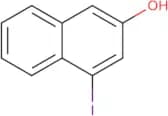
4-Iodonaphthalen-2-ol
CAS:Versatile small molecule scaffoldFormula:C10H7IOPurity:Min. 95%Molecular weight:270.07 g/mol3,3-Dimethylhexanoic acid
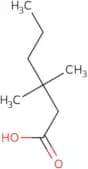
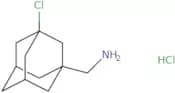
CAS:<p>3,3-Dimethylhexanoic acid is a stereoselective drug that is prescribed for the treatment of migraines and epileptic seizures. It has been shown to be effective against both the ipsilateral and contralateral sides of the brain. 3,3-Dimethylhexanoic acid is a racemic mixture with two stereoisomers: 1R,2S and 1S,2R. The compound has been shown to have anti-psychotic properties as well as epileptic effects. 3,3-Dimethylhexanoic acid binds to receptors in the brain that bind glutamate or GABA molecules. This binding inhibits the release of glutamate in nerve cells and increases the activity of GABA neurons in the brain. This results in a decrease in seizure frequency as well as an improvement in mood disorders such as depression and anxiety.</p>Formula:C8H16O2Purity:Min. 95%Molecular weight:144.21 g/mol(3-Chloroadamantan-1-yl)methanamine hydrochloride
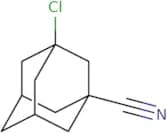
CAS:<p>Versatile small molecule scaffold</p>Formula:C11H19Cl2NPurity:Min. 95%Molecular weight:236.18 g/mol3-Chloroadamantane-1-carbonitrile
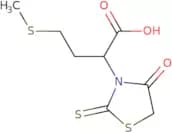
CAS:<p>3-Chloroadamantane-1-carbonitrile is a derivative of acetonitrile. It can be used as a catalyst in the production of carboxylic acids and their derivatives, including esters and amides. 3-Chloroadamantane-1-carbonitrile reacts with a wide range of carboxylic acids to produce the corresponding carbonitriles. These reactions are catalyzed by metal salts such as molybdenum, tetrachloride, vanadium, or carbon tetrachloride. The product can then undergo hydrolysis to form the corresponding carboxylic acid.</p>Formula:C11H14ClNPurity:Min. 95%Molecular weight:195.69 g/mol4-(Methylsulfanyl)-2-(4-oxo-2-sulfanylidene-1,3-thiazolidin-3-yl)butanoic acid
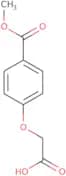
CAS:<p>Versatile small molecule scaffold</p>Formula:C8H11NO3S3Purity:Min. 95%Molecular weight:265.4 g/mol4-(Carboxymethoxy)benzoic acid methyl ester
CAS:<p>Versatile small molecule scaffold</p>Formula:C10H10O5Purity:Min. 95%Molecular weight:210.18 g/mol{[(4-Chlorobutan-2-yl)oxy]methyl}benzene
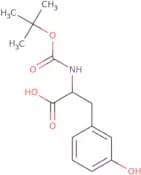
CAS:<p>Versatile small molecule scaffold</p>Formula:C11H15ClOPurity:Min. 95%Molecular weight:198.69 g/molN-Boc-3-hydroxy-D-phenylalanine
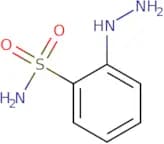
CAS:<p>Versatile small molecule scaffold</p>Formula:C14H19NO5Purity:Min. 95%Molecular weight:281.3 g/mol2-Hydrazinylbenzene-1-sulfonamide
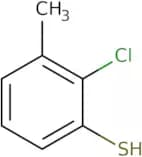
CAS:<p>Versatile small molecule scaffold</p>Formula:C6H9N3O2SPurity:Min. 95%Molecular weight:187.22 g/mol2-Chloro-3-methylbenzenethiol
CAS:<p>Versatile small molecule scaffold</p>Formula:C7H7ClSPurity:Min. 95%Molecular weight:158.65 g/mol2-Methylimidazo[1,2-a]pyrimidine-3-carboxylic acid
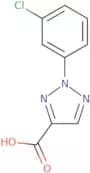
CAS:<p>Versatile small molecule scaffold</p>Formula:C8H7N3O2Purity:Min. 95%Molecular weight:177.16 g/mol2-(3-Chlorophenyl)-2H-1,2,3-triazole-4-carboxylic acid
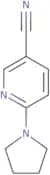
CAS:<p>Versatile small molecule scaffold</p>Formula:C9H6ClN3O2Purity:Min. 95%Molecular weight:223.61 g/mol6-Pyrrolidin-1-ylnicotinonitrile
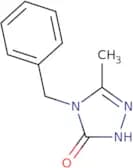
CAS:<p>Versatile small molecule scaffold</p>Formula:C10H11N3Purity:Min. 95%Molecular weight:173.21 g/mol4-Benzyl-3-methyl-4,5-dihydro-1H-1,2,4-triazol-5-one
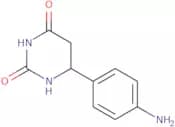
CAS:<p>Versatile small molecule scaffold</p>Formula:C10H11N3OPurity:Min. 95%Molecular weight:189.21 g/mol6-(4-Aminophenyl)-1,3-diazinane-2,4-dione
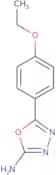
CAS:<p>Versatile small molecule scaffold</p>Formula:C10H11N3O2Purity:Min. 95%Molecular weight:205.21 g/mol5-(4-Ethoxyphenyl)-1,3,4-oxadiazol-2-amine
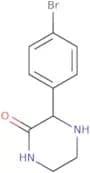
CAS:Versatile small molecule scaffoldFormula:C10H11N3O2Purity:Min. 95%Molecular weight:205.21 g/mol3-(4-Bromophenyl)piperazin-2-one
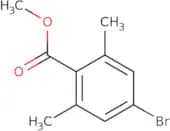
CAS:<p>Versatile small molecule scaffold</p>Formula:C10H11BrN2OPurity:Min. 95%Molecular weight:255.11 g/molMethyl 4-bromo-2,6-diMethylbenzoate
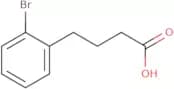
CAS:<p>Versatile small molecule scaffold</p>Formula:C10H11BrO2Purity:Min. 95%Molecular weight:243.1 g/mol4-(2-bromophenyl)butanoic acid
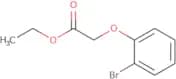
CAS:<p>4-(2-bromophenyl)butanoic acid is a ligand that has been used in intramolecular cyclisation reactions. It is also an amidation reagent, which can be used to synthesise amides from carboxylic acids and ammonia. 4-(2-bromophenyl)butanoic acid undergoes an amidation reaction with aromatic amines in the presence of a base to form 4-(2-bromophenyl)butanamide. This product has been used as an intermediate for the synthesis of other compounds such as aziridines and oxazolidinones.</p>Formula:C10H11BrO2Purity:Min. 95%Molecular weight:243.1 g/molEthyl 2-(2-bromophenoxy)acetate
CAS:<p>Ethyl 2-(2-bromophenoxy)acetate is an organic compound that is used as a reagent in organic synthesis. The cell parameters of ethyl 2-(2-bromophenoxy)acetate anhydrous are:</p>Formula:C10H11BrO3Purity:Min. 95%Molecular weight:259.1 g/mol

![{[(4-Chlorobutan-2-yl)oxy]methyl}benzene](/_next/image/?url=https%3A%2Fstatic.cymitquimica.com%2Fproducts%2F3D%2Fthumb-webp%2FQDA81269.webp&w=3840&q=75)
![2-Methylimidazo[1,2-a]pyrimidine-3-carboxylic acid](/_next/image/?url=https%3A%2Fstatic.cymitquimica.com%2Fproducts%2F3D%2Fthumb-webp%2FQDA83011.webp&w=3840&q=75)