Building Blocks
This section contains fundamental products for the synthesis of organic and biological compounds. Building blocks are the essential starting materials used to construct complex molecules through various chemical reactions. They play a critical role in drug discovery, material science, and chemical research. At CymitQuimica, we offer a diverse range of high-quality building blocks to support your innovative research and industrial projects, ensuring you have the essential components for successful synthesis.
Subcategories of "Building Blocks"
- Boronic Acids & Boronic Acid Derivatives(5,756 products)
- Chiral Building Blocks(1,242 products)
- Hydrocarbon Building Blocks(6,095 products)
- Organic Building Blocks(61,038 products)
Found 196817 products of "Building Blocks"
Sort by
Purity (%)
0
100
|
0
|
50
|
90
|
95
|
100
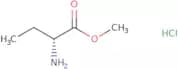
(R)-2-Aminobutanoic Acid Methyl Ester Hydrochloride
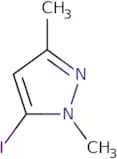
CAS:<p>Versatile small molecule scaffold</p>Formula:C5H12ClNO2Purity:Min. 95%Molecular weight:153.61 g/mol1,3-Dimethyl-5-iodopyrazole
CAS:<p>Versatile small molecule scaffold</p>Formula:C5H7IN2Purity:Min. 95%Molecular weight:222.03 g/mol8H-Indeno[1,2-d][1,3]thiazol-2-amine
CAS:<p>Versatile small molecule scaffold</p>Formula:C10H8N2SPurity:Min. 95%Molecular weight:188.25 g/molEthyl 2-(4-bromo-2-chlorophenyl)-2-hydroxy-3-(1H-1,2,4-triazol-1-yl)propanoate
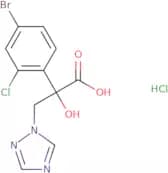
CAS:<p>Versatile small molecule scaffold</p>Formula:C13H13BrClN3O3Purity:Min. 95%Molecular weight:374.62 g/mol2-(4-Bromo-2-chlorophenyl)-2-hydroxy-3-(1H-1,2,4-triazol-1-yl)propanoic acid hydrochloride
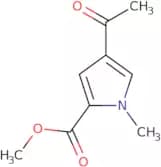
CAS:<p>Versatile small molecule scaffold</p>Formula:C11H10BrCl2N3O3Purity:Min. 95%Molecular weight:383.02 g/molMethyl 4-acetyl-1-methyl-1H-pyrrole-2-carboxylate
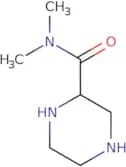
CAS:<p>Versatile small molecule scaffold</p>Formula:C9H11NO3Purity:Min. 95%Molecular weight:181.19 g/molN,N-Dimethylpiperazine-2-carboxamide
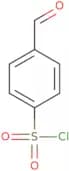
CAS:<p>Versatile small molecule scaffold</p>Formula:C7H15N3OPurity:Min. 95%Molecular weight:157.21 g/mol4-formylbenzene-1-sulfonyl chloride
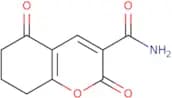
CAS:<p>4-Formylbenzene-1-sulfonyl chloride is an alkylating agent that can be used to produce amines. It is the most efficient reagent for the reductive amination of carbonyl groups, and it also reacts with nucleophiles in a nucleophilic substitution reaction. The reaction of 4-formylbenzene-1-sulfonyl chloride with potassium carbonate produces formaldehyde and potassium sulfite. This product is soluble in water and organic solvents, which makes it useful for reactions involving high boiling points. Yields are typically 50%.</p>Formula:C7H5ClO3SPurity:Min. 95%Molecular weight:204.6 g/mol2,5-Dioxo-5,6,7,8-tetrahydro-2H-chromene-3-carboxamide
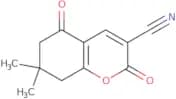
CAS:<p>2,5-Dioxo-5,6,7,8-tetrahydro-2H-chromene-3-carboxamide is a chromene that has been synthesized in the laboratory. It is stable and biologically active. This compound can be used to develop new pharmaceuticals or as an intermediate for other organic compounds.</p>Formula:C10H9NO4Purity:Min. 95%Molecular weight:207.18 g/mol7,7-Dimethyl-2,5-dioxo-5,6,7,8-tetrahydro-2H-chromene-3-carbonitrile
CAS:<p>Versatile small molecule scaffold</p>Formula:C12H11NO3Purity:Min. 95%Molecular weight:217.2 g/mol1-[4-Hydroxy-3-(piperidin-1-ylmethyl)phenyl]ethan-1-one hydrochloride
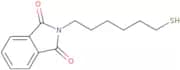
CAS:<p>Versatile small molecule scaffold</p>Formula:C14H20ClNO2Purity:Min. 95%Molecular weight:269.77 g/mol2-(6-Sulfanylhexyl)-2,3-dihydro-1H-isoindole-1,3-dione
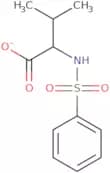
CAS:<p>Diptocarpiline is a diterpene that is found in the bark of D. dasycarpa, a tree native to Southeast Asia. It has been shown to have anticonvulsant and analgesic properties, as well as anti-inflammatory effects. Daptocarpiline also has anticancer activity against leukemia cells in culture. This compound binds to the GABA receptor and inhibits the binding of GABA, which results in increased levels of this neurotransmitter in the brain. This leads to an increase in the frequency and amplitude of spontaneous inhibitory postsynaptic currents (sIPSCs) and an increase in the duration of action potentials (APs). The mechanism of anticancer activity is not completely understood, but it may be due to its ability to induce apoptosis by inhibiting protein synthesis or by inducing reactive oxygen species (ROS).</p>Formula:C14H17NO2SPurity:Min. 95%Molecular weight:263.36 g/mol(2S)-2-Benzenesulfonamido-3-methylbutanoic acid
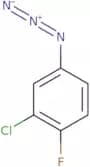
CAS:<p>Versatile small molecule scaffold</p>Formula:C11H14NO4SPurity:Min. 95%Molecular weight:256.3 g/mol4-Azido-2-chloro-1-fluorobenzene
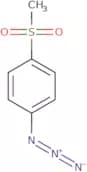
CAS:<p>4-Azido-2-chloro-1-fluorobenzene (4ACFB) is a potential immunotherapy drug for cancer. It inhibits the activity of kynurenine, which is an important pathway in tumor growth and development. 4ACFB has been shown to inhibit the proliferation of human leukemia cells in vitro and in vivo. The half maximal inhibitory concentration for 4ACFB is 10 µM. This molecule also has high potential as a lead compound for cancer therapy because it targets many pathways that are involved in tumor growth and development, such as the microenvironment, protein synthesis, DNA replication, and cell division.</p>Formula:C6H3ClFN3Purity:Min. 95%Molecular weight:171.56 g/mol1-Azido-4-methanesulfonylbenzene
CAS:<p>1-Azido-4-methanesulfonylbenzene is a 1,3-dipolar cycloaddition agent that contains a heterocyclic ring. It inhibits the activity of the enzyme COX-2 (cyclooxygenase 2), which is the target for nonsteroidal anti-inflammatory drugs. 1-Azido-4-methanesulfonylbenzene has an inhibitory potency in the vicinal assay and has been shown to be a potent COX-2 inhibitor. The inhibition of COX-2 is thought to be due to its ability to bind with specificity to the heme group in the COX active site. This binding prevents substrate access and thus prevents prostaglandin synthesis.</p>Formula:C7H7N3O2SPurity:Min. 95%Molecular weight:197.22 g/mol1-[4-(1H-1,2,3-Triazol-1-yl)phenyl]ethan-1-one
CAS:<p>Versatile small molecule scaffold</p>Formula:C10H9N3OPurity:Min. 95%Molecular weight:187.2 g/mol1-[3-(1H-1,2,3-Triazol-1-yl)phenyl]ethan-1-one
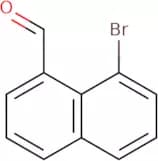
CAS:<p>Versatile small molecule scaffold</p>Formula:C10H9N3OPurity:Min. 95%Molecular weight:187.2 g/mol8-Bromonaphthalene-1-carbaldehyde
CAS:<p>8-Bromonaphthalene-1-carbaldehyde is a reactive intermediate in the synthesis of azepines. The compound has been shown to undergo reversible hydride transfer reactions with iodides and benzylic alcohols. It can be prepared by the reaction of 1,2-dibromoethane with acetophenone in the presence of sodium hydroxide. 8-Bromonaphthalene-1-carbaldehyde is also a useful synthon for the synthesis of azepines and active methylenes. 8-Bromonaphthalene-1-carbaldehyde reacts with 2,4,6-trimethylbenzenesulfonyl chloride to form 4-(2,4,6-trimethylphenyl)azepine.</p>Formula:C11H7BrOPurity:Min. 95%Molecular weight:235.08 g/mol1-(4-Methylbenzenesulfonyl)propan-2-ol
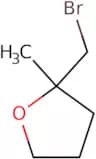
CAS:<p>Versatile small molecule scaffold</p>Formula:C10H14O3SPurity:Min. 95%Molecular weight:214.28 g/mol2-(Bromomethyl)-2-methyloxolane
CAS:<p>Versatile small molecule scaffold</p>Formula:C6H11BrOPurity:Min. 95%Molecular weight:179.05 g/mol

![8H-Indeno[1,2-d][1,3]thiazol-2-amine](/_next/image/?url=https%3A%2Fstatic.cymitquimica.com%2Fproducts%2F3D%2Fthumb-webp%2FKDA78795.webp&w=3840&q=75)

![1-[4-Hydroxy-3-(piperidin-1-ylmethyl)phenyl]ethan-1-one hydrochloride](/_next/image/?url=https%3A%2Fstatic.cymitquimica.com%2Fproducts%2F3D%2Fthumb-webp%2FKDA84313.webp&w=3840&q=75)
![1-[4-(1H-1,2,3-Triazol-1-yl)phenyl]ethan-1-one](/_next/image/?url=https%3A%2Fstatic.cymitquimica.com%2Fproducts%2F3D%2Fthumb-webp%2FKDA86290.webp&w=3840&q=75)
![1-[3-(1H-1,2,3-Triazol-1-yl)phenyl]ethan-1-one](/_next/image/?url=https%3A%2Fstatic.cymitquimica.com%2Fproducts%2F3D%2Fthumb-webp%2FKDA86297.webp&w=3840&q=75)