Building Blocks
This section contains fundamental products for the synthesis of organic and biological compounds. Building blocks are the essential starting materials used to construct complex molecules through various chemical reactions. They play a critical role in drug discovery, material science, and chemical research. At CymitQuimica, we offer a diverse range of high-quality building blocks to support your innovative research and industrial projects, ensuring you have the essential components for successful synthesis.
Subcategories of "Building Blocks"
- Boronic Acids & Boronic Acid Derivatives(5,756 products)
- Chiral Building Blocks(1,242 products)
- Hydrocarbon Building Blocks(6,095 products)
- Organic Building Blocks(61,055 products)
Found 199650 products of "Building Blocks"
Sort by
Purity (%)
0
100
|
0
|
50
|
90
|
95
|
100
5-Bromo-4-hydrazino-6-methylpyrimidine
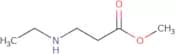
CAS:<p>Versatile small molecule scaffold</p>Formula:C5H7BrN4Purity:Min. 95%Molecular weight:203.04 g/molmethyl 3-(ethylamino)propanoate
CAS:<p>Versatile small molecule scaffold</p>Formula:C6H13NO2Purity:Min. 95%Molecular weight:131.2 g/molMethyl 3-(ethylamino)-2-methylpropanoate
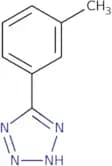
CAS:Versatile small molecule scaffoldFormula:C7H15NO2Purity:Min. 95%Molecular weight:145.2 g/mol5-(m-Tolyl)tetrazole
CAS:<p>5-(m-Tolyl)tetrazole is an experimental compound that has been shown to be a nitrite reductase catalyst. It is also an electrochemical and photocatalytic oxidizing agent that can catalyze the oxidation of bromate. The crystal x-ray diffraction patterns of 5-(m-tolyl)tetrazole show the presence of channels, cycles, and nitrite ions in its structure.</p>Formula:C8H8N4Purity:Min. 95%Molecular weight:160.18 g/mol2-[4-(Propan-2-yl)phenyl]propan-2-ol
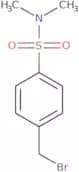
CAS:<p>Versatile small molecule scaffold</p>Formula:C12H18OPurity:Min. 95%Molecular weight:178.27 g/mol4-Bromomethyl-N,N-dimethyl-benzenesulfonamide
CAS:<p>Versatile small molecule scaffold</p>Formula:C9H12BrNO2SPurity:Min. 95%Molecular weight:278.17 g/mol[4-(Benzylsulfanyl)phenyl]methanol
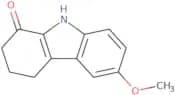
CAS:<p>Versatile small molecule scaffold</p>Formula:C14H14OSPurity:Min. 95%Molecular weight:230.33 g/mol6-Methoxy-2,3,4,9-tetrahydro-1H-carbazol-1-one
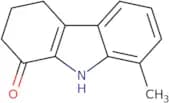
CAS:<p>The molecular formula for 6-methoxy-2,3,4,9-tetrahydro-1H-carbazol-1-one is C10H8O2. The molecular weight of this compound is 180.18 g/mol. This compound has a planar shape with a benzene ring and a pyrrole ring that are connected by hydrogen bonds. The pyrrole ring interacts with the cyclohexene and the benzene rings of this molecule. This interaction causes the molecule to have a dihedral conformation. In addition to these interactions, there are also intermolecular hydrogen bonds in this compound that are formed between the hydrogen atom on one pyrrole group and an oxygen atom on another pyrrole group.</p>Formula:C13H13NO2Purity:Min. 95%Molecular weight:215.25 g/mol8-methyl-2,3,4,9-tetrahydro-1H-carbazol-1-one
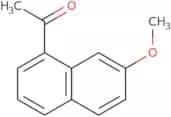
CAS:<p>8-methyl-2,3,4,9-tetrahydro-1H-carbazol-1-one is a pyrrole organic compound with the chemical formula C8H6N2. The molecule has two benzene rings and one cyclohexenone ring. The molecular structure has a dihedral angle of 18° and is conformationally flexible with hydrogen bonding interactions between the nitrogen atoms and the carbonyl groups. 8-methyl-2,3,4,9-tetrahydro-1H-carbazol-1-one has been shown to be an effective inhibitor of bacterial nitroreductase enzymes.</p>Formula:C13H13NOPurity:Min. 95%Molecular weight:199.25 g/mol1-(7-Methoxynaphthalen-1-yl)ethan-1-one
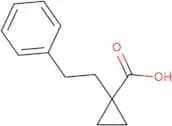
CAS:<p>1-(7-Methoxynaphthalen-1-yl)ethan-1-one is a heterocyclic compound that is used in the synthesis of other compounds. It is also used as a solvent and as a reaction product in acetylation reactions. The solubility of this compound is low and it shows low activity. It can be synthesized by reacting naphthalene with chloroform or benzene in the presence of aluminium chloride at high temperatures. This compound can also be obtained from 1,4-dichlorobenzene by deuterating it with D2O. 1-(7-Methoxynaphthalen-1-yl)ethan-1-one is soluble in nonpolar solvents such as hexane, but insoluble in water.</p>Formula:C13H12O2Purity:Min. 95%Molecular weight:200.23 g/mol1-(2-Phenylethyl)cyclopropane-1-carboxylic acid
CAS:<p>Versatile small molecule scaffold</p>Formula:C12H14O2Purity:Min. 95%Molecular weight:190.24 g/mol2,3-Dioxo-2,3-dihydro-1H-indole-5-sulfonamide
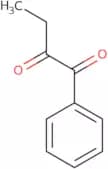
CAS:<p>2,3-Dioxo-2,3-dihydro-1H-indole-5-sulfonamide is a synthetic compound that has been shown to inhibit the growth of cancer cells. It is active against anhydrase and hCT116 cells but not against normal epidermal keratinocytes. 2,3-Dioxo-2,3-dihydro-1H-indole-5-sulfonamide binds to the epidermal growth factor receptor on the cell surface and inhibits its activity. This drug also inhibits the uptake of epidermal growth factor and carbonic anhydrase II in cancer cells. 2,3 Dioxo -2,3 dihydro -1H indole 5 sulfonamide has been used in some clinical trials as a potential anticancer agent for cancers such as non small cell lung cancer or colorectal cancer and may be used in combination with other drugs such as</p>Formula:C8H6N2O4SPurity:Min. 95%Molecular weight:226.21 g/mol1-Phenylbutane-1,2-dione
CAS:Versatile small molecule scaffoldFormula:C10H10O2Purity:Min. 95%Molecular weight:162.18 g/mol2-[(3-Hydroxypyridin-2-yl)formamido]acetic acid
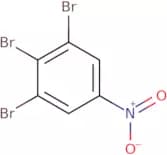
CAS:<p>2-[(3-Hydroxypyridin-2-yl)formamido]acetic acid is a pharmaceutical preparation that belongs to the group of metal ion chelating agents. It is used as a conditioning agent in the production of didemnin, an anti-inflammatory agent. 2-[(3-Hydroxypyridin-2-yl)formamido]acetic acid can be used to inhibit the formation of reactive oxygen species by removing metal ions such as iron and copper from cells. This drug also has been shown to have an antioxidant effect and can reduce inflammation due to its ability to inhibit prostaglandin synthesis.</p>Formula:C8H8N2O4Purity:Min. 95%Molecular weight:196.16 g/mol1,2,3-Tribromo-5-nitrobenzene
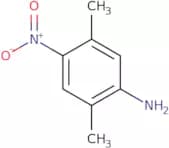
CAS:<p>1,2,3-Tribromo-5-nitrobenzene (1,2,3-TBNB) is a chemical compound that is used as an electron acceptor in the Covid-19 pandemic. It has been shown to have a resonance of 3.8 ppm with a magnetic field strength of 5.0 T. 1,2,3-TBNB has been shown to be electronegative and can form halogen bonds with nitrobenzene. The molecule was synthesized by reacting bromine with nitric acid in ether solution.</p>Formula:C6H2Br3NO2Purity:Min. 95%Molecular weight:359.8 g/mol2,5-Dimethyl-4-nitroaniline
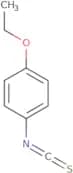
CAS:<p>2,5-Dimethyl-4-nitroaniline is an isomer of 2,5-dimethylaniline. The molecular electrostatic potential map reveals that the molecule has a high electron density at the 4 position of the aniline ring, which is characteristic of an aromatic system. This molecule displays a conformational change when it interacts with chloride ions, which can be seen in its vibrational spectrum. The nature of this molecule is interannular between aromatic and nonaromatic.<br>2,5-Dimethyl-4-nitroaniline's crystal system is orthorhombic. Its interactions with other molecules are determined by the electrostatic forces present on the surface of the crystal.</p>Formula:C8H10N2O2Purity:Min. 95%Color and Shape:PowderMolecular weight:166.18 g/mol1-Ethoxy-4-isothiocyanato-benzene
CAS:<p>1-Ethoxy-4-isothiocyanato-benzene is a chemical compound that has shown antihypertensive activity, as well as antioxidant and anticancer potential. It reacts with the primary amino group of proteins to form an amine, which can then react with hydrochloric acid or other aldehydes to form pentane. The pentane is then oxidized by amines or thiosemicarbazide to form methyl anthranilate. This compound also has antibacterial properties, which may be due to its ability to inhibit bacterial growth by disrupting hydrogen bonds and sulphonates.</p>Formula:C9H9NOSPurity:Min. 95%Molecular weight:179.24 g/mol(4-Cyanophenyl)thiourea
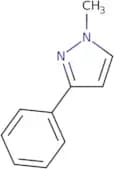
CAS:<p>Versatile small molecule scaffold</p>Formula:C8H7N3SPurity:Min. 95%Molecular weight:177.23 g/mol1-Methyl-3-phenyl-1H-pyrazole
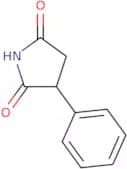
CAS:<p>1-Methyl-3-phenyl-1H-pyrazole is an agriculturally useful compound that can be used as an intermediate in the synthesis of pesticides. 1-Methyl-3-phenyl-1H-pyrazole has two different orientations with respect to the pyrazole ring, which gives rise to two isomers. The cis form is a photoelectron acceptor and the trans form is a photoelectron donor. The molecular orbitals of 1-methyl-3-phenylpyrazole are energetically similar to those of other pyrazoles. The difference lies in the orientation of the nitrogen atom, which makes it unsymmetrical. It also has a sulfate group and a dihedral angle of 60°. 1,2,4,5,6-Pentafluoroalkyl and pyrazolyl groups have been found on this molecule.</p>Formula:C10H10N2Purity:Min. 95%Molecular weight:158.2 g/mol3-Phenylpyrrolidine-2,5-dione
CAS:<p>3-Phenylpyrrolidine-2,5-dione is an organic compound with a polymer film. It has been shown to have antireflection properties and can be used for optical applications. 3-Phenylpyrrolidine-2,5-dione can be made by the reaction of hydrochloric acid and an organic solvent. It is soluble in methyl ethyl ketone and hydroxyl group. The colorless compound has a melting point of 104 degrees Celsius and decomposes at around 250 degrees Celsius. 3-Phenylpyrrolidine-2,5-dione is soluble in aromatic hydrocarbons such as naphthalene and structural formula consists of a benzene ring fused to a pyrrole ring with a carbonyl group on each side. 3-Phenylpyrrolidine-2,5-dione has been shown to have good thermal expansion properties which are useful for patterning or mold</p>Formula:C10H9NO2Purity:Min. 95%Molecular weight:175.18 g/mol



![2-[4-(Propan-2-yl)phenyl]propan-2-ol](/_next/image/?url=https%3A%2Fstatic.cymitquimica.com%2Fproducts%2F3D%2Fthumb-webp%2FDAA44542.webp&w=3840&q=75)
![[4-(Benzylsulfanyl)phenyl]methanol](/_next/image/?url=https%3A%2Fstatic.cymitquimica.com%2Fproducts%2F3D%2Fthumb-webp%2FDAA44898.webp&w=3840&q=75)

![2-[(3-Hydroxypyridin-2-yl)formamido]acetic acid](/_next/image/?url=https%3A%2Fstatic.cymitquimica.com%2Fproducts%2F3D%2Fthumb-webp%2FDAA45869.webp&w=3840&q=75)