Building Blocks
This section contains fundamental products for the synthesis of organic and biological compounds. Building blocks are the essential starting materials used to construct complex molecules through various chemical reactions. They play a critical role in drug discovery, material science, and chemical research. At CymitQuimica, we offer a diverse range of high-quality building blocks to support your innovative research and industrial projects, ensuring you have the essential components for successful synthesis.
Subcategories of "Building Blocks"
- Boronic Acids & Boronic Acid Derivatives(5,756 products)
- Chiral Building Blocks(1,242 products)
- Hydrocarbon Building Blocks(6,095 products)
- Organic Building Blocks(61,038 products)
Found 196817 products of "Building Blocks"
Sort by
Purity (%)
0
100
|
0
|
50
|
90
|
95
|
100
1-Cyclopropyl-2-methylpropan-1-amine hydrochloride
CAS:<p>Versatile small molecule scaffold</p>Formula:C7H16ClNPurity:Min. 95%Molecular weight:149.66 g/mol1-Bromo-2-(methylsulfanyl)ethane
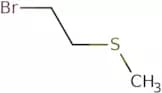
CAS:<p>1-Bromo-2-(methylsulfanyl)ethane is a chemical compound with the formula CHSCH. It is a reagent in organic synthesis and an intermediate in the production of other chemicals. This compound is used in the preparation of medicines, such as sulfide, alkylation, and anion profiling strategies. It has also been used to synthesize methylthioethyl fatty acids. 1-Bromo-2-(methylsulfanyl)ethane can be prepared by reacting acetonitrile with a mixture of ethylene and hydrogen sulfide gas. The reaction products are analyzed using microextraction followed by ligand and diffraction analysis.</p>Formula:C3H7BrSPurity:Min. 95%Molecular weight:155.06 g/mol1-(Chloromethyl)-1H-benzotriazole
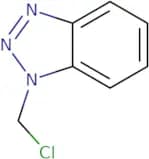
CAS:<p>1-Chloromethyl-1H-benzotriazole is a water soluble organometallic compound that has been used in wastewater treatment. It is an active methylene that binds to palladium complexes, which are catalysts for the hydrogenation of organic compounds. The x-ray crystal structures for 1-chloromethyl-1H-benzotriazole show that it can form a coordination complex with palladium(II). This complex is nucleophilic and reacts with chloride to form the corresponding chloro complex. The quaternization of 1-chloromethyl-1H benzotriazole is a reaction where one molecule of hydrogen chloride reacts with the methylene group to produce a tertiary amine, which yields chloride as a byproduct. The structural analysis and NMR spectra confirm the presence of protonated chlorine atoms in the molecule.</p>Formula:C7H6ClN3Purity:Min. 95%Molecular weight:167.6 g/mol6-Chloro-N-methylnicotinamide
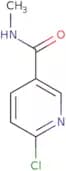
CAS:<p>6-Chloro-N-methylnicotinamide is an organic molecule with a pyridine ring, an amide group, and a chlorinated methyl group. It is regioselective for the electrophiles cross-coupling reactions with nucleophiles. 6-Chloro-N-methylnicotinamide has been used as an intermediate in the synthesis of carboxamides.</p>Formula:C7H7ClN2OPurity:Min. 95%Molecular weight:170.6 g/mol1-(Ethoxymethyl)-4-methylbenzene
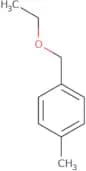
CAS:<p>Versatile small molecule scaffold</p>Formula:C10H14OPurity:Min. 95%Molecular weight:150.22 g/mol3-(2-Chlorophenyl)-1-phenylpropan-1-one
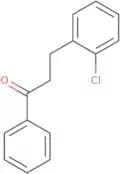
CAS:<p>Versatile small molecule scaffold</p>Formula:C15H13ClOPurity:Min. 95%Molecular weight:244.71 g/mol6-Bromo-2-(3,4-dimethoxyphenyl)-4H-chromen-4-one
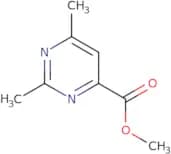
CAS:<p>Versatile small molecule scaffold</p>Formula:C17H13BrO4Purity:Min. 95%Molecular weight:361.2 g/molMethyl 2,6-dimethylpyrimidine-4-carboxylate
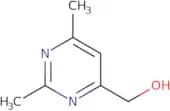
CAS:<p>Versatile small molecule scaffold</p>Formula:C8H10N2O2Purity:Min. 95%Molecular weight:166.18 g/mol(2,6-Dimethylpyrimidin-4-yl)methanol
CAS:<p>Versatile small molecule scaffold</p>Formula:C7H10N2OPurity:Min. 95%Molecular weight:138.17 g/mol2-(Bromomethyl)pyrimidine
CAS:<p>Versatile small molecule scaffold</p>Formula:C5H5BrN2Purity:Min. 95%Molecular weight:173.01 g/molMethyl 4-cyanobicyclo[2.2.2]octane-1-carboxylate
CAS:<p>Versatile small molecule scaffold</p>Formula:C11H15NO2Purity:Min. 95%Molecular weight:193.24 g/molMethyl 4-(aminomethyl)bicyclo[2.2.2]octane-1-carboxylate
CAS:<p>Versatile small molecule scaffold</p>Formula:C11H19NO2Purity:Min. 95%Molecular weight:197.27 g/mol5-Hydroxybenzo[d]oxazol-2(3H)-one
CAS:<p>Versatile small molecule scaffold</p>Formula:C7H5NO3Purity:Min. 95%Molecular weight:151.11 g/molMethyl 2-isocyanato-2-methylpropanoate
CAS:<p>Versatile small molecule scaffold</p>Formula:C6H9NO3Purity:Min. 95%Molecular weight:143.14 g/mol1-Bromo-6,6-dimethylheptane
CAS:<p>Versatile small molecule scaffold</p>Formula:C9H19BrPurity:Min. 95%Molecular weight:207.15 g/mol2,4-Dimethyl-5-phenylimidazo[1,5-b]pyridazine-7-thiol
CAS:<p>Versatile small molecule scaffold</p>Formula:C14H13N3SPurity:Min. 95%Molecular weight:255.34 g/mol4-Chloro-2-hydroxy-1H-imidazo[4,5-c]pyridine
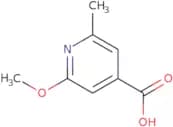
CAS:<p>Versatile small molecule scaffold</p>Formula:C6H4ClN3OPurity:Min. 95%Molecular weight:169.57 g/mol2-Methoxy-6-methylpyridine-4-carboxylic acid
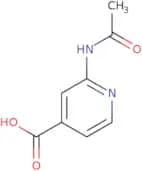
CAS:<p>Versatile small molecule scaffold</p>Formula:C8H9NO3Purity:Min. 95%Molecular weight:167.16 g/mol2-Acetylamino-isonicotinic acid
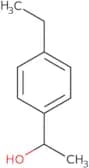
CAS:<p>2-Acetylamino-isonicotinic acid is a polymerization reaction product of pyridine and vinyl acetate. It is soluble in water, ethanol, and ether. 2-Acetylamino-isonicotinic acid has been used as a template for the synthesis of silver nanoparticles. These particles have shown to be effective against gram positive bacteria such as Staphylococcus aureus and Mycobacterium tuberculosis. The supramolecular assembly of these nanoparticles was achieved using an ion exchange membrane as the template. This assembly leads to the formation of hierarchically organized, porous structures with high surface area that are able to adsorb molecules at their surface.</p>Formula:C8H8N2O3Purity:Min. 95%Molecular weight:180.16 g/mol(1R)-1-(4-Ethylphenyl)ethan-1-ol
CAS:<p>Versatile small molecule scaffold</p>Formula:C10H14OPurity:Min. 95%Molecular weight:150.22 g/mol




![Methyl 4-cyanobicyclo[2.2.2]octane-1-carboxylate](/_next/image/?url=https%3A%2Fstatic.cymitquimica.com%2Fproducts%2F3D%2Fthumb-webp%2FECA20205.webp&w=3840&q=75)
![Methyl 4-(aminomethyl)bicyclo[2.2.2]octane-1-carboxylate](/_next/image/?url=https%3A%2Fstatic.cymitquimica.com%2Fproducts%2F3D%2Fthumb-webp%2FECA20209.webp&w=3840&q=75)
![5-Hydroxybenzo[d]oxazol-2(3H)-one](/_next/image/?url=https%3A%2Fstatic.cymitquimica.com%2Fproducts%2F3D%2Fthumb-webp%2FECA20992.webp&w=3840&q=75)


![2,4-Dimethyl-5-phenylimidazo[1,5-b]pyridazine-7-thiol](/_next/image/?url=https%3A%2Fstatic.cymitquimica.com%2Fproducts%2F3D%2Fthumb-webp%2FECA22154.webp&w=3840&q=75)
![4-Chloro-2-hydroxy-1H-imidazo[4,5-c]pyridine](/_next/image/?url=https%3A%2Fstatic.cymitquimica.com%2Fproducts%2F3D%2Fthumb-webp%2FECA22173.webp&w=3840&q=75)