


Building Blocks
This section contains fundamental products for the synthesis of organic and biological compounds. Building blocks are the essential starting materials used to construct complex molecules through various chemical reactions. They play a critical role in drug discovery, material science, and chemical research. At CymitQuimica, we offer a diverse range of high-quality building blocks to support your innovative research and industrial projects, ensuring you have the essential components for successful synthesis.
Subcategories of "Building Blocks"
- Boronic Acids & Boronic Acid Derivatives(5,778 products)
- Chiral Building Blocks(1,242 products)
- Hydrocarbon Building Blocks(6,098 products)
- Organic Building Blocks(61,034 products)
Found 199601 products of "Building Blocks"
Sort by
Purity (%)
0
100
|
0
|
50
|
90
|
95
|
100
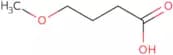
4-Methoxybutanoic acid
CAS:Controlled Product<p>4-Methoxybutanoic acid is an isomer of 4-hydroxybutanoic acid, but with a methoxy group added to the second carbon atom. It can be found in fatty acids and prednisolone, which is a type of steroid hormone. This chemical also has antioxidant properties and can act as an oxidant or glutamate. It also reacts with magnesium, causing allergic reactions such as skin redness and itching. 4-Methoxybutanoic acid can be chemically synthesized by reacting butanol with magnesium in the presence of hydrogen peroxide. This compound has been shown to have antihistamine properties when it binds to histamine H1 receptors.<br> The molecular formula for 4-methoxybutanoic acid is C5H11O2. This molecule contains one oxygen atom, two carbon atoms, four hydrogen atoms, and one oxygen atom. The molecular weight of this molecule is 117.17 grams per mole.</p>Formula:C5H10O3Purity:Min. 95%Molecular weight:118.13 g/mol3-Dibenzofurancarboxylic acid
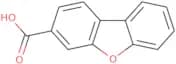
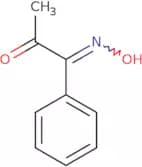
CAS:<p>3-Dibenzofurancarboxylic acid is an aliphatic alcohol that is used as a reagent to synthesize metal salts or metal salt. 3-Dibenzofurancarboxylic acid can be prepared by the reaction of 2-hydroxydibenzofuran with alkali metal. The metal salt is obtained by adding an alkali and carbon atoms to 3-dibenzofurancarboxylic acid.</p>Formula:C13H8O3Purity:Min. 95%Molecular weight:212.2 g/mol1-(N-Hydroxyimino)-1-phenylpropan-2-one
CAS:Controlled Product<p>Versatile small molecule scaffold</p>Formula:C9H9NO2Purity:Min. 95%Molecular weight:163.17 g/mol1-(4-Chlorophenyl)-2,8,9-trioxa-5-aza-1-silabicyclo[3.3.3]undecane
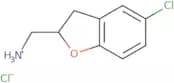
CAS:<p>1-(4-Chlorophenyl)-2,8,9-trioxa-5-aza-1-silabicyclo[3.3.3]undecane is an analog of gamma-aminobutyric acid (GABA) that has been shown to have convulsant activity in rats and exhibits functional correlations with GABA in the cerebral cortex. 1-(4-Chlorophenyl)-2,8,9-trioxa-5-aza-1-silabicyclo[3.3.3]undecane is taken up by cells through a chloride channel and can induce chloride efflux from cells in the cerebral cortex. It also inhibits uptake of gamma aminobutyric acid (GABA), which causes increased levels of GABA in the cerebral cortex and increased seizure activity.</p>Formula:C12H16ClNO3SiPurity:Min. 95%Molecular weight:285.8 g/mol1-(5-Chloro-2,3-dihydro-1-benzofuran-2-yl)methanamine hydrochloride
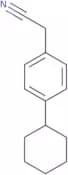
CAS:Versatile small molecule scaffoldFormula:C9H11Cl2NOPurity:Min. 95%Molecular weight:220.09 g/mol2-(4-Cyclohexylphenyl)acetonitrile
CAS:<p>2-(4-Cyclohexylphenyl)acetonitrile is a prophylactic agent that prevents inflammation. It is an amidated carboxylic acid and has been shown to have chemotherapeutic and prophylactic properties. 2-(4-Cyclohexylphenyl)acetonitrile can be used as a radical scavenger, preventing the formation of reactive oxygen species that may lead to cell damage. This drug also inhibits the production of inflammatory cytokines by inhibiting cyclooxygenase enzymes.</p>Formula:C14H17NPurity:Min. 95%Molecular weight:199.29 g/mol2-[4-(1-Benzofuran-2-amido)phenyl]acetic acid
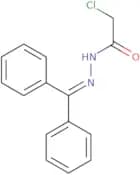
CAS:<p>2-[4-(1-Benzofuran-2-amido)phenyl]acetic acid (BAPAA) is a research tool that belongs to the class of ligands. It has been shown to inhibit ion channels and receptor proteins in the cell membrane. BAPAA binds to peptides and receptors on cells, which leads to activation of those receptors and subsequent changes in the cell. This drug also has been shown to be a potent activator of protein interactions with antibodies.</p>Formula:C17H13NO4Purity:Min. 95%Molecular weight:295.29 g/mol2-Chloro-N'-(diphenylmethylidene)acetohydrazide
CAS:<p>2-Chloro-N'-(diphenylmethylidene)acetohydrazide is a β-lactam antibiotic that contains a 2-chloro-N'-hydrazino group and an acetamide substituent. It has been shown to be effective in the treatment of Gram-positive bacterial infections, such as MRSA and penicillin resistant Staphylococcus aureus, but not Gram negative bacteria. 2-Chloro-N'-(diphenylmethylidene)acetohydrazide has been used as a starting point for the synthesis of other antibiotics with improved activity against Gram negative bacteria. This drug is also active against Mycobacterium tuberculosis (Mtb), which causes tuberculosis in humans. The heterocycles substituents are responsible for its reactivity and biological properties.</p>Formula:C15H13ClN2OPurity:Min. 95%Molecular weight:272.73 g/molN'-Hydroxymorpholine-4-carboxamidine
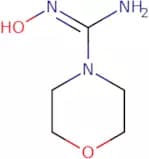
CAS:Versatile small molecule scaffoldFormula:C5H11N3O2Purity:Min. 95%Molecular weight:145.16 g/mol1-Ethoxy-3-iodobenzene
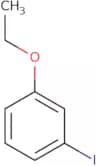
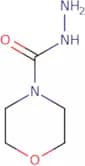
CAS:<p>Versatile small molecule scaffold</p>Formula:C8H9IOPurity:Min. 95%Molecular weight:248.06 g/molMorpholine-4-carbohydrazide
CAS:<p>Morpholine-4-carbohydrazide is a carbamate that can be used as a fluorescent sensor. The fluorescence of this compound can be easily detected visually and its intensity can be titrated. Fluorescein is the most common fluorophore used in fluorescent sensors and it has been shown to have a strong interaction with metal ions, which may lead to fluorescence quenching. Morpholine-4-carbohydrazide has been optimized for use as a fluorescent sensor by replacing the fluorescein with semicarbazides, which are not sensitive to metal ions and do not quench the fluorescence. This compound also has an improved emission spectrum in the visible range, which makes it suitable for many applications.</p>Formula:C5H11N3O2Purity:Min. 95%Molecular weight:145.16 g/mol7-Bromo-4-chlorothieno[3,2-c]pyridine
CAS:<p>Versatile small molecule scaffold</p>Formula:C7H3BrClNSPurity:Min. 95%Molecular weight:248.53 g/mol3-Bromo-4-chloro-thieno[3,2-c]pyridine
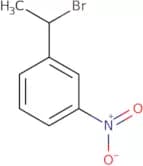
CAS:<p>3-Bromo-4-chloro-thieno[3,2-c]pyridine is a boronic acid that has been shown to be an effective electron donor in the Suzuki reaction. This compound is substituted with a cyclic amine and a fluorescing substituent. The cyclic amine and substituent are orthogonal to each other, which leads to different fluorescence properties. The 3-bromo substituent has been shown to have strong fluorescence properties, while the 4-chloro substituent has weak fluorescence properties.</p>Formula:C7H3BrClNSPurity:Min. 95%Molecular weight:248.53 g/mol1-(1-Bromoethyl)-3-nitrobenzene
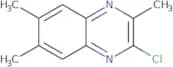
CAS:<p>Versatile small molecule scaffold</p>Formula:C8H8BrNO2Purity:Min. 95%Molecular weight:230.06 g/mol2-Chloro-3,6,7-trimethylquinoxaline
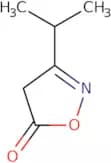
CAS:<p>Versatile small molecule scaffold</p>Formula:C11H11ClN2Purity:Min. 95%Molecular weight:206.67 g/mol3-(1-Methylethyl)-5(4H)-isoxazolone
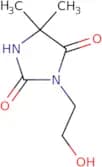
CAS:<p>Versatile small molecule scaffold</p>Formula:C6H9NO2Purity:Min. 95%Molecular weight:127.14 g/mol3-(2-Hydroxyethyl)-5,5-dimethylimidazolidine-2,4-dione
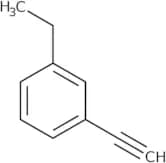
CAS:<p>Versatile small molecule scaffold</p>Formula:C7H12N2O3Purity:Min. 95%Molecular weight:172.18 g/mol1-Ethyl-3-ethynylbenzene
CAS:<p>Versatile small molecule scaffold</p>Formula:C10H10Purity:Min. 95%Molecular weight:130.19 g/mol7-Chloro-4H,5H-thieno[3,2-c]pyridin-4-one
CAS:<p>Versatile small molecule scaffold</p>Formula:C7H4ClNOSPurity:Min. 95%Molecular weight:185.63 g/mol7-Bromothieno[3,2-c]pyridin-4(5H)-one
CAS:Versatile small molecule scaffoldFormula:C7H4BrNOSPurity:Min. 95%Molecular weight:230.08 g/mol

![1-(4-Chlorophenyl)-2,8,9-trioxa-5-aza-1-silabicyclo[3.3.3]undecane](/_next/image/?url=https%3A%2Fstatic.cymitquimica.com%2Fproducts%2F3D%2Fthumb-webp%2FEBA02567.webp&w=3840&q=75)
![2-[4-(1-Benzofuran-2-amido)phenyl]acetic acid](/_next/image/?url=https%3A%2Fstatic.cymitquimica.com%2Fproducts%2F3D%2Fthumb-webp%2FEBA03777.webp&w=3840&q=75)
![7-Bromo-4-chlorothieno[3,2-c]pyridine](/_next/image/?url=https%3A%2Fstatic.cymitquimica.com%2Fproducts%2F3D%2Fthumb-webp%2FEBA06476.webp&w=3840&q=75)
![3-Bromo-4-chloro-thieno[3,2-c]pyridine](/_next/image/?url=https%3A%2Fstatic.cymitquimica.com%2Fproducts%2F3D%2Fthumb-webp%2FEBA06482.webp&w=3840&q=75)
![7-Chloro-4H,5H-thieno[3,2-c]pyridin-4-one](/_next/image/?url=https%3A%2Fstatic.cymitquimica.com%2Fproducts%2F3D%2Fthumb-webp%2FEBA07993.webp&w=3840&q=75)
![7-Bromothieno[3,2-c]pyridin-4(5H)-one](/_next/image/?url=https%3A%2Fstatic.cymitquimica.com%2Fproducts%2F3D%2Fthumb-webp%2FEBA07994.webp&w=3840&q=75)