Building Blocks
This section contains fundamental products for the synthesis of organic and biological compounds. Building blocks are the essential starting materials used to construct complex molecules through various chemical reactions. They play a critical role in drug discovery, material science, and chemical research. At CymitQuimica, we offer a diverse range of high-quality building blocks to support your innovative research and industrial projects, ensuring you have the essential components for successful synthesis.
Subcategories of "Building Blocks"
- Boronic Acids & Boronic Acid Derivatives(5,756 products)
- Chiral Building Blocks(1,242 products)
- Hydrocarbon Building Blocks(6,095 products)
- Organic Building Blocks(61,055 products)
Found 199650 products of "Building Blocks"
Sort by
Purity (%)
0
100
|
0
|
50
|
90
|
95
|
100
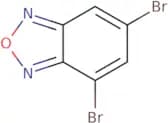
4,6-Dibromo-2,1,3-benzoxadiazole
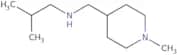
CAS:<p>4,6-Dibromo-2,1,3-benzoxadiazole is an azide compound that is used as a precursor for the synthesis of other compounds. The structure of this molecule consists of two benzene rings with a single oxygen atom in between. It contains four bromine atoms and one fluorine atom. This molecule has an isomeric relationship to 2,1,3-benzoxyazetidine and 2,1,3-benzothiadiazetidine because it has two identical groups on each ring. 4,6-Dibromo-2,1,3-benzoxadiazole can be synthesized by reacting phenols with sodium azide or fluorine atoms in the presence of a catalytic amount of copper(II) chloride.</p>Formula:C6H2Br2N2OPurity:Min. 95%Molecular weight:277.9 g/mol2-Methyl-N-((1-methylpiperidin-4-yl)methyl)propan-1-amine
CAS:<p>Versatile small molecule scaffold</p>Formula:C11H24N2Purity:Min. 95%Molecular weight:184.32 g/mol4-{[(3-Methylphenyl)methyl]carbamoyl}benzoic acid
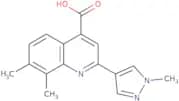
CAS:<p>Versatile small molecule scaffold</p>Formula:C16H15NO3Purity:Min. 95%Molecular weight:269.29 g/mol7,8-Dimethyl-2-(1-methyl-1H-pyrazol-4-yl)quinoline-4-carboxylic acid
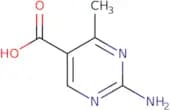
CAS:<p>Versatile small molecule scaffold</p>Formula:C16H15N3O2Purity:Min. 95%Molecular weight:281.31 g/mol2-Amino-4-methyl-pyrimidine-5-carboxylic acid
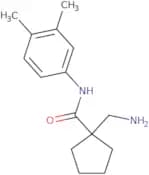
CAS:<p>2-Amino-4-methyl-pyrimidine-5-carboxylic acid is a spleen cell immunogen that induces antibody production in animals. 2-Amino-4-methyl-pyrimidine-5-carboxylic acid is an immunogen that belongs to the class of pyrimidine carboxylic acids. It has been optimised for use as an animal vaccine by inoculating it into tissues and monitoring antibody production with an enzyme linked immunosorbent assay. This compound has also been used to monitor and screen for antibodies in liquid chromatography.</p>Formula:C6H7N3O2Purity:Min. 95%Molecular weight:153.14 g/mol1-(Aminomethyl)-N-(3,4-dimethylphenyl)cyclopentane-1-carboxamide
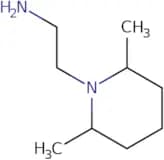
CAS:<p>Versatile small molecule scaffold</p>Formula:C15H22N2OPurity:Min. 95%Molecular weight:246.35 g/mol2-(2,6-Dimethylpiperidin-1-yl)ethan-1-amine
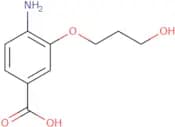
CAS:<p>Versatile small molecule scaffold</p>Formula:C9H20N2Purity:Min. 95%Molecular weight:156.27 g/mol4-Amino-3-(3-hydroxypropoxy)benzoic acid
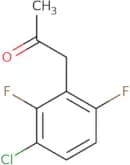
CAS:<p>Versatile small molecule scaffold</p>Formula:C10H13NO4Purity:Min. 95%Molecular weight:211.21 g/mol1-(3-Chloro-2,6-difluorophenyl)propan-2-one
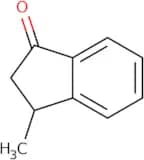
CAS:<p>Versatile small molecule scaffold</p>Formula:C9H7ClF2OPurity:Min. 95%Molecular weight:204.6 g/mol(3R)-3-Methyl-2,3-dihydro-1H-inden-1-one
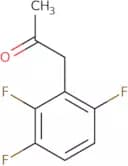
CAS:<p>Versatile small molecule scaffold</p>Formula:C10H10OPurity:Min. 95%Molecular weight:146.19 g/mol1-(2,3,6-Trifluorophenyl)propan-2-one
CAS:Versatile small molecule scaffoldFormula:C9H7F3OPurity:Min. 95%Molecular weight:188.15 g/mol1-(4-Chloro-2-fluorophenyl)propan-2-one
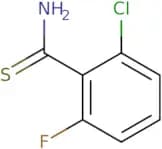
CAS:Versatile small molecule scaffoldFormula:C9H8ClFOPurity:Min. 95%Molecular weight:186.61 g/mol2-Chloro-6-fluorobenzene-1-carbothioamide
CAS:<p>2-Chloro-6-fluorobenzene-1-carbothioamide is a chemical that is used in the production of insecticides. Research has been done to investigate the insecticidal properties of 2-chloro-6-fluorobenzene-1-carbothioamide and how it can be synthesized in an organic process.</p>Formula:C7H5ClFNSPurity:Min. 95%Molecular weight:189.64 g/mol1-(2,4,5-Trifluorophenyl)propan-2-one
CAS:<p>Versatile small molecule scaffold</p>Formula:C9H7F3OPurity:Min. 95%Molecular weight:188.15 g/mol1-Cyclopropylpiperazine
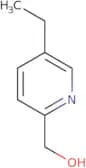
CAS:<p>1-Cyclopropylpiperazine is a nitrogen-containing organic compound that is part of a class of compounds called cyclopropylamines. It has been shown to have neuroprotective effects in animal models of Parkinson's disease and Alzheimer's disease. It also has anti-inflammatory effects and shows promise as an anticancer agent. 1-Cyclopropylpiperazine interacts with phosphatidylinositol-3 kinase (PI3K) and inhibits the formation of fatty acid molecules, which are involved in degenerative diseases and inflammatory diseases, such as cancer.</p>Formula:C7H14N2Purity:Min. 95%Molecular weight:126.2 g/mol(5-Ethylpyridin-2-yl)methanol
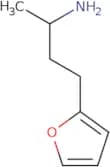
CAS:<p>Versatile small molecule scaffold</p>Formula:C8H11NOPurity:Min. 95%Molecular weight:137.18 g/mol3-Furan-2-yl-1-methyl-propylamine
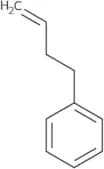
CAS:<p>Versatile small molecule scaffold</p>Formula:C8H13NOPurity:Min. 95%Molecular weight:139.2 g/mol4-Phenyl-1-butene
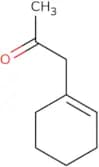
CAS:<p>4-Phenyl-1-butene is an aryl halide that undergoes acylation reactions with the addition of hydrochloric acid. The reaction is efficient and produces high yields. 4-Phenyl-1-butene can be used in the synthesis of fosinopril sodium, which is a drug used to treat high blood pressure. The reaction requires hydrogen chloride gas, which reacts with the butene to produce chloride ions as well as sequences containing 4 phenyl groups. 4-Phenyl-1-butene is also used for asymmetric synthesis and copolymerization reactions. Copolymerization reactions are done at low temperatures to avoid polymerization and crosslinking of monomers.</p>Formula:C10H12Purity:Min. 95%Molecular weight:132.21 g/mol1-(Cyclohex-1-en-1-yl)propan-2-one
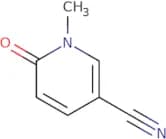
CAS:<p>Versatile small molecule scaffold</p>Formula:C9H14OPurity:Min. 95%Molecular weight:138.21 g/mol1-Methyl-6-oxo-1,6-dihydropyridine-3-carbonitrile
CAS:<p>1-Methyl-6-oxo-1,6-dihydropyridine-3-carbonitrile is an oxidation product of osmium and phosphorus oxychloride. It has been shown to have a hypoglycemic effect in mice. The mechanism of this effect is unknown, but it may be due to the antioxidant potential of 1-methyl-6-oxo-1,6-dihydropyridine 3 carbonitrile. There are no studies that indicate whether this compound has any effects on humans. This chemical is found in the leaves of a plant called Acalypha wilkesiana and also in the extract from Ricinus communis seedlings and Acalypha wilkesiana seedlings.</p>Formula:C7H6N2OPurity:Min. 95%Molecular weight:134.14 g/mol

![4-{[(3-Methylphenyl)methyl]carbamoyl}benzoic acid](/_next/image/?url=https%3A%2Fstatic.cymitquimica.com%2Fproducts%2F3D%2Fthumb-webp%2FFCC56743.webp&w=3840&q=75)