


Building Blocks
This section contains fundamental products for the synthesis of organic and biological compounds. Building blocks are the essential starting materials used to construct complex molecules through various chemical reactions. They play a critical role in drug discovery, material science, and chemical research. At CymitQuimica, we offer a diverse range of high-quality building blocks to support your innovative research and industrial projects, ensuring you have the essential components for successful synthesis.
Subcategories of "Building Blocks"
- Boronic Acids & Boronic Acid Derivatives(5,756 products)
- Chiral Building Blocks(1,242 products)
- Hydrocarbon Building Blocks(6,095 products)
- Organic Building Blocks(61,051 products)
Found 199813 products of "Building Blocks"
Sort by
Purity (%)
0
100
|
0
|
50
|
90
|
95
|
100
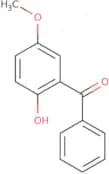
2-Benzoyl-4-methoxyphenol
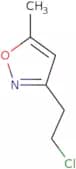
CAS:<p>2-Benzoyl-4-methoxyphenol is a surfactant that is sustainable and biodegradable. It is used in the production of micelles to form detergents, which are important for the environment. The binding constants of this chemical with 2-hydroxybenzophenone and benzyl have been determined at different temperatures. 2-Benzoyl-4-methoxyphenol has been shown to be an effective transient probe for mechanistic investigations in organic chemistry. This compound can be prepared by reacting benzaldehyde with methoxyacetophenone in acetonitrile. Irradiation can break down the benzene ring, producing phenoxy (2,6-dioxo)cyclohexane or 2-(2,6-dioxo)cyclohexanone. 2-Benzoyl-4-methoxyphenol also has hydrophobic properties and can be used as a surf</p>Formula:C14H12O3Purity:Min. 95%Molecular weight:228.24 g/mol3-(2-Chloroethyl)-5-methyl-1,2-oxazole
CAS:<p>Versatile small molecule scaffold</p>Formula:C6H8ClNOPurity:Min. 95%Molecular weight:145.59 g/mol2-[(4-Methylphenyl)sulfanyl]acetohydrazide
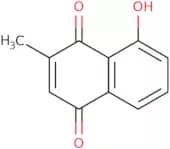
CAS:<p>Versatile small molecule scaffold</p>Formula:C9H12N2OSPurity:Min. 95%Molecular weight:196.27 g/mol8-Hydroxy-2-methyl-1,4-dihydronaphthalene-1,4-dione
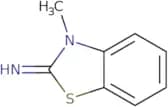
CAS:<p>8-Hydroxy-2-methyl-1,4-dihydronaphthalene-1,4-dione is a natural product that has been found to have anticancer activity. It induces apoptosis in human cancer cells and inhibits the growth of bacteria by binding to the 50S ribosomal subunit. 8HMN has also been shown to inhibit the proliferation of cervical cancer cells in vitro. The active form of this compound is acetate extract and it has been shown to have strong anti-inflammatory properties by inhibiting prostaglandin synthesis in neutrophils. 8HMN binds to mitochondrial membrane protein complexes, leading to mitochondrial fission and inhibition of ATP production.</p>Formula:C11H8O3Purity:Min. 95%Molecular weight:188.18 g/mol3-Methyl-2,3-dihydro-1,3-benzothiazol-2-imine
CAS:<p>3-Methyl-2,3-dihydro-1,3-benzothiazol-2-imine is an imine nitrogen that is a ligand for transition metals. It is used in the synthesis of 1,3-benzothiazoles and has been shown to have anti-malarial activity. 3-Methyl-2,3-dihydro-1,3-benzothiazol-2-imine interacts with aldehydes to form ring opening products. This compound also has been shown to be a ligand for palladium and platinum metals. The compound has been functionalized with thiol groups and can be used as a reagent in organic synthesis.</p>Formula:C8H8N2SPurity:Min. 95%Molecular weight:164.23 g/mol7-Methylbenzo[d]thiazol-2-amine
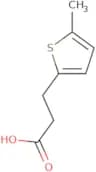
CAS:<p>7-Methylbenzo[d]thiazol-2-amine is an antimicrobial agent that has been shown to have both antibacterial and antifungal properties. It has a broad spectrum of activity against Gram-positive and Gram-negative bacteria, as well as fungi. 7-Methylbenzo[d]thiazol-2-amine also inhibits the growth of yeast cells by interfering with their ability to produce proteins necessary for cell division. This drug can be synthesized using a number of different techniques, including the reaction between phenyl mercaptan and dimethyl acetylenedicarboxylate in the presence of aluminium chloride or phosphorus pentachloride. The yield is typically low (5%).</p>Formula:C8H8N2SPurity:Min. 95%Molecular weight:164.23 g/mol3-(5-Methyl-thiophen-2-yl)-propionic acid
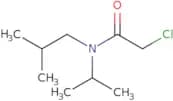
CAS:<p>Versatile small molecule scaffold</p>Formula:C8H10O2SPurity:Min. 95%Molecular weight:170.23 g/mol2-Chloro-N-(2-methylpropyl)-N-(propan-2-yl)acetamide
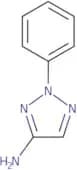
CAS:<p>Versatile small molecule scaffold</p>Formula:C9H18ClNOPurity:Min. 95%Molecular weight:191.7 g/mol2-Phenyl-2H-1,2,3-triazol-4-amine
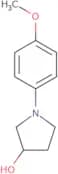
CAS:<p>Versatile small molecule scaffold</p>Formula:C8H8N4Purity:Min. 95%Molecular weight:160.18 g/mol1-(4-Methoxyphenyl)pyrrolidin-3-ol
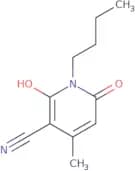
CAS:<p>Versatile small molecule scaffold</p>Formula:C11H15NO2Purity:Min. 95%Molecular weight:193.24 g/mol1-Butyl-6-hydroxy-4-methyl-2-oxo-1,2-dihydropyridine-3-carbonitrile
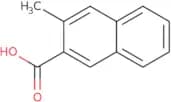
CAS:Versatile small molecule scaffoldFormula:C11H14N2O2Purity:Min. 95%Molecular weight:206.24 g/mol3-Methylnaphthalene-2-carboxylic acid
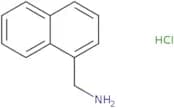
CAS:<p>3-Methylnaphthalene-2-carboxylic acid is a dicarboxylic acid that can be found in the environment. It has been isolated from Australian soil samples and is produced by some bacterial strains. 3-Methylnaphthalene-2-carboxylic acid has antimicrobial activity, which may be due to its ability to inhibit microbial growth by inhibiting protein synthesis.</p>Formula:C12H10O2Purity:Min. 95%Molecular weight:186.21 g/mol1-(Aminomethyl)naphthalene Hydrochloride
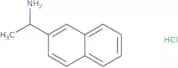
CAS:<p>1-(Aminomethyl)naphthalene hydrochloride (1-AMN) is an organocatalytic oxidant that is used to oxidize quaternary ammonium salts and quinazolinones. 1-AMN is a white crystalline solid that can be stored at room temperature. It has been shown to have the ability to react with anisidine, amines, and alcohols to produce aniline, nitrosobenzene, and hydroxylamine, respectively. This product also has a functional group which is capable of reacting with chlorides or diazonium ions. The use of this product in biochemistry has been shown in the immobilization of biomolecules such as DNA and RNA.</p>Formula:C11H12ClNPurity:Min. 95%Molecular weight:193.67 g/mol1-(Naphthalen-2-yl)ethanamine hydrochloride
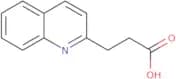
CAS:<p>Versatile small molecule scaffold</p>Formula:C12H14ClNPurity:Min. 95%Molecular weight:207.7 g/mol3-(Quinolin-2-yl)propanoic acid
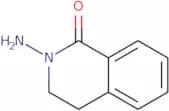
CAS:<p>3-(Quinolin-2-yl)propanoic acid is a quinoline derivative that is used to treat inflammatory diseases. It is thought to have an anti-inflammatory effect by inhibiting the production of the fatty acid arachidonic acid, which is then converted into prostaglandins and leukotrienes. 3-(Quinolin-2-yl)propanoic acid inhibits cellular signaling by binding to specific protein receptors. This drug binds to the fatty acids in cell membranes, which leads to the inhibition of cellular growth factor signal transduction and signal detection. Research has shown that 3-(quinolin-2-yl)propanoic acid has a toxic effect on humans, as well as other animals, including rats and mice. The animal studies showed that this drug inhibited the growth of cancer cells in human colon tumors.</p>Formula:C12H11NO2Purity:Min. 95%Molecular weight:201.22 g/mol2-Amino-1,2,3,4-tetrahydroisoquinolin-1-one
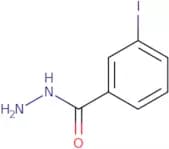
CAS:<p>Versatile small molecule scaffold</p>Formula:C9H10N2OPurity:Min. 95%Molecular weight:162.19 g/mol3-Iodobenzhydrazide
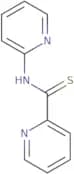
CAS:<p>Versatile small molecule scaffold</p>Formula:C7H7IN2OPurity:Min. 95%Molecular weight:262.05 g/molNSC 185058
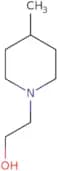
CAS:<p>NSC 185058 is a potential cancer therapy that inhibits protein synthesis in the cell. It prevents cells from growing and dividing by inhibiting their ability to synthesize proteins. NSC 185058 also induces apoptotic cell death, which is programmed cell death that occurs as a result of genetic or environmental stress. When cells undergo apoptosis, they are able to destroy themselves without releasing harmful substances into the surrounding area. NSC 185058 has been shown to induce autophagy and autophagy-related proteins in animal models. Autophagy is a process by which cells break down dysfunctional components to recycle nutrients and energy for future use. NSC 185058 has also been shown to inhibit tumor growth in mice with malignant brain tumors when used in combination with other therapies such as radiation and chemotherapy.</p>Formula:C11H9N3SPurity:Min. 95%Molecular weight:215.27 g/mol2-(4-Methylpiperidin-1-yl)ethan-1-ol
CAS:<p>Versatile small molecule scaffold</p>Formula:C8H17NOPurity:Min. 95%Molecular weight:143.23 g/mol8-Thia-1,3-diazaspiro[4.5]decane-2,4-dione
CAS:<p>Versatile small molecule scaffold</p>Formula:C7H10N2O2SPurity:Min. 95%Molecular weight:186.23 g/mol

![2-[(4-Methylphenyl)sulfanyl]acetohydrazide](/_next/image/?url=https%3A%2Fstatic.cymitquimica.com%2Fproducts%2F3D%2Fthumb-webp%2FPAA77665.webp&w=3840&q=75)
![7-Methylbenzo[d]thiazol-2-amine](/_next/image/?url=https%3A%2Fstatic.cymitquimica.com%2Fproducts%2F3D%2Fthumb-webp%2FPAA77918.webp&w=3840&q=75)
![8-Thia-1,3-diazaspiro[4.5]decane-2,4-dione](/_next/image/?url=https%3A%2Fstatic.cymitquimica.com%2Fproducts%2F3D%2Fthumb-webp%2FPBA12415.webp&w=3840&q=75)