Building Blocks
This section contains fundamental products for the synthesis of organic and biological compounds. Building blocks are the essential starting materials used to construct complex molecules through various chemical reactions. They play a critical role in drug discovery, material science, and chemical research. At CymitQuimica, we offer a diverse range of high-quality building blocks to support your innovative research and industrial projects, ensuring you have the essential components for successful synthesis.
Subcategories of "Building Blocks"
- Boronic Acids & Boronic Acid Derivatives(5,756 products)
- Chiral Building Blocks(1,242 products)
- Hydrocarbon Building Blocks(6,095 products)
- Organic Building Blocks(61,038 products)
Found 196817 products of "Building Blocks"
Sort by
Purity (%)
0
100
|
0
|
50
|
90
|
95
|
100
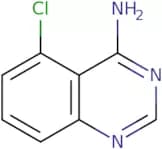
5-Chloroquinazolin-4-amine
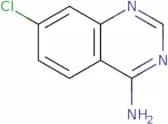
CAS:<p>Versatile small molecule scaffold</p>Formula:C8H6ClN3Purity:Min. 95%Molecular weight:179.61 g/mol7-Chloroquinazolin-4-amine
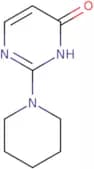
CAS:<p>Versatile small molecule scaffold</p>Formula:C8H6ClN3Purity:Min. 95%Molecular weight:179.6 g/mol2-(Piperidin-1-yl)pyrimidin-4-ol
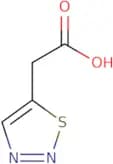
CAS:<p>Versatile small molecule scaffold</p>Formula:C9H13N3OPurity:Min. 95%Molecular weight:179.22 g/mol2-(1,2,3-Thiadiazol-5-yl)acetic acid
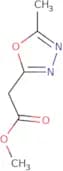
CAS:<p>Versatile small molecule scaffold</p>Formula:C4H4N2O2SPurity:Min. 95%Molecular weight:144.15 g/molMethyl 2-(5-methyl-1,3,4-oxadiazol-2-yl)acetate
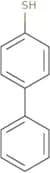
CAS:<p>Versatile small molecule scaffold</p>Formula:C6H8N2O3Purity:Min. 95%Molecular weight:156.14 g/molBiphenyl-4-thiol
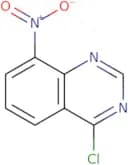
CAS:<p>Biphenyl-4-thiol is a biphenyl derivative that is used in the treatment of fatty acid oxidation disorders. It is a lipophilic molecule that accumulates in red blood cells and can be detected by surface-enhanced Raman spectroscopy. Biphenyl-4-thiol has been shown to interact with the lipid bilayer, which may be due to its ability to form monolayers on the surface of red blood cells. The dipole moment of biphenyl-4-thiol causes an accumulation of electrons on one side of the molecule, which leads to electrochemical impedance changes upon exposure to electromagnetic radiation. X-ray absorption studies have shown that biphenyl-4-thiol has good chemical stability, which may be due to its aromaticity.</p>Formula:C12H10SPurity:Min. 95%Molecular weight:186.27 g/mol4-Chloro-8-nitroquinazoline
CAS:<p>4-Chloro-8-nitroquinazoline is a potent antiproliferative agent that binds to the FGFR3 receptor and inhibits the proliferation of bladder cancer cells. It also has potent activity against bladder cancer cells in culture and inhibits cell growth by binding to submicromolar concentrations of this protein. 4-Chloro-8-nitroquinazoline may be useful for the treatment of bladder cancer, which is a disease characterized by uncontrolled cell division. This drug can inhibit proliferation of bladder cancer cells by interfering with their ability to signal through FGFR3 receptors, thereby inhibiting the activation of downstream signaling pathways that regulate cell cycle progression.</p>Formula:C8H4ClN3O2Purity:Min. 95%Molecular weight:209.59 g/mol3-Ethynyl-1-azabicyclo[2.2.2]octan-3-ol
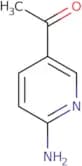
CAS:<p>3-Ethynyl-1-azabicyclo[2.2.2]octan-3-ol is a potent inhibitor of farnesyl diphosphate synthase, an enzyme involved in the biosynthesis of cholesterol. It also has potent inhibitory activity against muscarinic acetylcholine receptors and antimuscarinic effects on the bladder. 3-Ethynyl-1-azabicyclo[2.2.2]octan-3-ol is rapidly absorbed from the gastrointestinal tract and catalyses the nonenzymatic conversion of low density lipoproteins (LDL) to oxidized LDL, which is then taken up by macrophages in the arterial wall where it promotes foam cell formation and atherosclerosis. This drug also inhibits cerebral function and has been shown to have antitumor properties in animal studies.</p>Formula:C9H13NOPurity:Min. 95%Molecular weight:151.21 g/mol2-Amino-5-acetylpyridine
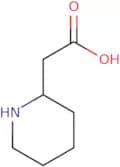
CAS:<p>2-Amino-5-acetylpyridine is a potent adenosine kinase inhibitor. It binds to the ATP site of the enzyme and inhibits the production of ATP, which is necessary for the normal functioning of cells. 2-Amino-5-acetylpyridine has been shown to be orally bioavailable in rat studies. In computational studies, it was found that analogues with a longer side chain may provide greater potency and oral bioavailability. Computational studies also revealed that 2-amino-5-acetylpyridine may have selectivity for adenosine over other substrates.</p>Formula:C7H8N2OPurity:Min. 95%Molecular weight:136.15 g/mol2-(Piperidin-2-yl)acetic acid
CAS:<p>2-(Piperidin-2-yl)acetic acid (2-PA) is a coordination complex that binds to the l-tartaric acid ligand, which is an amide. This compound may be used to treat urinary infections and fatty alcohols. 2-PA has shown anticancer activity in vitro and in vivo against a wide range of cancer cells. 2-PA also inhibits the production of isoflavonoid, which is a plant hormone that has been shown to possess anticancer properties. It also has been shown to have anti-inflammatory effects and can inhibit lipase activity. This compound can be synthesized using organic solvents at temperatures between -20°C and 180°C.</p>Formula:C7H13NO2Purity:Min. 95%Molecular weight:143.18 g/mol1-(Adamantan-1-yl)propan-2-one
CAS:<p>1-(Adamantan-1-yl)propan-2-one is an enolate reagent that is used in the synthesis of organic compounds. It reacts with chloride to form a chloroformate and can be used for the preparation of ketones, nitro compounds, and nitroalkanes. The 1-(Adamantan-1-yl)propan-2-one is also an enolate anion that has been shown to react with ethylmercury, nitroethane, and piperidine.</p>Formula:C13H20OPurity:Min. 95%Molecular weight:192.3 g/mol1,4-Dioxaspiro[4.4]nonan-2-ylmethanol
CAS:<p>Versatile small molecule scaffold</p>Formula:C8H14O3Purity:Min. 95%Molecular weight:158.19 g/mol4-Amino-N-(2-chlorophenyl)benzene-1-sulfonamide
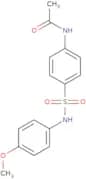
CAS:<p>Versatile small molecule scaffold</p>Formula:C12H11ClN2O2SPurity:Min. 95%Molecular weight:282.75 g/molN-(4-(N-(4-Methoxyphenyl)sulfamoyl)phenyl)acetamide
CAS:<p>Versatile small molecule scaffold</p>Formula:C15H16N2O4SPurity:Min. 95%Molecular weight:320.4 g/mol4-(Diphenylmethyl)piperidine
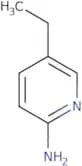
CAS:Controlled Product<p>4-(Diphenylmethyl)piperidine is a molecule that has been used to study the effects of dimethylsulfate on pancreatic cells. It can also be used to induce diabetes in humans and animals. 4-(Diphenylmethyl)piperidine binds to chloride ions in the cytoplasm and isomers are formed, which may have an effect on cell morphology and cell toxicity. This drug does not have any pharmacologic activity in humans or animals, but it has been shown to be diabetogenic in animal models.</p>Formula:C18H21NPurity:Min. 95%Molecular weight:251.4 g/mol2-Amino-5-ethyl-pyridine
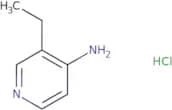
CAS:<p>Versatile small molecule scaffold</p>Formula:C7H10N2Purity:Min. 95%Molecular weight:122.17 g/mol3-Ethyl-1,4-dihydropyridin-4-imine hydrochloride
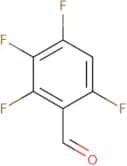
CAS:<p>Versatile small molecule scaffold</p>Formula:C7H11ClN2Purity:Min. 95%Molecular weight:158.63 g/mol2,3,4,6-Tetrafluorobenzaldehyde
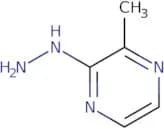
CAS:<p>Versatile small molecule scaffold</p>Formula:C7H2F4OPurity:Min. 95%Molecular weight:178.08 g/mol2-Hydrazinyl-3-methylpyrazine
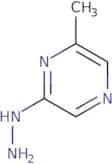
CAS:<p>Versatile small molecule scaffold</p>Formula:C5H8N4Purity:Min. 95%Molecular weight:124.14 g/mol2-Hydrazinyl-6-methylpyrazine
CAS:<p>Versatile small molecule scaffold</p>Formula:C5H8N4Purity:Min. 95%Molecular weight:124.14 g/mol

![3-Ethynyl-1-azabicyclo[2.2.2]octan-3-ol](/_next/image/?url=https%3A%2Fstatic.cymitquimica.com%2Fproducts%2F3D%2Fthumb-webp%2FUAA81707.webp&w=3840&q=75)

![1,4-Dioxaspiro[4.4]nonan-2-ylmethanol](/_next/image/?url=https%3A%2Fstatic.cymitquimica.com%2Fproducts%2F3D%2Fthumb-webp%2FUAA83764.webp&w=3840&q=75)