Building Blocks
This section contains fundamental products for the synthesis of organic and biological compounds. Building blocks are the essential starting materials used to construct complex molecules through various chemical reactions. They play a critical role in drug discovery, material science, and chemical research. At CymitQuimica, we offer a diverse range of high-quality building blocks to support your innovative research and industrial projects, ensuring you have the essential components for successful synthesis.
Subcategories of "Building Blocks"
- Boronic Acids & Boronic Acid Derivatives(5,756 products)
- Chiral Building Blocks(1,242 products)
- Hydrocarbon Building Blocks(6,095 products)
- Organic Building Blocks(61,051 products)
Found 199813 products of "Building Blocks"
Sort by
Purity (%)
0
100
|
0
|
50
|
90
|
95
|
100
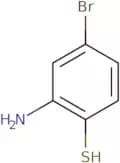
2-amino-4-bromobenzene-1-thiol
CAS:<p>2-Amino-4-bromobenzene-1-thiol is a semiconducting polymer that can be used in devices such as solar cells, transistors, and sensors. It has electron deficient properties and is therefore able to form the backbone of a polymer. 2-Amino-4-bromobenzene-1-thiol is an electron donor that can be used for polymerization reactions with electron acceptors such as indigoid compounds. This compound has been shown to have optical absorption bands in the near infrared region, which are suitable for solar energy conversion applications.</p>Formula:C6H6BrNSPurity:Min. 95%Molecular weight:204.1 g/mol4-(Methoxymethyl)benzaldehyde
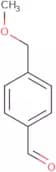
CAS:<p>4-(Methoxymethyl)benzaldehyde is an organic chemical compound that has the molecular formula CHO. It can be obtained by catalytic cleavage of 4-hydroxybenzaldehyde with hydrogen chloride in the presence of a nickel catalyst, followed by chlorination and reduction. This chemical is used in pharmaceuticals as a catalyst for reductive cleavage and cyclization reactions. The acidity of 4-(methoxymethyl)benzaldehyde is due to its nitrogen substituents, which are capable of deprotonating the carbon atom adjacent to the carbonyl group. This allows for selective synthesis at the benzylic position.<br>4-(Methoxymethyl)benzaldehyde is also able to catalyze lithiation reactions because it contains a reactive chlorine atom.</p>Formula:C9H10O2Purity:Min. 95%Molecular weight:150.17 g/mol3-Chloro-N-(2-phenoxyphenyl)propanamide
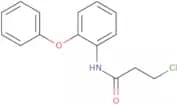
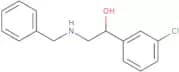
CAS:<p>Versatile small molecule scaffold</p>Formula:C15H14ClNO2Purity:Min. 95%Molecular weight:275.73 g/mol2-(Benzylamino)-1-(3-chlorophenyl)ethan-1-ol
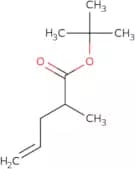
CAS:<p>Versatile small molecule scaffold</p>Formula:C15H16ClNOPurity:Min. 95%Molecular weight:261.74 g/moltert-Butyl 2-methylpent-4-enoate
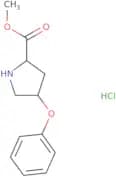
CAS:Versatile small molecule scaffoldFormula:C10H18O2Purity:Min. 95%Molecular weight:170.25 g/molMethyl (2S,4S)-4-phenoxypyrrolidine-2-carboxylate hydrochloride
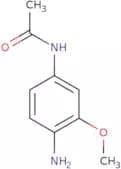
CAS:<p>Versatile small molecule scaffold</p>Formula:C12H16ClNO3Purity:Min. 95%Molecular weight:257.71 g/molN-(4-Amino-3-methoxyphenyl)acetamide
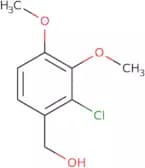
CAS:<p>Versatile small molecule scaffold</p>Formula:C9H12N2O2Purity:Min. 95%Molecular weight:180.2 g/mol(2-chloro-3,4-dimethoxyphenyl)methanol
CAS:<p>Versatile small molecule scaffold</p>Formula:C9H11ClO3Purity:Min. 95%Molecular weight:202.64 g/molHNF4 Antagonist, BI6015
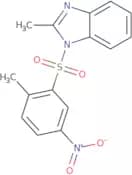
CAS:<p>BI6015 is a fatty acid that inhibits the transcriptional regulation of genes involved in tumorigenesis, cell survival, and drug resistance. It has been shown to inhibit the uptake of glucose and fatty acids by cells. BI6015 also blocks the binding of growth factor-β1 to its receptor, thereby inhibiting signal transduction pathways that regulate cell proliferation and differentiation. BI6015 has been shown to inhibit the activity of enzymes involved in lipid synthesis, which may contribute to its ability to prevent congenital heart disease. This drug has been tested in animal models with promising results but it is not yet known how it will affect human subjects.<br>BI6015 is rapidly absorbed after oral administration and excreted unchanged in urine. The pharmacokinetic properties of this compound have not yet been evaluated in humans.</p>Formula:C15H13N3O4SPurity:Min. 95%Molecular weight:331.35 g/mol2-Amino-N-(2,4-dimethoxyphenyl)benzamide
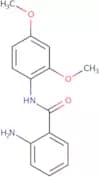
CAS:<p>Versatile small molecule scaffold</p>Formula:C15H16N2O3Purity:Min. 95%Molecular weight:272.3 g/mol4-[(1-Methylpiperidin-4-yl)oxy]benzoic acid hydrochloride
CAS:<p>Versatile small molecule scaffold</p>Formula:C13H18ClNO3Purity:Min. 95%Molecular weight:271.74 g/molrac-Tetrabenazine
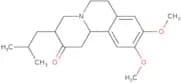
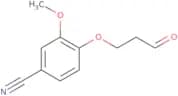
CAS:Controlled ProductTetrabenazine is a drug that is used to treat hyperkinesia, a neurological disorder. It decreases the release of dopamine in the brain by binding to and blocking the activity of vesicular monoamine transporter 2 (VMAT2) and inhibits the reuptake of dopamine into synaptic vesicles. Tetrabenazine has been shown to decrease locomotor activity in rats. The clinical relevance of tetrabenazine is not known, but it may have adverse effects on the liver, for example, if taken with anhydrous sodium. Tetrabenazine is not recommended for use in patients with hepatic impairment or with symptoms of liver disease.Formula:C19H27NO3Purity:Min. 95%Molecular weight:317.42 g/mol3-Methoxy-4-(3-oxopropoxy)benzonitrile
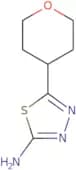
CAS:<p>Versatile small molecule scaffold</p>Formula:C11H11NO3Purity:Min. 95%Molecular weight:205.21 g/mol5-(Oxan-4-yl)-1,3,4-thiadiazol-2-amine
CAS:<p>Versatile small molecule scaffold</p>Formula:C7H11N3OSPurity:Min. 95%Molecular weight:185.25 g/molN1-(4-Methoxypyrimidin-2-yl)benzene-1,4-diamine
CAS:<p>Versatile small molecule scaffold</p>Formula:C11H12N4OPurity:Min. 95%Molecular weight:216.2 g/mol2,6-Dioxaspiro[4.5]decan-9-amine
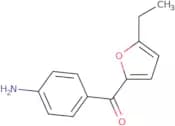
CAS:<p>Versatile small molecule scaffold</p>Formula:C8H15NO2Purity:Min. 95%Molecular weight:157.21 g/mol4-(5-Ethylfuran-2-carbonyl)aniline
CAS:<p>Versatile small molecule scaffold</p>Formula:C13H13NO2Purity:Min. 95%Molecular weight:215.25 g/mol[2-(2-Phenylethyl)pyrimidin-4-yl]methanol
CAS:<p>Versatile small molecule scaffold</p>Formula:C13H14N2OPurity:Min. 95%Molecular weight:214.26 g/mol4-({[(9H-Fluoren-9-yl)methoxy]carbonyl}amino)pentanoic acid
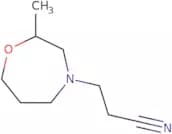
CAS:<p>Versatile small molecule scaffold</p>Formula:C20H21NO4Purity:Min. 95%Molecular weight:339.4 g/mol3-(2-Methyl-1,4-oxazepan-4-yl)propanenitrile
CAS:<p>Versatile small molecule scaffold</p>Formula:C9H16N2OPurity:Min. 95%Molecular weight:168.24 g/mol

![4-[(1-Methylpiperidin-4-yl)oxy]benzoic acid hydrochloride](/_next/image/?url=https%3A%2Fstatic.cymitquimica.com%2Fproducts%2F3D%2Fthumb-webp%2FTDB63261.webp&w=3840&q=75)
![2,6-Dioxaspiro[4.5]decan-9-amine](/_next/image/?url=https%3A%2Fstatic.cymitquimica.com%2Fproducts%2F3D%2Fthumb-webp%2FTDC02486.webp&w=3840&q=75)
![[2-(2-Phenylethyl)pyrimidin-4-yl]methanol](/_next/image/?url=https%3A%2Fstatic.cymitquimica.com%2Fproducts%2F3D%2Fthumb-webp%2FTDC03317.webp&w=3840&q=75)
![4-({[(9H-Fluoren-9-yl)methoxy]carbonyl}amino)pentanoic acid](/_next/image/?url=https%3A%2Fstatic.cymitquimica.com%2Fproducts%2F3D%2Fthumb-webp%2FTDC03580.webp&w=3840&q=75)