


Building Blocks
This section contains fundamental products for the synthesis of organic and biological compounds. Building blocks are the essential starting materials used to construct complex molecules through various chemical reactions. They play a critical role in drug discovery, material science, and chemical research. At CymitQuimica, we offer a diverse range of high-quality building blocks to support your innovative research and industrial projects, ensuring you have the essential components for successful synthesis.
Subcategories of "Building Blocks"
- Boronic Acids & Boronic Acid Derivatives(5,756 products)
- Chiral Building Blocks(1,242 products)
- Hydrocarbon Building Blocks(6,095 products)
- Organic Building Blocks(61,055 products)
Found 199650 products of "Building Blocks"
Sort by
Purity (%)
0
100
|
0
|
50
|
90
|
95
|
100
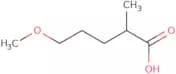
5-Methoxy-2-methylpentanoic acid
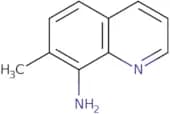
CAS:<p>Versatile small molecule scaffold</p>Formula:C7H14O3Purity:Min. 95%Molecular weight:146.18 g/mol7-Methylquinolin-8-amine
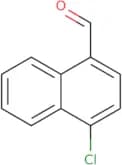
CAS:<p>7-Methylquinolin-8-amine is a chemical compound that belongs to the group of quinoline derivatives. It has been shown to inhibit collagen synthesis, which may be due to its alkalizing effect on the extracellular matrix. This agent also acts as an inhibitor of cardiac hypertrophy and modulates cardiac muscle cell proliferation. 7-Methylquinolin-8-amine also represses the transcription of protein genes and prevents the activation of cardiac tissues by chloride ions.</p>Formula:C10H10N2Purity:Min. 95%Molecular weight:158.2 g/mol4-Chloronaphthalene-1-carbaldehyde
CAS:<p>Versatile small molecule scaffold</p>Formula:C11H7ClOPurity:Min. 95%Molecular weight:190.62 g/mol1-Cyclohexylpropan-2-amine hydrochloride
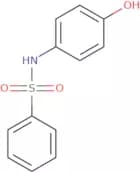
CAS:<p>Versatile small molecule scaffold</p>Formula:C9H20ClNPurity:Min. 95%Molecular weight:177.71 g/molN-(4-Hydroxyphenyl)benzenesulfonamide
CAS:<p>N-(4-Hydroxyphenyl)benzenesulfonamide (NPSA) is a potentiator of chlorine that increases the activity of monooxygenases, such as epoxide hydrolase. NPSA also has the ability to inhibit glutathione synthesis in the liver and kidneys. This inhibition leads to liver cell necrosis. It is believed that NPSA may act by inhibiting the synthesis of an intermediate in the biosynthesis of cholesterol, 3-methylcholanthrene. The chlorobenzenesulfonamide moiety reacts with glutathione to form a reactive chloride ion, which then reacts with other cellular components to cause damage.</p>Formula:C12H11NO3SPurity:Min. 95%Molecular weight:249.29 g/mol1,3-Diphenylpropane-1,3-diol
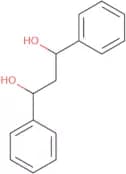
CAS:<p>1,3-Diphenylpropane-1,3-diol is a synthetic compound that can be used as an intermediate in organic synthesis. It is a chiral molecule with the (R) configuration at the phenyl ring. 1,3-Diphenylpropane-1,3-diol has been studied for its effects on acidemia and aciduria in humans. This chemical also inhibits phosphine toxicity by inhibiting alcohol dehydrogenase and acetaldehyde dehydrogenase. Clinical studies have shown that 1,3-diphenylpropane-1,3-diol can alleviate methylmalonic acidemia and congenital methylmalonic aciduria.</p>Formula:C15H16O2Purity:Min. 95%Molecular weight:228.29 g/mol(Cyclohexylmethyl)urea
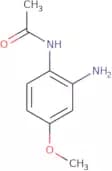
CAS:<p>Cyclohexylmethyl)urea is a protease inhibitor that inhibits the activity of the ns3 protease, which is involved in coagulation. Cyclohexylmethyl)urea binds to the active site of the ns3 protease and prevents it from cleaving proteins. It has been shown to be beneficial for patients who have had angioplasty or other procedures that involve opening a blocked artery. Cyclohexylmethyl)urea is also used for the treatment of restenosis after angioplasty and myocardial infarction. Cyclohexylmethyl)urea is administered intravenously and can be given as an injection or infusion. The drug must be given with a co-administered agent such as hydrochloric acid, which stabilizes cyclohexylmethyl)urea by converting it into its hydrochloride salt. This pharmaceutical preparation is not indicated for use in children under 6 years of age because of its potential to cause irreversible</p>Formula:C8H16N2OPurity:Min. 95%Molecular weight:156.23 g/molN-(2-Amino-4-methoxyphenyl)acetamide
CAS:N-(2-Amino-4-methoxyphenyl)acetamide (ACAM) is a chemical compound that is used as a precursor in the synthesis of various organic compounds. It is an amide derivative of acetanilide and can be synthesized by the reaction of potassium cyanide with 2-methoxybenzaldehyde, followed by cyclization with potassium hydroxide and methanol. ACAM has been shown to result in unambiguous identification of potassium cyanide in environmental samples.Formula:C9H12N2O2Purity:Min. 95%Molecular weight:180.21 g/molDiethyl 2-formylsuccinate
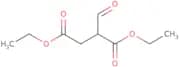
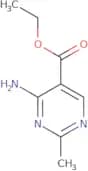
CAS:<p>Diethyl 2-formylsuccinate is an organic ester that is used in pharmaceutical preparations. It is a strong electrophile that reacts with nucleophiles, such as DNA, RNA, and proteins. Diethyl 2-formylsuccinate has been shown to induce basophilic leukemia in mice. This drug also induces the expression of crth2 which is a receptor for the inflammatory response. Diethyl 2-formylsuccinate also has anti-inflammatory properties and has been shown to inhibit bowel disease. Diethyl 2-formylsuccinate has also been shown to have some activity against congestive heart failure and cyhalothrin toxicity. The anti-inflammatory effects of diethyl 2-formylsuccinate may be due to its steric interactions with the nitro group or its ability to scavenge reactive oxygen species.</p>Formula:C9H14O5Purity:Min. 95%Molecular weight:202.21 g/molEthyl 4-Amino-2-methylpyrimidine-5-carboxylate
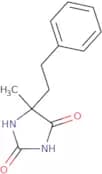
CAS:<p>Ethyl 4-amino-2-methylpyrimidine-5-carboxylate is a synthetic, nonsteroidal androgen receptor antagonist. It binds to the androgen receptor in prostate cancer cells, which inhibits the function of this receptor and prevents testosterone from activating it. This drug has been shown to have anticancer activity in human lung cancer and human prostate cancer, as well as other cancers. Ethyl 4-amino-2-methylpyrimidine-5-carboxylate is also able to cross the blood brain barrier and inhibit tumor growth in the brain. Human lung tumors are sensitive to this drug at concentrations of 10 μM or higher. The mechanism of action for this drug involves binding to the DNA in tumor cells, inhibiting transcription of genes that regulate cell growth and proliferation. Ethyl 4-amino-2-methylpyrimidine-5 carboxylate has been shown to be effective against tautomeric forms of benzene including</p>Formula:C8H11N3O2Purity:Min. 95%Molecular weight:181.2 g/mol5-Methyl-5-(2-phenylethyl)imidazolidine-2,4-dione
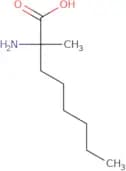
CAS:<p>Versatile small molecule scaffold</p>Formula:C12H14N2O2Purity:Min. 95%Molecular weight:218.25 g/mol2-Amino-2-methyloctanoic acid
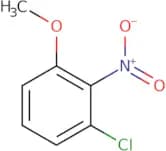
CAS:<p>2-Amino-2-methyloctanoic acid is an α-amino acid that has been shown to have a right-handed helical conformation. In the solid state, it appears as a dimer and in solution, it appears as a hexamer. The compound is chiral, which means that it can exist in two forms with different configurations of the groups around the central carbon atom. 2-Amino-2-methyloctanoic acid has been synthesized using techniques such as FTIR spectroscopy and NMR spectroscopy. It is also used to study stereoselectivity in peptides by probing their conformational preferences.</p>Formula:C9H19NO2Purity:Min. 95%Molecular weight:173.25 g/mol1-Chloro-3-methoxy-2-nitrobenzene
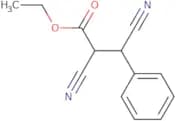
CAS:<p>1-Chloro-3-methoxy-2-nitrobenzene is an anomalous compound that reacts with water to produce hydrochloric acid and nitrous oxide. The reaction starts with cleavage of the C–C bond, followed by a rearrangement to form the methylenedioxy group. This leads to a nucleophilic attack on the aromatic ring, which causes it to become electrophilic and react with water. The temperature of this reaction is dependent on the concentration of hydrochloric acid.</p>Formula:C7H6ClNO3Purity:Min. 95%Molecular weight:187.58 g/molEthyl 2,3-dicyano-3-phenylpropanoate
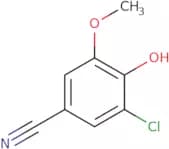
CAS:<p>Versatile small molecule scaffold</p>Formula:C13H12N2O2Purity:Min. 95%Molecular weight:228.25 g/mol3-Chloro-4-hydroxy-5-methoxybenzonitrile
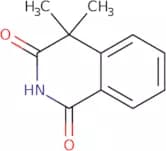
CAS:<p>Versatile small molecule scaffold</p>Formula:C8H6ClNO2Purity:Min. 95%Molecular weight:183.59 g/mol4,4-dimethyl-1,2,3,4-tetrahydroisoquinoline-1,3-dione
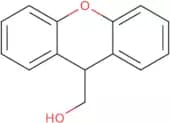
CAS:<p>4,4-dimethyl-1,2,3,4-tetrahydroisoquinoline-1,3-dione is an antiplatelet agent that inhibits the activity of the platelet cyclooxygenase enzyme and prevents the production of thromboxane A2. It has been shown to be a potent compound that has antiplatelet effects in vitro and in vivo. 4,4-dimethyl-1,2,3,4-tetrahydroisoquinoline-1,3-dione is used for the treatment of patients with atherosclerosis or coronary artery disease who have had a recent stroke or heart attack. This drug also shows promise as an anticonvulsant and analgesic due to its ability to reduce neuronal excitability.</p>Formula:C11H11NO2Purity:Min. 95%Molecular weight:189.21 g/mol9H-Xanthene-9-methanol
CAS:9H-Xanthene-9-methanol is an orthogonal protecting group for amines, carbanions, and other nucleophiles. It is a multistep process that yields a cationic intermediate, which can be used for the synthesis of amine-containing compounds. 9H-Xanthene-9-methanol is also used in the deprotection of photolabile groups such as sulfonyl chlorides and tosylates. The reactivity of this reagent is optimized when it is combined with acidic solvents, such as dichloromethane or chloroform.Formula:C14H12O2Purity:Min. 95%Molecular weight:212.25 g/mol1,4-diazabicyclo[3.2.1]octane 2hcl
CAS:<p>Versatile small molecule scaffold</p>Formula:C6H14Cl2N2Purity:Min. 95%Molecular weight:185.09 g/mol6-Methyl-1-(propan-2-yl)-1H,4H,5H-pyrazolo[3,4-d]pyrimidin-4-one
CAS:<p>Versatile small molecule scaffold</p>Formula:C9H12N4OPurity:Min. 95%Molecular weight:192.22 g/mol1-Azaspiro[4.5]decan-2-one
CAS:<p>Versatile small molecule scaffold</p>Formula:C9H15NOPurity:Min. 95%Molecular weight:153.22 g/mol


![1,4-diazabicyclo[3.2.1]octane 2hcl](/_next/image/?url=https%3A%2Fstatic.cymitquimica.com%2Fproducts%2F3D%2Fthumb-webp%2FFAA49261.webp&w=3840&q=75)
![6-Methyl-1-(propan-2-yl)-1H,4H,5H-pyrazolo[3,4-d]pyrimidin-4-one](/_next/image/?url=https%3A%2Fstatic.cymitquimica.com%2Fproducts%2F3D%2Fthumb-webp%2FFAA49483.webp&w=3840&q=75)
![1-Azaspiro[4.5]decan-2-one](/_next/image/?url=https%3A%2Fstatic.cymitquimica.com%2Fproducts%2F3D%2Fthumb-webp%2FFAA49874.webp&w=3840&q=75)