Building Blocks
This section contains fundamental products for the synthesis of organic and biological compounds. Building blocks are the essential starting materials used to construct complex molecules through various chemical reactions. They play a critical role in drug discovery, material science, and chemical research. At CymitQuimica, we offer a diverse range of high-quality building blocks to support your innovative research and industrial projects, ensuring you have the essential components for successful synthesis.
Subcategories of "Building Blocks"
- Boronic Acids & Boronic Acid Derivatives(5,756 products)
- Chiral Building Blocks(1,242 products)
- Hydrocarbon Building Blocks(6,095 products)
- Organic Building Blocks(61,055 products)
Found 199650 products of "Building Blocks"
Sort by
Purity (%)
0
100
|
0
|
50
|
90
|
95
|
100
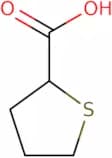
Tetrahydrothiophene-2-carboxylic acid
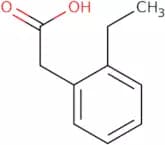
CAS:Tetrahydrothiophene-2-carboxylic acid is a metabolite of tetrahydrothiophene-2-acetic acid. It has been found to be a demethylation product of the protein genes in testicular tissues. Tetrahydrothiophene-2-carboxylic acid has been shown to inhibit the production of human telomerase and consequently, cell proliferation. This compound also inhibits the growth factor activity of bovine erythropoietin, which may be due to its chloride anion. The optical imaging technique has been used to study the effect of tetrahydrothiophene-2-carboxylic acid on cultured cells, revealing that this metabolite may induce apoptosis by increasing oxidative stress and inhibiting the synthesis of proteins essential for cell division.Formula:C5H8O2SPurity:Min. 95%Molecular weight:132.2 g/mol2-(2-Ethylphenyl)acetic acid
CAS:<p>2-(2-Ethylphenyl)acetic acid is a compound that is used to synthesize antihistamines. It has been shown to have potent antihistaminic activity in both the ileum and the stomach, which is stereoselective for the S(+) enantiomer. The 2-ethylphenyl group of this compound can be susceptible to alkylation by organometallic reagents such as piperidine, which can lead to side reactions with other groups on the molecule or other molecules in the reaction mixture. The 2-ethylphenyl group is also chiral, meaning that it has two different forms, or configurations.</p>Formula:C10H12O2Purity:Min. 95%Molecular weight:164.2 g/mol2-[2-(Propan-2-yl)phenyl]acetic acid
CAS:<p>Versatile small molecule scaffold</p>Formula:C11H14O2Purity:Min. 95%Molecular weight:178.23 g/mol3-Bromocinnolin-4-ol
CAS:<p>3-Bromocinnolin-4-ol is a nitrogenous and reactive chemical that can form dimers and triazines. It is a heteroaromatic with perfluoroalkyl substituents. 3-Bromocinnolin-4-ol has been shown to undergo photolysis, polymerization, and pyrolysis. The chemical has the ability to fluorinate other compounds by electron transfer. 3-Bromocinnolin-4-ol can also react with heteroaromatics to form polymers. This chemical is used as a reagent in organic synthesis due to its reactive nature.</p>Formula:C8H5BrN2OPurity:Min. 95%Molecular weight:225.05 g/mol2-Chloro-5-(4-chlorophenyl)-1,3,4-thiadiazole
CAS:<p>Versatile small molecule scaffold</p>Formula:C8H4Cl2N2SPurity:Min. 95%Molecular weight:231.1 g/mol2-Bromo-4-isopropylphenol
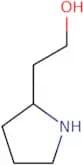
CAS:<p>Versatile small molecule scaffold</p>Formula:C9H11BrOPurity:Min. 95%Molecular weight:215.1 g/mol2-Pyrrolidin-2-yl-ethanol HCl
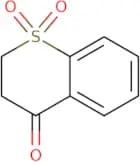
CAS:<p>2-Pyrrolidin-2-yl-ethanol HCl (2PE) is a chiral, homochiral molecule that can be used to synthesize enantiomers of other chiral molecules. It is a potent catalyst for the hydrogenation of carboxylic acids and can be used for the asymmetric synthesis of 1,4-dioxa-8-azaspiro[4.5]decane derivatives. 2PE is also an excellent inducible system for the production of trifluoromethyl carbanions which are useful in organic synthesis. The detection methods most commonly used to identify 2PE are headspace analysis and gas chromatography with mass spectrometry (GC/MS).</p>Formula:C6H14ClNOPurity:Min. 95%Molecular weight:151.63 g/mol3,4-dihydro-2H-1-benzothiopyran-1,1,4-trione
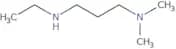
CAS:<p>Versatile small molecule scaffold</p>Formula:C9H8O3SPurity:Min. 95%Molecular weight:196.22 g/mol1-(Ethylamino)-3-(dimethylamino)propane
CAS:<p>Versatile small molecule scaffold</p>Formula:C7H18N2Purity:Min. 95%Molecular weight:130.23 g/mol{3-[(2-Aminoethyl)(methyl)amino]propyl}dimethylamine
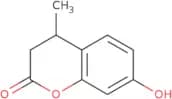
CAS:<p>Versatile small molecule scaffold</p>Formula:C8H21N3Purity:Min. 95%Molecular weight:159.27 g/mol7-Hydroxy-4-methyl-3,4-dihydro-2H-1-benzopyran-2-one
CAS:<p>Versatile small molecule scaffold</p>Formula:C10H10O3Purity:Min. 95%Molecular weight:178.18 g/molrac-(1R,3R,5S)-Bicyclo[3.3.1]nonane-3-carboxylic acid, exo
CAS:<p>Versatile small molecule scaffold</p>Formula:C10H16O2Purity:Min. 95%Molecular weight:168.23 g/molrac-(1R,3S,5S)-Bicyclo[3.3.1]nonane-3-carboxylic acid
CAS:<p>Racemic bicyclo[3.3.1]nonane-3-carboxylic acid (BCCA) is a synthetic carboxylic acid that contains a carbonyl group. It has been shown to be an excellent electrophilic substrate for hydrogenolysis and catalysis. The functional groups can be easily modified by reactions with nucleophiles, electrophiles, and oxidizing agents. Racemic BCCA is used as a precursor in the synthesis of (±)-trans-2,4-pentadienal and other carbonyl compounds.</p>Formula:C10H16O2Purity:Min. 95%Molecular weight:168.23 g/mol5-Bromo-benzo[b]thiophene 1,1-dioxide
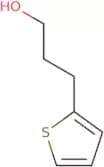
CAS:<p>Versatile small molecule scaffold</p>Formula:C8H5BrO2SPurity:Min. 95%Molecular weight:245.09 g/mol3-(thiophen-2-yl)propan-1-ol
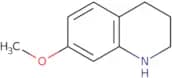
CAS:<p>3-(thiophen-2-yl)propan-1-ol is a chiral synthon. It is used as a building block in the synthesis of organic compounds, such as esters and amides. 3-(Thiophen-2-yl)propan-1-ol has been used to synthesize enantiomerically pure methylene compounds. This synthon can be prepared by the catalysis of vinyl acetate with thiophene, which forms a chain reaction that leads to the formation of 3-(thiophen-2-yl)propan-1-ol. The stereogenic center of this synthon is also chiral.</p>Formula:C7H10OSPurity:Min. 95%Molecular weight:142.22 g/mol7-Methoxy-1,2,3,4-tetrahydroquinoline
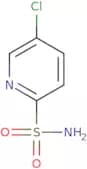
CAS:<p>Versatile small molecule scaffold</p>Formula:C10H13NOPurity:Min. 95%Molecular weight:163.22 g/mol5-Chloropyridine-2-sulfonamide
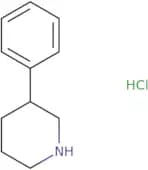
CAS:<p>Versatile small molecule scaffold</p>Formula:C5H5ClN2O2SPurity:Min. 95%Molecular weight:192.62 g/mol3-Phenylpiperidine hydrochloride
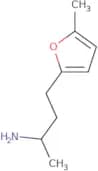
CAS:<p>3-Phenylpiperidine hydrochloride is a phenyl derivative that has been shown to have pharmacological effects. It binds to α2-adrenergic receptors and inhibits the binding of trifluoromethanesulfonic acid, which is a radioligand. 3-Phenylpiperidine hydrochloride also has affinity for benzene and hydroxyl groups, which are found in the structure of this drug. This compound has been shown to have conformational and conformational studies, as well as pharmacological tests. The methyl group on the 3-phenylpiperidine hydrochloride molecule is responsible for its pharmacological activity.</p>Formula:C11H16ClNPurity:Min. 95%Molecular weight:197.71 g/mol4-(5-Methylfuran-2-yl)butan-2-amine
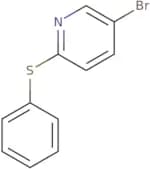
CAS:<p>Versatile small molecule scaffold</p>Formula:C9H15NOPurity:Min. 95%Molecular weight:153.22 g/mol5-Bromo-2-(phenylsulfanyl)pyridine
CAS:<p>Versatile small molecule scaffold</p>Formula:C11H8BrNSPurity:Min. 95%Molecular weight:266.16 g/mol

![2-[2-(Propan-2-yl)phenyl]acetic acid](/_next/image/?url=https%3A%2Fstatic.cymitquimica.com%2Fproducts%2F3D%2Fthumb-webp%2FUAA41896.webp&w=3840&q=75)


![{3-[(2-Aminoethyl)(methyl)amino]propyl}dimethylamine](/_next/image/?url=https%3A%2Fstatic.cymitquimica.com%2Fproducts%2F3D%2Fthumb-webp%2FUAA47531.webp&w=3840&q=75)
![rac-(1R,3R,5S)-Bicyclo[3.3.1]nonane-3-carboxylic acid, exo](/_next/image/?url=https%3A%2Fstatic.cymitquimica.com%2Fproducts%2F3D%2Fthumb-webp%2FUAA48916.webp&w=3840&q=75)
![rac-(1R,3S,5S)-Bicyclo[3.3.1]nonane-3-carboxylic acid](/_next/image/?url=https%3A%2Fstatic.cymitquimica.com%2Fproducts%2F3D%2Fthumb-webp%2FUAA48918.webp&w=3840&q=75)
![5-Bromo-benzo[b]thiophene 1,1-dioxide](/_next/image/?url=https%3A%2Fstatic.cymitquimica.com%2Fproducts%2F3D%2Fthumb-webp%2FUAA49287.webp&w=3840&q=75)