


Building Blocks
This section contains fundamental products for the synthesis of organic and biological compounds. Building blocks are the essential starting materials used to construct complex molecules through various chemical reactions. They play a critical role in drug discovery, material science, and chemical research. At CymitQuimica, we offer a diverse range of high-quality building blocks to support your innovative research and industrial projects, ensuring you have the essential components for successful synthesis.
Subcategories of "Building Blocks"
- Boronic Acids & Boronic Acid Derivatives(5,756 products)
- Chiral Building Blocks(1,242 products)
- Hydrocarbon Building Blocks(6,095 products)
- Organic Building Blocks(61,055 products)
Found 199650 products of "Building Blocks"
Sort by
Purity (%)
0
100
|
0
|
50
|
90
|
95
|
100
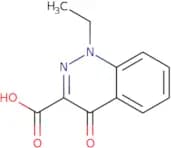
1-Ethyl-4-oxo-1,4-dihydrocinnoline-3-carboxylic acid
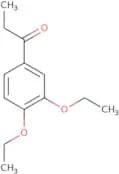
CAS:Versatile small molecule scaffoldFormula:C11H10N2O3Purity:Min. 95%Molecular weight:218.21 g/mol1-(3,4-Diethoxyphenyl)propan-1-one
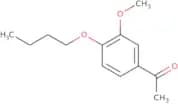
CAS:<p>Versatile small molecule scaffold</p>Formula:C13H18O3Purity:Min. 95%Molecular weight:222.28 g/mol1-(4-Butoxy-3-methoxyphenyl)ethan-1-one
CAS:<p>Versatile small molecule scaffold</p>Formula:C13H18O3Purity:Min. 95%Molecular weight:222.28 g/mol2,2,2-Trifluoro-1-[3-(trifluoromethyl)phenyl]ethan-1-ol
CAS:Versatile small molecule scaffoldFormula:C9H6F6OPurity:Min. 95%Molecular weight:244.13 g/mol2,2,2-Trifluoro-3'-(trifluoromethyl)acetophenone
CAS:<p>2,2,2-Trifluoro-3'-(trifluoromethyl)acetophenone is a layered compound that has been used to test the reaction of sulfur with industrial and research nitro compounds. It is also used in the synthesis of trifluoroacetic acid catalysts. The chemical structure of 2,2,2-Trifluoro-3'-(trifluoromethyl)acetophenone was determined by analyzing its sulfur content and comparing it to other similar compounds. This compound has been shown to be an efficient catalyst system for the ionizing chemistry of trifluoroacetic acid.</p>Formula:C9H4F6OPurity:Min. 95%Molecular weight:242.12 g/mol2-[4-(Trifluoromethyl)phenyl]ethane-1-sulfonyl chloride
CAS:<p>Versatile small molecule scaffold</p>Formula:C9H8ClF3O2SPurity:Min. 95%Molecular weight:272.67 g/mol2-(2,5-Dioxo-4,4-dipropylimidazolidin-1-yl)acetic acid
CAS:<p>Versatile small molecule scaffold</p>Formula:C11H18N2O4Purity:Min. 95%Molecular weight:242.27 g/mol1-Benzyl-3-phenylthiourea
CAS:<p>1-Benzyl-3-phenylthiourea is a molecule that has been shown to inhibit corrosion in the presence of blood pressure. It has also been shown to be a potent inhibitor of hexamethylenetetramine, an organic compound that is used as a corrosion inhibitor. 1-Benzyl-3-phenylthiourea can be used as a biomimetic corrosion inhibitor for blood pressure and sensitivity tests. It is also capable of membrane hyperpolarization, which can be used to prevent nerve cell death from lack of oxygen and glucose.</p>Formula:C14H14N2SPurity:Min. 95%Molecular weight:242.34 g/mol2-Chloro-3-phenyl-3,4-dihydroquinazolin-4-one
CAS:Controlled Product<p>Versatile small molecule scaffold</p>Formula:C14H9ClN2OPurity:Min. 95%Molecular weight:256.68 g/mol2,6-di(tert-butyl)-4-Nitrobenzenol
CAS:<p>2,6-di(tert-butyl)-4-Nitrobenzenol is a chemical that is used as a reference standard for the gravimetric determination of sodium. It has been shown to have low toxicity in animals and environmental monitoring studies, but can be hazardous if ingested by humans. The LD50 (lethal dose) for 2,6-di(tert-butyl)-4-nitrobenzenol in Sprague Dawley rats is greater than 10 g/kg body weight. This chemical also has the potential to react with pyrimidine nucleosides and organic chemicals such as methylene chloride or urea nitrogen.</p>Formula:C14H21NO3Purity:Min. 95%Molecular weight:251.32 g/mol2-(4-Ethyl-2,5-dioxo-4-phenylimidazolidin-1-yl)acetic acid
CAS:<p>Versatile small molecule scaffold</p>Formula:C13H14N2O4Purity:Min. 95%Molecular weight:262.26 g/mol4-[1-(4-Fluorophenyl)-1-(4-hydroxyphenyl)ethyl]phenol
CAS:Versatile small molecule scaffoldFormula:C20H17FO2Purity:Min. 95%Molecular weight:308.3 g/mol2-(2,2,3,3,3-Pentafluoropropoxy)ethan-1-ol
CAS:<p>Versatile small molecule scaffold</p>Formula:C5H7F5O2Purity:Min. 95%Molecular weight:194.1 g/mol2-Mercaptoacetamide
CAS:Versatile small molecule scaffoldFormula:C2H5NOSPurity:Min. 95%Molecular weight:91.13 g/mol3,4-Dichloro-1-butene
CAS:<p>3,4-Dichloro-1-butene (3,4-DCB) is an industrial chemical that is used in the production of a variety of chemicals and plastics. It has been shown to be toxic to the liver and kidneys following chronic exposure, which may be due to its ability to form reactive quaternary ammonium salts. 3,4-DCB reacts with copper salt to produce hydrogen chloride gas, which can then react with water vapor in the air to produce hydrochloric acid. Hydrochloric acid is highly corrosive and can cause severe burns on contact with skin. 3,4-DCB also has the ability to isomerize into 1,2-dichloroethane (1,2-DCA), a known human carcinogen.</p>Formula:C4H6Cl2Purity:Min. 95%Molecular weight:124.99 g/mol1,3-Difluoropropan-2-amine hydrochloride
CAS:Versatile small molecule scaffoldFormula:C3H8ClF2NPurity:Min. 95%Molecular weight:131.55 g/mol2-Cyano-4-methylpent-2-enoic acid
CAS:<p>Versatile small molecule scaffold</p>Formula:C7H9NO2Purity:Min. 95%Molecular weight:139.15 g/mol1,5-dimethyl 2-bromopentanedioate
CAS:<p>1,5-Dimethyl 2-bromopentanedioate is an organic compound that is a colorless solid. It is used as a synthetic intermediate for cyclen and other compounds. 1,5-Dimethyl 2-bromopentanedioate undergoes a shift reaction to form dippinine. This reaction can be catalyzed by lanthanide metals or nitroethane. The efficiency of this conversion has been studied with magnetic preparative strategies.</p>Formula:C7H11BrO4Purity:Min. 95%Molecular weight:239.07 g/molPropane-1-sulfonyl fluoride
CAS:<p>Versatile small molecule scaffold</p>Formula:C3H7FO2SPurity:Min. 95%Molecular weight:126.15 g/mol2-Chloroethanesulfonyl fluoride
CAS:<p>2-Chloroethanesulfonyl fluoride is a synthetic compound that belongs to the class of aliphatic chlorofluorocarbons. It is a highly reactive and useful reagent in organic synthesis, as well as in chemical biology. The chloride ion is a common functional group that can be introduced using 2-chloroethanesulfonyl fluoride. Aliphatic chlorofluorocarbons are versatile molecules with many possible applications in chemistry due to their modularity and scalability. They have been used for the synthesis of new compounds by introducing various substituents, as well as for highlighting specific chemical features such as fluorine atoms or magnesium ions, which are often difficult to detect using other analytical techniques.<br>2-Chloroethanesulfonyl fluoride has been used in x-ray crystallographic studies to investigate the structure and reactivity of magnesium oxide and magnesium chloride complexes. These studies highlight the importance of magnesium ions in chemical biology.</p>Formula:C2H4ClFO2SPurity:Min. 95%Molecular weight:146.57 g/mol

![2,2,2-Trifluoro-1-[3-(trifluoromethyl)phenyl]ethan-1-ol](/_next/image/?url=https%3A%2Fstatic.cymitquimica.com%2Fproducts%2F3D%2Fthumb-webp%2FAAA72136.webp&w=3840&q=75)

![2-[4-(Trifluoromethyl)phenyl]ethane-1-sulfonyl chloride](/_next/image/?url=https%3A%2Fstatic.cymitquimica.com%2Fproducts%2F3D%2Fthumb-webp%2FAAA72164.webp&w=3840&q=75)


![4-[1-(4-Fluorophenyl)-1-(4-hydroxyphenyl)ethyl]phenol](/_next/image/?url=https%3A%2Fstatic.cymitquimica.com%2Fproducts%2F3D%2Fthumb-webp%2FAAA74135.webp&w=3840&q=75)


