Building Blocks
This section contains fundamental products for the synthesis of organic and biological compounds. Building blocks are the essential starting materials used to construct complex molecules through various chemical reactions. They play a critical role in drug discovery, material science, and chemical research. At CymitQuimica, we offer a diverse range of high-quality building blocks to support your innovative research and industrial projects, ensuring you have the essential components for successful synthesis.
Subcategories of "Building Blocks"
- Boronic Acids & Boronic Acid Derivatives(5,756 products)
- Chiral Building Blocks(1,242 products)
- Hydrocarbon Building Blocks(6,095 products)
- Organic Building Blocks(61,051 products)
Found 199813 products of "Building Blocks"
Sort by
Purity (%)
0
100
|
0
|
50
|
90
|
95
|
100
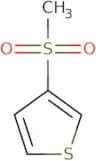
3-Methanesulfonylthiophene
CAS:<p>Versatile small molecule scaffold</p>Formula:C5H6O2S2Purity:Min. 95%Molecular weight:162.2 g/mol2-Methylsulfonylthiophene
CAS:<p>2-Methylsulfonylthiophene is a modulating agent that can inhibit the activity of carbonic anhydrase, adenosine receptors and 5-membered heteroaryl. It has been shown to have affinity for CB1 receptor antagonists and is used to treat cardiovascular diseases. 2-Methylsulfonylthiophene also inhibits the enzymatic activity of anhydrase in the eye, which leads to suppression of intraocular pressure (IOP). The drug also has anti-glaucoma effects by reducing the production of aqueous humour. 2-Methylsulfonylthiophene is used as a dyestuff intermediate and as an organic solvent.</p>Formula:C5H6O2S2Purity:Min. 95%Molecular weight:162.23 g/mol(2-methoxypyrimidin-4-yl)methanol
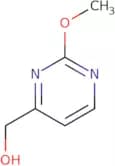
CAS:<p>(2-Methoxypyrimidin-4-yl)methanol is a photoreactive molecule that can be synthesized by the dehalogenation of diethylamine and methylated with methanol. The reaction produces a derivative of pyrimidine, which is an important precursor for pharmaceuticals. When irradiated with UV light, (2-methoxypyrimidin-4-yl)methanol undergoes a series of reactions to form the desired pyrimidine product. This reaction proceeds through electron transfer from the amine nitrogen to the methoxy group on the pyrimidine ring. This process yields a 5 membered ring with two oxygen atoms and one nitrogen atom, in contrast to the 6 membered ring formed by other methods.</p>Formula:C6H8N2O2Purity:Min. 95%Molecular weight:140.14 g/mol4-(Aminomethyl)cyclohexane-1-carboxamide hydrochloride
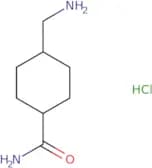
CAS:<p>Versatile small molecule scaffold</p>Formula:C8H17ClN2OPurity:Min. 95%Molecular weight:192.68 g/moltert-Butyl (1R,4R)-4-(aminomethyl)cyclohexane-1-carboxylate hydrochloride
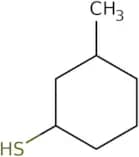
CAS:<p>Versatile small molecule scaffold</p>Formula:C12H24ClNO2Purity:Min. 95%Molecular weight:249.78 g/mol3-Methylcyclohexane-1-thiol
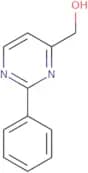
CAS:<p>Versatile small molecule scaffold</p>Formula:C7H14SPurity:Min. 95%Molecular weight:130.25 g/mol(2-Phenylpyrimidin-4-yl)methanol
CAS:<p>Versatile small molecule scaffold</p>Formula:C11H10N2OPurity:Min. 95%Molecular weight:186.21 g/mol6-Methyl-1-oxaspiro[2.5]octane
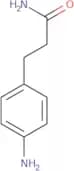
CAS:<p>Versatile small molecule scaffold</p>Formula:C8H14OPurity:Min. 95%Molecular weight:126.2 g/mol3-(4-Aminophenyl)propanamide
CAS:<p>Versatile small molecule scaffold</p>Formula:C9H12N2OPurity:Min. 95%Molecular weight:164.2 g/mol(Dimethylamino)acetaldehyde Dimethyl Acetal
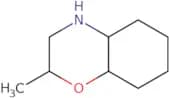
CAS:<p>Dimethylamino)acetaldehyde Dimethyl Acetal is a pharmaceutical preparation that is used as an organic solvent. It has a viscosity of 0.1 cP and is a colorless liquid with a molecular weight of 117. It reacts rapidly with alkyl halides, hydroxyl groups, and reactive alkoxy radicals to form (dimethylamino)acetaldehyde dimethyl acetal. This product has shown some surface activity in acidic solutions and the presence of alcohols and other hydrocarbons can reduce its reactivity.</p>Formula:C6H15NO2Purity:Min. 95%Molecular weight:133.19 g/mol2-Methyl-octahydro-2H-1,4-benzoxazine
CAS:<p>Versatile small molecule scaffold</p>Formula:C9H17NOPurity:Min. 95%Molecular weight:155.24 g/mol3-(4-Bromophenyl)-2-oxopropanoic acid
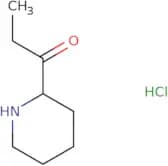
CAS:<p>Versatile small molecule scaffold</p>Formula:C9H7BrO3Purity:Min. 95%Molecular weight:243.05 g/mol1-(Piperidin-2-yl)propan-1-one hydrochloride
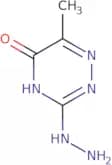
CAS:<p>Versatile small molecule scaffold</p>Formula:C8H16ClNOPurity:Min. 95%Molecular weight:177.67 g/mol3-Hydrazinyl-6-methyl-4H-1,2,4-triazin-5-one
CAS:<p>3-Hydrazinyl-6-methyl-4H-1,2,4-triazin-5-one is a chemical compound that belongs to the group of aromatic aldehydes. It has been shown to react with elemental chlorine, forming 3-chloro-6-methyl-4H-[1,2,4]triazin-5(3H)-one. This reaction can be accomplished by photolysis or pyrolysis. The magnetic properties of this compound allow for its use in studies involving electron spin resonance spectroscopy and nuclear magnetic resonance spectroscopy. 3-Hydrazinyl-6-methyl-[1,2,4]triazin-[5-(3H)]one can also undergo a photochemical reaction when exposed to ultraviolet radiation with molecular oxygen. The mechanism of this reaction is not fully understood but it is thought to involve electron transfer from the excited state of the 3 hydrazine molecule to an oxygen molecule followed by</p>Formula:C4H7N5OPurity:Min. 95%Molecular weight:141.13 g/mol3-Bromo-L-tyrosine
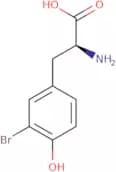
CAS:<p>3-Bromo-L-tyrosine is a reactive eosinophilic compound that is formed in human serum during the activation process. 3-Bromo-L-tyrosine has been used as an analytical method for the measurement of eosinophil peroxidase and tissue culture cells. 3-Bromo-L-tyrosine has also been shown to be a marker for infectious diseases, such as cytomegalovirus (CMV), influenza, and parainfluenza virus infections. This compound can also be used to evaluate the efficacy of treatments for infectious diseases, such as CMV and influenza.</p>Formula:C9H10BrNO3Purity:Min. 95%Molecular weight:260.1 g/mol3-Iodo-4-methylpyridine
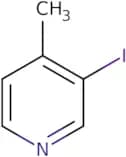
CAS:<p>Versatile small molecule scaffold</p>Formula:C6H6INPurity:Min. 95%Molecular weight:219.02 g/mol1-Chloro-4-[(2-isothiocyanatoethyl)sulfanyl]benzene
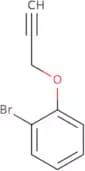
CAS:<p>Versatile small molecule scaffold</p>Formula:C9H8ClNS2Purity:Min. 95%Molecular weight:229.8 g/mol1-Bromo-2-prop-2-ynoxy-benzene
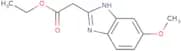
CAS:<p>Versatile small molecule scaffold</p>Formula:C9H7OBrPurity:Min. 95%Molecular weight:211.06 g/molEthyl (5-methoxy-1H-benzimidazol-2-yl)acetate
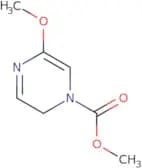
CAS:<p>Versatile small molecule scaffold</p>Formula:C12H14N2O3Purity:Min. 95%Molecular weight:234.25 g/molMethyl 5-Methoxypyrazinecarboxylate
CAS:<p>Methyl 5-methoxypyrazinecarboxylate is an organic compound that belongs to the group of triazoles. It has been used as a pesticide for the control of plant pathogenic fungi, nematodes and insects, such as dextrose, chloride, oxadiazoles and agriculturally. This product is effective against pests at low doses. Methyl 5-methoxypyrazinecarboxylate inhibits the synthesis of proteins in plants by inhibiting chitin synthase enzymes in fungi and nematodes. It also inhibits the synthesis of proteins in insects by interfering with the synthesis of proteins involved in cell division.</p>Formula:C7H8N2O3Purity:Min. 95%Molecular weight:168.15 g/mol



![6-Methyl-1-oxaspiro[2.5]octane](/_next/image/?url=https%3A%2Fstatic.cymitquimica.com%2Fproducts%2F3D%2Fthumb-webp%2FNBA70971.webp&w=3840&q=75)


![1-Chloro-4-[(2-isothiocyanatoethyl)sulfanyl]benzene](/_next/image/?url=https%3A%2Fstatic.cymitquimica.com%2Fproducts%2F3D%2Fthumb-webp%2FNBA75240.webp&w=3840&q=75)