Building Blocks
This section contains fundamental products for the synthesis of organic and biological compounds. Building blocks are the essential starting materials used to construct complex molecules through various chemical reactions. They play a critical role in drug discovery, material science, and chemical research. At CymitQuimica, we offer a diverse range of high-quality building blocks to support your innovative research and industrial projects, ensuring you have the essential components for successful synthesis.
Subcategories of "Building Blocks"
- Boronic Acids & Boronic Acid Derivatives(5,756 products)
- Chiral Building Blocks(1,242 products)
- Hydrocarbon Building Blocks(6,095 products)
- Organic Building Blocks(61,051 products)
Found 199813 products of "Building Blocks"
Sort by
Purity (%)
0
100
|
0
|
50
|
90
|
95
|
100
2-[(4-Methylphenyl)amino]-4,5-dihydro-1,3-thiazol-4-one
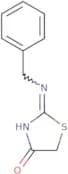
CAS:<p>Versatile small molecule scaffold</p>Formula:C10H10N2OSPurity:Min. 95%Molecular weight:206.27 g/mol2-(Benzylamino)-4,5-dihydro-1,3-thiazol-4-one
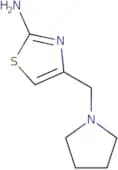
CAS:<p>Versatile small molecule scaffold</p>Formula:C10H10N2OSPurity:Min. 95%Molecular weight:206.27 g/mol4-(Pyrrolidin-1-ylmethyl)-1,3-thiazol-2-amine
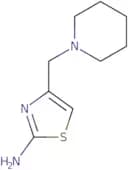
CAS:<p>Versatile small molecule scaffold</p>Formula:C8H13N3SPurity:Min. 95%Molecular weight:183.27 g/mol4-Piperidin-1-ylmethyl-thiazol-2-ylamine dihydrochloride
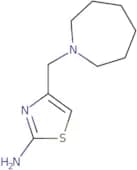
CAS:<p>Versatile small molecule scaffold</p>Formula:C9H17Cl2N3SPurity:Min. 95%Molecular weight:270.23 g/mol4-(Azepan-1-ylmethyl)-1,3-thiazol-2-amine
CAS:<p>Versatile small molecule scaffold</p>Formula:C10H17N3SPurity:Min. 95%Molecular weight:211.33 g/mol1-[(2-Methyl-1,3-thiazol-4-yl)methyl]piperidine
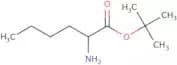
CAS:<p>Versatile small molecule scaffold</p>Formula:C10H16N2SPurity:Min. 95%Molecular weight:196.31 g/moltert-Butyl 2-aminohexanoate
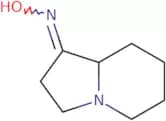
CAS:<p>Versatile small molecule scaffold</p>Formula:C10H21NO2Purity:Min. 95%Molecular weight:187.28 g/molN-(Octahydroindolizin-1-ylidene)hydroxylamine
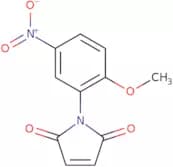
CAS:<p>Versatile small molecule scaffold</p>Formula:C8H14N2OPurity:Min. 95%Molecular weight:154.21 g/mol1-(2-Methoxy-5-nitrophenyl)-1H-pyrrole-2,5-dione
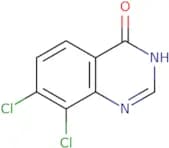
CAS:<p>Versatile small molecule scaffold</p>Formula:C11H8N2O5Purity:Min. 95%Molecular weight:248.19 g/mol7,8-Dichloro-3,4-dihydroquinazolin-4-one
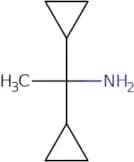
CAS:Versatile small molecule scaffoldFormula:C8H4Cl2N2OPurity:Min. 95%Molecular weight:215.03 g/mol1,1-Dicyclopropylethan-1-amine
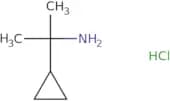
CAS:<p>Versatile small molecule scaffold</p>Formula:C8H15NPurity:Min. 95%Molecular weight:125.21 g/mol(1-Cyclopropyl-1-methylethyl)amine hydrochloride
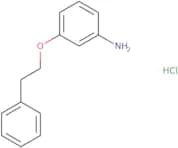
CAS:<p>Versatile small molecule scaffold</p>Formula:C6H14ClNPurity:Min. 95%Molecular weight:135.64 g/mol3-(Phenethyloxy)aniline hydrochloride
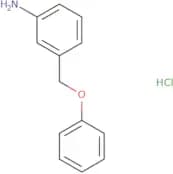
CAS:<p>Versatile small molecule scaffold</p>Formula:C14H16ClNOPurity:Min. 95%Molecular weight:249.74 g/mol3-(Phenoxymethyl)aniline hydrochloride
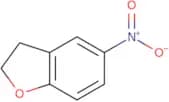
CAS:<p>Versatile small molecule scaffold</p>Formula:C13H14ClNOPurity:Min. 95%Molecular weight:235.71 g/mol5-Nitro-2,3-dihydro-1-benzofuran
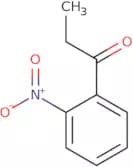
CAS:<p>5-Nitro-2,3-dihydro-1-benzofuran is a versatile compound that serves as an intermediate in the synthesis of various products. It is commonly used in the production of pyrazoles, fatty acids, and aromatic ketones. Additionally, it can be utilized as a methylating agent in chemical reactions.</p>Formula:C8H7NO3Purity:Min. 95%Molecular weight:165.15 g/mol1-(2-Nitrophenyl)propan-1-one
CAS:1-(2-Nitrophenyl)propan-1-one is an electron acceptor in the chemistry of isoxazoles. The compound has a cation that can be protonated to form an alkyl group. 1-(2-Nitrophenyl)propan-1-one has been shown to react with cyanide to form acylium ions and release hydrogen cyanide gas. This compound also reacts with the probe pinacolborane to form isopropyl boronate, which can be used as a spectroscopic probe for aromatic ketones.Formula:C9H9NO3Purity:Min. 95%Molecular weight:179.17 g/mol6-Chloro-7-methylimidazo[1,2-b]pyridazine
CAS:<p>Versatile small molecule scaffold</p>Formula:C7H6ClN3Purity:Min. 95%Molecular weight:167.59 g/mol2-[(4-Chlorophenyl)amino]-2-methylpropanoic acid
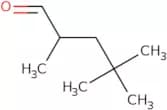
CAS:<p>Versatile small molecule scaffold</p>Formula:C10H12ClNO2Purity:Min. 95%Molecular weight:213.66 g/mol2,4,4-Trimethylpentanal
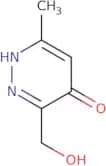
CAS:<p>2,4,4-Trimethylpentanal is a colorless liquid with a sweet odor. It is used as an olefin and solvent, and has industrial applications in the production of chloroform, solvents, and naphthenes. 2,4,4-Trimethylpentanal can also be used as a precursor for the production of benzene by hydrogenation. This product can be found in the liquid phase at room temperature and is soluble in organic solvents such as chloroform and carbon tetrachloride. It reacts with sulphonic acid to produce phosphoric acid or with pentane or tetrachloride to produce epoxides.</p>Formula:C8H16OPurity:Min. 95%Molecular weight:128.21 g/mol3-(Hydroxymethyl)-6-methyl-1,4-dihydropyridazin-4-one
CAS:Versatile small molecule scaffoldFormula:C6H8N2O2Purity:Min. 95%Molecular weight:140.14 g/mol
![2-[(4-Methylphenyl)amino]-4,5-dihydro-1,3-thiazol-4-one](/_next/image/?url=https%3A%2Fstatic.cymitquimica.com%2Fproducts%2F3D%2Fthumb-webp%2FSAA38568.webp&w=3840&q=75)

![1-[(2-Methyl-1,3-thiazol-4-yl)methyl]piperidine](/_next/image/?url=https%3A%2Fstatic.cymitquimica.com%2Fproducts%2F3D%2Fthumb-webp%2FSAA38615.webp&w=3840&q=75)
![6-Chloro-7-methylimidazo[1,2-b]pyridazine](/_next/image/?url=https%3A%2Fstatic.cymitquimica.com%2Fproducts%2F3D%2Fthumb-webp%2FSAA41219.webp&w=3840&q=75)
![2-[(4-Chlorophenyl)amino]-2-methylpropanoic acid](/_next/image/?url=https%3A%2Fstatic.cymitquimica.com%2Fproducts%2F3D%2Fthumb-webp%2FSAA41386.webp&w=3840&q=75)