Building Blocks
Subcategories of "Building Blocks"
- Boronic Acids & Boronic Acid Derivatives(5,805 products)
- Chiral Building Blocks(1,248 products)
- Hydrocarbon Building Blocks(6,122 products)
- Organic Building Blocks(61,463 products)
Found 208442 products of "Building Blocks"
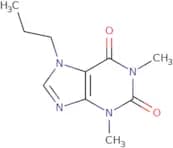
1,3-Dimethyl-7-propyl-3,7-dihydro-1H-purine-2,6-dione
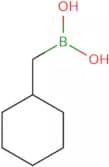
CAS:Controlled ProductVersatile small molecule scaffoldFormula:C10H14N4O2Purity:Min. 95%Molecular weight:222.24 g/molCyclohexylmethylboronic acid
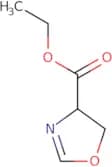
CAS:Cyclohexylmethylboronic acid is a hydroxyalkyl, triazine, formyl, cyanoalkyl, carboxy, sulfur, triazines, heterocycle and alkoxycarbonyl. Cyclohexylmethylboronic acid has been shown to inhibit the growth of bacteria by inhibiting the enzyme DNA gyrase. It also inhibits protein synthesis by blocking the formation of aminoacyl-tRNA complexes. Cyclohexylmethylboronic acid is also able to bind to nitro groups and form a stable adduct with nitrogen atoms in other molecules.Formula:C7H15BO2Purity:Min. 95%Molecular weight:142 g/molEthyl 4,5-dihydro-1,3-oxazole-4-carboxylate
CAS:Versatile small molecule scaffoldFormula:C6H9NO3Purity:Min. 95%Molecular weight:143.14 g/mol6-Aminonaphthalene-2-sulfonamide
CAS:Versatile small molecule scaffoldFormula:C10H10N2O2SPurity:Min. 95%Molecular weight:222.3 g/mol4,5,6,7-Tetrahydro-benzo[d]isoxazol-3-ol
CAS:4,5,6,7-Tetrahydro-benzo[d]isoxazol-3-ol (THI) is a chromatic integrating device that utilizes an algorithm and coding to update circuitry and devices. THI interacts with the optical vector techniques in order to position itself. The circuitry updates in response to the interaction with the optical vector techniques. THI can be utilized for many purposes such as updating bandwidth, devices, or interaction.
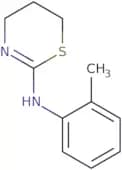
Formula:C7H9NO2Purity:Min. 95%Molecular weight:139.15 g/molN-(2-Methylphenyl)-5,6-dihydro-4H-1,3-thiazin-2-amine
CAS:Versatile small molecule scaffoldFormula:C11H14N2SPurity:Min. 95%Molecular weight:206.31 g/molN-(2-Chlorophenyl)-5,6-dihydro-4H-1,3-thiazin-2-amine
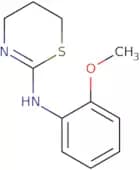
CAS:Versatile small molecule scaffoldFormula:C10H11ClN2SPurity:Min. 95%Molecular weight:226.73 g/molN-(2-Methoxyphenyl)-5,6-dihydro-4H-1,3-thiazin-2-amine
CAS:Versatile small molecule scaffold
Formula:C11H14N2OSPurity:Min. 95%Molecular weight:222.31 g/mol11-Aminoundecan-1-ol
CAS:11-Aminoundecan-1-ol is a bifunctional molecule that binds to the receptor and stabilizes it. It can be used as an antimicrobial agent against human pathogens, such as HIV, by preventing the virus from attaching to cells. 11-Aminoundecan-1-ol also has activity against plant viruses. This compound is an anhydroglucose with hydroxamic acid groups that are responsible for its antiviral properties and also contains a particle with azide functionalities. 11-Aminoundecan-1-ol has shown efficacy in inhibiting the replication of human Herpes simplex virus types 1 and 2 (HSV) in vitro, which may be due to its ability to bind to the HSV glycoprotein B envelope protein GP2.
11-Aminoundecan-1-ol can also bind to the receptor lysine and stabilize it. This binding prevents azides from reacting with lFormula:C11H25NOPurity:Min. 95%Molecular weight:187.32 g/molEthyl 2-(1-hydroxycyclobutyl)acetate
CAS:Versatile small molecule scaffoldFormula:C8H14O3Purity:Min. 95%Molecular weight:158.19 g/mol5-Oxa-7-azaspiro[3.4]octan-6-one
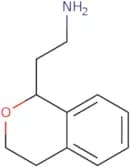
CAS:Versatile small molecule scaffoldFormula:C6H9NO2Purity:Min. 95%Molecular weight:127.14 g/mol2-(3,4-Dihydro-1H-2-benzopyran-1-yl)ethan-1-amine
CAS:Versatile small molecule scaffoldFormula:C11H15NOPurity:Min. 95%Molecular weight:177.24 g/mol1-Benzyl-3-bromobenzene
CAS:Versatile small molecule scaffold
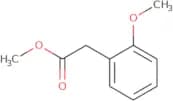
Formula:C13H11BrPurity:Min. 95%Molecular weight:247.13 g/mol2-Methoxyphenylacetic acid methyl ester
CAS:2-Methoxyphenylacetic acid methyl ester is an enolate that is formed by the demethylation of cinchonidine. The proton of the methyl group can be displaced and 2-methoxyphenylacetic acid methyl ester becomes a nucleophile, attacking the electrophilic carbon atom in malonate to form an intermediate. The molecular modeling and optimized structures have been obtained using quantum mechanics calculations. The chloride ion is used as a counterion to stabilize the negative charge on the phenyl groups, which are substituted with isoflavonoid. Metal ions such as lithium cations are also important for stabilization purposes. Ammonium nitrate is used as an efficient method to produce this compound in high yield.Formula:C10H12O3Purity:Min. 95%Molecular weight:180.2 g/mol1-Methyl-1H-1,2,3-benzotriazol-4-amine
CAS:Versatile small molecule scaffoldFormula:C7H8N4Purity:Min. 95%Molecular weight:148.17 g/mol1-Methyl-1H-1,2,3-benzotriazol-5-amine
CAS:Versatile small molecule scaffoldFormula:C7H8N4Purity:Min. 95%Molecular weight:148.17 g/molEthyl 2-oxo-1,2-dihydropyridine-3-carboxylate
CAS:Versatile small molecule scaffold
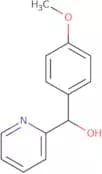
Formula:C8H9NO3Purity:Min. 95%Molecular weight:167.16 g/mol(4-Methoxyphenyl)(pyridin-2-yl)methanol
CAS:Versatile small molecule scaffold
Formula:C13H13NO2Purity:Min. 95%Molecular weight:215.25 g/mol4-Methyl-2,1,3-benzoxadiazol-1-ium-1-olate
CAS:Versatile small molecule scaffoldFormula:C7H6N2O2Purity:Min. 95%Molecular weight:150.13 g/molAzepane-1-carbonyl chloride
CAS:Azepane-1-carbonyl chloride is a molecule that has been shown to be efficacious in the treatment of trypanosomiasis. It is a urea derivative that works by inhibiting the activity of a specific enzyme, adenylate kinase, which is essential for the metabolism of nucleotides and nucleosides. Azepane-1-carbonyl chloride binds to this enzyme and prevents it from converting ATP into AMP, which leads to cell death. This molecule has been shown to have antiviral properties against murine leukemia virus and trypanosoma cruzi. However, it does not seem to work as well on human cells. The efficacy of azepane-1-carbonyl chloride in vivo has also been demonstrated using an animal model. The effects of this molecule are dose dependent and there may be potential for optimization by changing its structure or metabolic stability.
Formula:C7H12ClNOPurity:Min. 95%Molecular weight:161.63 g/mol

![4,5,6,7-Tetrahydro-benzo[d]isoxazol-3-ol](/_next/image/?url=https%3A%2Fstatic.cymitquimica.com%2Fproducts%2F3D%2Fthumb-webp%2FCBA77290.webp&w=3840&q=75)



![5-Oxa-7-azaspiro[3.4]octan-6-one](/_next/image/?url=https%3A%2Fstatic.cymitquimica.com%2Fproducts%2F3D%2Fthumb-webp%2FCBA78433.webp&w=3840&q=75)