Building Blocks
Subcategories of "Building Blocks"
- Boronic Acids & Boronic Acid Derivatives(5,805 products)
- Chiral Building Blocks(1,248 products)
- Hydrocarbon Building Blocks(6,122 products)
- Organic Building Blocks(61,463 products)
Found 208442 products of "Building Blocks"
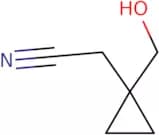
1-(Hydroxymethyl)cyclopropaneacetonitrile
CAS:1-(Hydroxymethyl)cyclopropaneacetonitrile is a cyclic molecule that can be synthesized from the reaction of sulfite and formaldehyde. It can also be obtained by hydrolysis of 1-hydroxycyclopropanecarboxylic acid. The synthesis of 1-(hydroxymethyl)cyclopropaneacetonitrile involves the oxidation of formaldehyde with sodium metaperiodate, followed by hydrolysis with potassium hydroxide or sodium hydroxide to produce 1-formylcyclopropaneacetonitrile, which reacts with sodium sulfite to yield the desired product. This compound has not been found in nature, but it is used as an intermediate in the synthesis of other compounds.
Formula:C6H9NOPurity:Min. 95%Molecular weight:111.14 g/mol2-Hydroxy-3-methylbutanenitrile
CAS:2-Hydroxy-3-methylbutanenitrile is a carbonyl group and an amide, with the chemical formula CH2OHCN. It can be synthesized from isobutyraldehyde and cyanogen chloride. The reaction solution of this compound reacts with a hydroxy group to form cyanate, which can be used as a medicine. 2-Hydroxy-3-methylbutanenitrile is also used in organic solvents, such as chloroform and acetone. The reaction selectivity of this compound is determined by chromatographic analysis and spectrometry.Formula:C5H9NOPurity:Min. 95%Color and Shape:Clear LiquidMolecular weight:99.13 g/mol3-Hydroxyisoquinoline
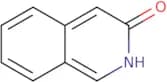
CAS:3-Hydroxyisoquinoline is a non-nucleoside inhibitor of cyclic nucleotide phosphodiesterase (cNMP) that is used in the treatment of nervous system diseases. 3-Hydroxyisoquinoline has been shown to have an inhibitory effect on cyclic nucleotide phosphodiesterase and can be used for the treatment of neurological disorders such as Parkinson’s disease, Alzheimer’s disease, and epilepsy. It also has anti-inflammatory properties and can be used to treat pain. 3-Hydroxyisoquinoline has a photoelectron spectrum that peaks at 5.6 eV, with a strong absorption band at 2.1 eV due to hydrogen bonding. This compound is also able to absorb radiation in the form of light emission with an emission peak at 4.8 eV, with a maximum intensity around 830 nm and a half-life of 0.2 s. 3-Hydroxyisoquinoline is able toFormula:C9H7NOPurity:Min. 95%Color and Shape:Yellow PowderMolecular weight:145.16 g/molFmoc-O-trityl-L-serine
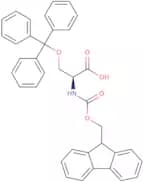
CAS:Fmoc-O-trityl-L-serine is a synthetic molecule that is not naturally occurring. It has been shown to have inhibitory effects on the growth of cancer cells in vitro and in vivo, but does not affect healthy cells. Fmoc-O-trityl-L-serine binds to the membrane of cancer cells and inhibits protein synthesis by binding to ribosomes. This drug also inhibits cell growth by interfering with the membrane interactions necessary for cellular metabolism. Fmoc-O-trityl-L-serine is toxic to red blood cells, which may be due to its ability to induce hemolysis.
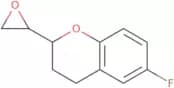
Formula:C37H31NO5Purity:Min. 95%Molecular weight:569.65 g/mol6-Fluoro-3,4-dihydro-2-oxiranyl-2H-1-benzopyran
CAS:Fluorinated benzopyran. Nebivolol precursor.
Formula:C11H11FO2Purity:Min. 95%Color and Shape:PowderMolecular weight:194.2 g/molFluocinolone acetonide-21-carboxylic acid
CAS:Please enquire for more information about Fluocinolone acetonide-21-carboxylic acid including the price, delivery time and more detailed product information at the technical inquiry form on this page
Formula:C24H28F2O7Purity:Min. 95%Color and Shape:PowderMolecular weight:466.47 g/molFmoc-Arg(Pbf)-OH (U-13C6, U-15N4)
CAS:Please enquire for more information about Fmoc-Arg(Pbf)-OH (U-13C6, U-15N4) including the price, delivery time and more detailed product information at the technical inquiry form on this page
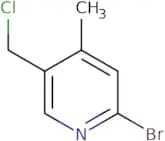
Formula:C28C)6H40N)4O7SPurity:Min. 95%Molecular weight:658.7 g/mol2-Bromo-5-(chloromethyl)-4-methylpyridine
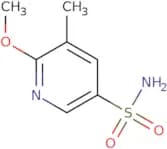
CAS:Versatile small molecule scaffoldFormula:C7H7BrClNPurity:Min. 95%Molecular weight:220.49 g/mol6-Methoxy-5-methylpyridine-3-sulfonamide
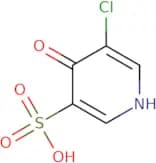
CAS:Versatile small molecule scaffoldFormula:C7H10N2O3SPurity:Min. 95%Molecular weight:202.23 g/mol5-Chloro-4-hydroxypyridine-3-sulfonic acid
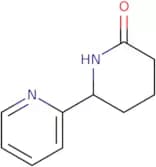
CAS:Versatile small molecule scaffoldFormula:C5H4ClNO4SPurity:Min. 95%Molecular weight:209.61 g/mol6-(Pyridin-2-yl)piperidin-2-one
CAS:Versatile small molecule scaffold
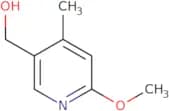
Formula:C10H12N2OPurity:Min. 95%Molecular weight:176.21 g/mol(6-Methoxy-4-methylpyridin-3-yl)methanol
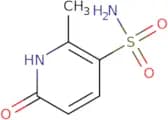
CAS:Versatile small molecule scaffoldFormula:C8H11NO2Purity:Min. 95%Molecular weight:153.18 g/mol2-Methyl-6-oxo-1,6-dihydropyridine-3-sulfonamide
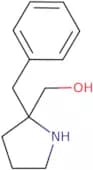
CAS:Versatile small molecule scaffoldFormula:C6H8N2O3SPurity:Min. 95%Molecular weight:188.21 g/mol(2-Benzylpyrrolidin-2-yl)methanol
CAS:Versatile small molecule scaffold
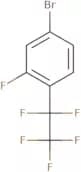
Formula:C12H17NOPurity:Min. 95%Molecular weight:191.27 g/mol4-Bromo-2-fluoro-1-(pentafluoroethyl)benzene
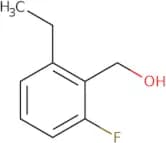
CAS:Versatile small molecule scaffoldFormula:C8H3BrF6Purity:Min. 95%Molecular weight:293 g/mol(2-Ethyl-6-fluorophenyl)methanol
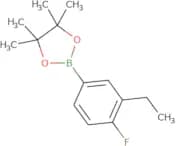
CAS:Versatile small molecule scaffoldFormula:C9H11FOPurity:Min. 95%Molecular weight:154.18 g/mol2-(3-Ethyl-4-fluorophenyl)-4,4,5,5-tetramethyl-1,3,2-dioxaborolane
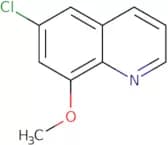
CAS:Versatile small molecule scaffoldFormula:C14H20BFO2Purity:Min. 95%Molecular weight:250.12 g/mol6-Chloro-8-methoxyquinoline
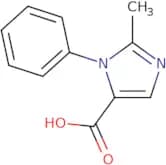
CAS:Versatile small molecule scaffoldFormula:C10H8ClNOPurity:Min. 95%Molecular weight:193.63 g/mol2-Methyl-1-phenyl-1H-imidazole-5-carboxylic acid
CAS:Versatile small molecule scaffoldFormula:C11H10N2O2Purity:Min. 95%Molecular weight:202.21 g/molN-tert-Butyl-2-(ethylamino)acetamide
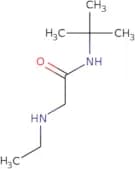
CAS:Versatile small molecule scaffold
Formula:C8H18N2OPurity:Min. 95%Molecular weight:158.24 g/mol