Building Blocks
This section contains fundamental products for the synthesis of organic and biological compounds. Building blocks are the essential starting materials used to construct complex molecules through various chemical reactions. They play a critical role in drug discovery, material science, and chemical research. At CymitQuimica, we offer a diverse range of high-quality building blocks to support your innovative research and industrial projects, ensuring you have the essential components for successful synthesis.
Subcategories of "Building Blocks"
- Boronic Acids & Boronic Acid Derivatives(5,778 products)
- Chiral Building Blocks(1,242 products)
- Hydrocarbon Building Blocks(6,098 products)
- Organic Building Blocks(61,084 products)
Found 198714 products of "Building Blocks"
Sort by
Purity (%)
0
100
|
0
|
50
|
90
|
95
|
100
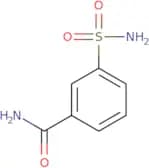
3-(Aminosulfonyl)-benzamide
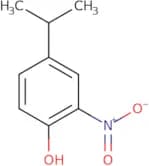
CAS:<p>3-(Aminosulfonyl)-benzamide is a carbonic anhydrase inhibitor that is used in the treatment of glaucoma. 3-(Aminosulfonyl)-benzamide is an amide that has been optimized to inhibit the cytosolic isoform of human carbonic anhydrase, while being insensitive to the other isoforms. This drug is also used as a medicinal chemistry tool for research on the structure activity relationship of carbonic anhydrases.</p>Formula:C7H8N2O3SPurity:Min. 95%Molecular weight:200.22 g/mol2-Nitro-4-(propan-2-yl)phenol
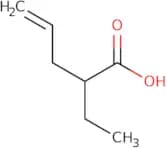
CAS:<p>Versatile small molecule scaffold</p>Formula:C9H11NO3Purity:Min. 95%Molecular weight:181.2 g/mol2-Ethylpent-4-enoic acid
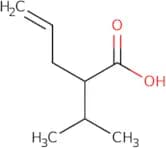
CAS:<p>2-Ethylpent-4-enoic acid is an analog of 4-pentenoic acid that can be used as a catalyst in the gas phase. It has been shown to catalyze the metathesis of cis and trans 4-pentene. 2-Ethylpent-4-enoic acid has an enthalpy of formation of -5.6 kJ/mol and an enthalpy of activation at 298 K of -2.8 kJ/mol, which means that it is a relatively strong catalyst for this reaction. 2-Ethylpent-4-enoic acid has also been shown to have a higher catalytic activity than 1,3,5,7,9,11,-heptadecane (1HPD) or 1,3,5,7,-octadecane (OD).</p>Formula:C7H12O2Purity:Min. 95%Molecular weight:128.17 g/mol2-(Propan-2-yl)pent-4-enoic acid
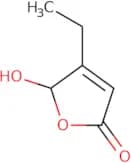
CAS:<p>2-(Propan-2-yl)pent-4-enoic acid is an organic compound that is a chiral, optically active fatty acid. It is used in the production of pharmaceuticals, including antihistamines and antiarrhythmics. 2-(Propan-2-yl)pent-4-enoic acid can be synthesized from dimethylamine and chloride in the presence of an acidic catalyst. The resulting product is purified by distillation or recrystallization to remove undesired byproducts and obtain a pure optical isomer.</p>Formula:C8H14O2Purity:Min. 95%Molecular weight:142.2 g/mol4-Ethyl-5-hydroxy-2,5-dihydrofuran-2-one
CAS:Versatile small molecule scaffoldFormula:C6H8O3Purity:Min. 95%Molecular weight:128.13 g/mol3,5-dibromobenzene-1,2-diamine
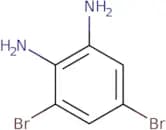
CAS:<p>3,5-Dibromobenzene-1,2-diamine is a nonsteroidal anti-inflammatory drug (NSAID) that inhibits the activity of cyclooxygenase enzymes. It binds to the heme group in these enzymes and prevents the production of prostaglandins. 3,5-Dibromobenzene-1,2-diamine has been shown to inhibit human serum albumin and bovine liver serum albumin in vitro. In addition, it has been shown to inhibit immunohistochemical staining for markers such as divinylbenzene and chromatographic methods for quantification. 3,5-Dibromobenzene-1,2-diamine can be used as an active inhibitor in microscopy experiments. To prepare this compound for use in microscopy experiments it must be freeze dried or diluted with water or buffer solution.</p>Formula:C6H6Br2N2Purity:Min. 95%Molecular weight:265.94 g/mol4-Hydroxy-2-naphthoic acid
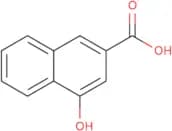
CAS:<p>4-Hydroxy-2-naphthoic acid is a hydrocarbon with a carboxylic acid group. It can act as an antagonist to the hydrocarbon receptor (HCR). 4-Hydroxy-2-naphthoic acid has been shown to be effective in treating colon cancer cells in vitro, and has been shown to inhibit the growth of cancer cells in vivo. This compound is also effective at inhibiting the proliferation of human colon cancer cells (Caco2) that have been exposed to benzo(a)pyrene, an aromatic hydrocarbon found in cigarette smoke. The mechanism by which this drug inhibits cell proliferation is not fully understood but may involve inhibition of cytochrome P450 1A1 (CYP1A1), which metabolizes benzo(a)pyrene into carcinogenic intermediates. 4-Hydroxy-2-naphthoic acid has also been shown to be anisotropic and microreactor, meaning</p>Formula:C11H8O3Purity:Min. 95%Molecular weight:188.17 g/mol(S)-1-(4-Methoxyphenyl)ethanol
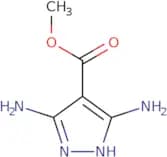
CAS:<p>(S)-1-(4-Methoxyphenyl)ethanol is an enantiopure chemical compound that is a reaction intermediate in the synthesis of various pharmaceuticals. The reaction system is immobilized, and the biological function of this molecule is activation energy. The surface methodology used for this compound is surface methodology, and the substrate concentration required for the reaction to occur is high. This compound also reacts with water, which may be due to its hydrophilic nature. The strain used in this experiment was Staphylococcus aureus, and the extents of the reaction were determined by measuring the rate at which the substrate concentration decreased over time. (S)-1-(4-Methoxyphenyl)ethanol has an asymmetric synthesis that can be caused by a surfactant or by adding a chiral catalyst to a racemic mixture.</p>Formula:C9H12O2Purity:Min. 95%Molecular weight:152.19 g/molMethyl 3,5-diamino-1H-pyrazole-4-carboxylate
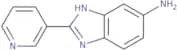
CAS:Methyl 3,5-diamino-1H-pyrazole-4-carboxylate is a chemical compound with the molecular formula CH3N2C(NH2)C(=O)OCH3. It is a condensation product of acetoacetic ester and x-ray structural analysis. The structural analysis of methyl 3,5-diamino-1H-pyrazole-4-carboxylate has shown that it is a 1:1 mixture of the two stereoisomers at the central carbon atom. The acetoacetic ester moiety of methyl 3,5-diamino-1H-pyrazole-4-carboxylate has been shown to have protective effects against acetaminophen (paracetamol)-induced hepatotoxicity in mice. Methyl 3,5 -diamino -1H -pyrazole -4 carboxylate is an intermediate in theFormula:C5H8N4O2Purity:Min. 95%Molecular weight:156.14 g/mol2-Pyridin-3-yl-1H-benzoimidazol-5-ylamine
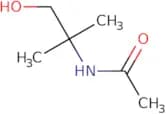
CAS:<p>Versatile small molecule scaffold</p>Formula:C12H10N4Purity:Min. 95%Molecular weight:210.2 g/molN-(1-Hydroxy-2-methylpropan-2-yl)acetamide
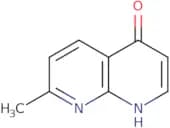
CAS:Versatile small molecule scaffoldFormula:C6H13NO2Purity:Min. 95%Molecular weight:131.17 g/mol7-Methyl-1,8-naphthyridin-4-ol
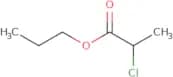
CAS:<p>Versatile small molecule scaffold</p>Formula:C9H8N2OPurity:Min. 95%Molecular weight:160.17 g/molPropyl 2-chloropropanoate
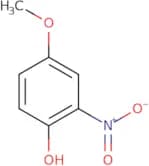
CAS:<p>Propyl 2-chloropropanoate is an eluted and monochlorinated short-chain alcohol. It is homologous to propanol, which has the same number of carbon atoms. The compound has been analysed using gas-liquid chromatography and found to be a mixture of several different n-alkyl chains. Propyl 2-chloropropanoate was analysed using gas chromatography and found to contain two propanoate chain lengths. This compound was also observed to elute from the column at the same time as a gas chromatographic peak with a retention time of 5 minutes and another peak with a retention time of 6 minutes.</p>Formula:C6H11ClO2Purity:Min. 95%Molecular weight:150.6 g/mol4-Methoxy-2-nitrophenol
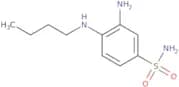
CAS:<p>4-Methoxy-2-nitrophenol is a chemical compound that has been shown to have a potential use in the functional theory of organic compounds. It can be prepared by hydrolysis of nitrobenzene with sodium hydroxide, which leads to the formation of 3-methoxy-4-nitrobenzoic acid. 4-Methoxy-2-nitrophenol can also be synthesized from an intramolecular hydrogen transfer reaction using sodium nitrite and potassium cyanide as reagents. 4MMP has been shown to bind to monoclonal antibodies, and it has been used for the detection of epitopes on proteins or peptides. The crystal structure of 4MPN was determined using X-ray diffraction analysis and was found to show three isomers. Heterostructures are also known for this compound.</p>Formula:C7H7NO4Purity:Min. 95%Molecular weight:169.13 g/mol3-Amino-4-(butylamino)benzene-1-sulfonamide
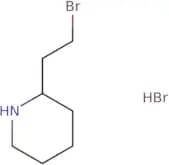
CAS:Versatile small molecule scaffoldFormula:C10H17N3O2SPurity:Min. 95%Molecular weight:243.33 g/mol2-(2-Bromoethyl)piperidine hydrobromide
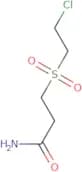
CAS:2-(2-Bromoethyl)piperidine hydrobromide (HPBA) is a hydride reagent that is used in organic synthesis. It can be prepared by the reaction of lithium aluminium hydride and diethyl ether, allowing for high yield and purity. HPBA reacts with acrylates to form acrylate, which can then be used for polymerization reactions. The use of HPBA is an efficient way to synthesize acrylates and other polymers.Formula:C7H15Br2NPurity:Min. 95%Molecular weight:273.01 g/mol3-(2-Chloroethanesulfonyl)propanamide
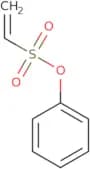
CAS:<p>3-(2-Chloroethanesulfonyl)propanamide is a molecule that has been shown to activate cells in the muscle. Activated cells are able to divide and grow. The mechanism of activation is not known, but it may be due to the functional groups on the molecule or its benzoic acid moiety. 3-(2-Chloroethanesulfonyl)propanamide is more active in muscle than in other tissues, and it stimulates muscle growth by increasing protein synthesis. This drug is also found to have anti-inflammatory properties, which may be due to its ability to inhibit prostaglandin synthesis.END></p>Formula:C5H10ClNO3SPurity:Min. 95%Molecular weight:199.66 g/molPhenyl vinylsulfonate
CAS:<p>Phenyl vinylsulfonate is a redox-active molecule that binds to the phosphate group of glutamate and cross-links amide groups. The stability of this film-forming polymer can be increased by adding an asymmetric synthesis and quinoline derivatives. Phenyl vinylsulfonate has been used as a cross-linking agent for the production of amide hydrogels, which are film forming polymers. This polymer is also used in the manufacture of antimicrobial agents.</p>Formula:CH2CHSO3C6H5Purity:Min. 95%Molecular weight:184.21 g/molSodium 2-hydroxypropane-1-sulfonate
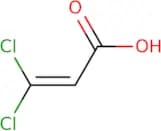
CAS:<p>Sodium 2-hydroxypropane-1-sulfonate is a surfactant that is used in the production of polymers. It can be used as a hydroxyethyl monomer and an oxidant, or as an initiator for polymerization reactions. This compound can also be used as an abrasive and to produce yields of propanesulfonic acid. Sodium 2-hydroxypropane-1-sulfonate has shown to yield piperazine from 2-amino-2-methyl-1-propanol and zwitterion from ethanesulfonic acid.</p>Formula:C3H8O4SPurity:Min. 95%Molecular weight:140.16 g/mol3,3-Dichloroprop-2-enoic acid
CAS:Versatile small molecule scaffoldFormula:C3H2Cl2O2Purity:Min. 95%Molecular weight:140.95 g/mol