Building Blocks
This section contains fundamental products for the synthesis of organic and biological compounds. Building blocks are the essential starting materials used to construct complex molecules through various chemical reactions. They play a critical role in drug discovery, material science, and chemical research. At CymitQuimica, we offer a diverse range of high-quality building blocks to support your innovative research and industrial projects, ensuring you have the essential components for successful synthesis.
Subcategories of "Building Blocks"
- Boronic Acids & Boronic Acid Derivatives(5,778 products)
- Chiral Building Blocks(1,242 products)
- Hydrocarbon Building Blocks(6,098 products)
- Organic Building Blocks(61,063 products)
Found 197855 products of "Building Blocks"
Sort by
Purity (%)
0
100
|
0
|
50
|
90
|
95
|
100
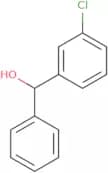
(3-Chlorophenyl)(phenyl)methanol
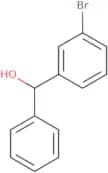
CAS:<p>(3-Chlorophenyl)(phenyl)methanol is a chiral, optically active aldehyde that is used as a reagent in the synthesis of cellulose triacetate. The optical isomers of this compound are separated by densitometric analysis and the yields are determined by measuring the amount of solutes that elute from plates. The functional groups on this compound have been shown to react with dinitrophenyl and form an intermediate that can be identified as an alcohol.</p>Formula:C13H11ClOPurity:Min. 95%Molecular weight:218.68 g/mol(3-Bromophenyl)(phenyl)methanol
CAS:<p>Versatile small molecule scaffold</p>Formula:C13H11BrOPurity:Min. 95%Molecular weight:263.13 g/mol2-Aminoindolizine-1-carbonitrile
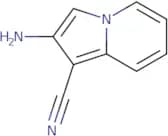
CAS:<p>2-Aminoindolizine-1-carbonitrile is an experimental substance that can form a bispyridinium ion in the presence of halides. It reacts with elemental analysis reagents and formylation agents to produce spectra, which can be used for screening purposes. This compound has been shown to react with electrophilic reagents and dimerize in the presence of a base. 2-Aminoindolizine-1-carbonitrile has antimicrobial activity against Gram negative bacteria, but not Gram positive bacteria. This antibiotic is active against Mycobacterium tuberculosis, but not against Mycobacterium avium complex.</p>Formula:C9H7N3Purity:Min. 95%Molecular weight:157.17 g/mol4-Bromo-1-methyl-2-nitronaphthalene
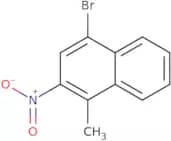
CAS:<p>Versatile small molecule scaffold</p>Formula:C11H8BrNO2Purity:Min. 95%Molecular weight:266.09 g/mol3-Methyl-4-phenylaniline
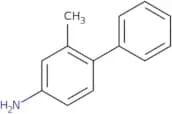
CAS:<p>Versatile small molecule scaffold</p>Formula:C13H13NPurity:Min. 95%Molecular weight:183.25 g/mol3-tert-Butyl-2,3-dihydro-1H-indol-2-one
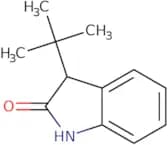
CAS:Versatile small molecule scaffoldFormula:C12H15NOPurity:Min. 95%Molecular weight:189.25 g/mol2-Acetamido-3-{1H-pyrrolo[2,3-b]pyridin-3-yl}propanoic acid
CAS:<p>Versatile small molecule scaffold</p>Formula:C12H13N3O3Purity:Min. 95%Molecular weight:247.25 g/molL-4-Chlorophenylalanine methyl ester hydrochloride
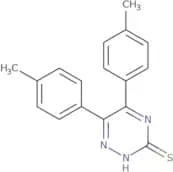
CAS:<p>Versatile small molecule scaffold</p>Formula:C14H15NO2·ClHPurity:Min. 95%Molecular weight:250.12 g/molBis(4-methylphenyl)-1,2,4-triazine-3-thiol
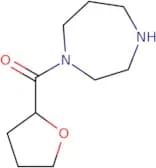
CAS:<p>Versatile small molecule scaffold</p>Formula:C17H15N3SPurity:Min. 95%Molecular weight:293.4 g/mol1-(Oxolane-2-carbonyl)-1,4-diazepane
CAS:Versatile small molecule scaffoldFormula:C10H18N2O2Purity:Min. 95%Molecular weight:198.26 g/mol4-Bromo-3-iodonitrobenzene
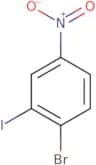
CAS:<p>4-Bromo-3-iodonitrobenzene is a pyrrole derivative that yields 4-bromo-3-iodobenzene upon treatment with palladium. It is a precursor to other products, such as 3-iodo-4-(pyrrolidinomethyl)benzoic acid and 4-(pyrrolidinomethyl)benzoic acid. This compound can be used in the synthesis of biomolecules, such as nucleosides, nucleotides, amino acids, peptides, and proteins. The synthesis of this compound involves deuterium exchange between the bromine and the hydrogen on the nitrogen atom. For example, if 4-bromo-3-iodonitrobenzene reacts with sodium methoxide in methanol it will produce 4-(methylamino)-3-(iodomethyl)aniline hydrochloride. The reaction yield of this</p>Formula:C6H3BrINO2Purity:Min. 95%Molecular weight:327.9 g/mol4-bromo-3-iodoaniline
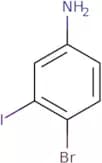
CAS:<p>4-Bromo-3-iodoaniline is a compound that can be used in cancer diagnosis. This substance has been shown to have high fluorescence properties and to emit light when exposed to radiation. The trifluoroacetic acid group makes this compound soluble in water, which is useful for medical purposes. 4-Bromo-3-iodoaniline has been shown to bind selectively to DNA and RNA, making it a potential diagnostic tool for cancer. It also shows great promise for use as a nanomaterial in biomedical imaging applications, such as optical imaging and magnetic resonance imaging (MRI).</p>Formula:C6H5BrINPurity:Min. 95%Molecular weight:297.9 g/mol6-Chloro-2-(pyridin-2-yl)-1H-1,3-benzodiazole
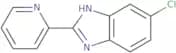
CAS:<p>Versatile small molecule scaffold</p>Formula:C12H8ClN3Purity:Min. 95%Molecular weight:229.66 g/molMethyl 2-oxo-2-(2-oxocyclopentyl)acetate
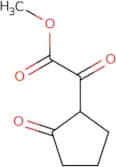
CAS:<p>Versatile small molecule scaffold</p>Formula:C8H10O4Purity:Min. 95%Molecular weight:170.16 g/mol2-Methyl-2H-1,2,3-triazole-4-carboxylic acid
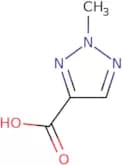
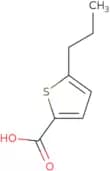
CAS:Versatile small molecule scaffoldFormula:C4H5N3O2Purity:Min. 95%Molecular weight:127.1 g/mol5-Propyl-thiophene-2-carboxylic acid
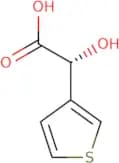
CAS:5-Propyl-thiophene-2-carboxylic acid is a cyclic hydrocarbon that has been synthesized in an asymmetric synthesis. It has a monosubstituted hydrocarbon group and a heterocyclic group. The 5-propyl-thiophene-2-carboxylic acid is a liquid crystal, which means it can form three different phases, including the isotropic phase, the nematic phase, and the smectic phase. 5-Propyl-thiophene-2-carboxylic acid is also a cyclic compound and can be classified as being a heterocyclic.Formula:C8H10O2SPurity:Min. 95%Molecular weight:170.23 g/mol(2R)-2-Hydroxy-2-(thiophen-3-yl)acetic acid
CAS:<p>Versatile small molecule scaffold</p>Formula:C6H6O3SPurity:Min. 95%Molecular weight:158.2 g/molN-{2-[4-(2-Chloroacetyl)phenyl]ethyl}acetamide
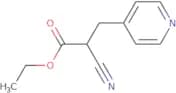
CAS:Versatile small molecule scaffoldFormula:C12H14ClNO2Purity:Min. 95%Molecular weight:239.7 g/molEthyl 2-cyano-3-(pyridin-4-yl)propanoate
CAS:<p>Versatile small molecule scaffold</p>Formula:C11H12N2O2Purity:Min. 95%Molecular weight:204.22 g/mol4-Aminophenol sulfate(2:1)
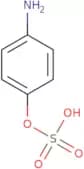
CAS:<p>Versatile small molecule scaffold</p>Formula:C12H16N2O6SPurity:Min. 95%Color and Shape:PowderMolecular weight:316.33 g/mol

![2-Acetamido-3-{1H-pyrrolo[2,3-b]pyridin-3-yl}propanoic acid](/_next/image/?url=https%3A%2Fstatic.cymitquimica.com%2Fproducts%2F3D%2Fthumb-webp%2FNCA02418.webp&w=3840&q=75)
![N-{2-[4-(2-Chloroacetyl)phenyl]ethyl}acetamide](/_next/image/?url=https%3A%2Fstatic.cymitquimica.com%2Fproducts%2F3D%2Fthumb-webp%2FNCA07741.webp&w=3840&q=75)