Building Blocks
This section contains fundamental products for the synthesis of organic and biological compounds. Building blocks are the essential starting materials used to construct complex molecules through various chemical reactions. They play a critical role in drug discovery, material science, and chemical research. At CymitQuimica, we offer a diverse range of high-quality building blocks to support your innovative research and industrial projects, ensuring you have the essential components for successful synthesis.
Subcategories of "Building Blocks"
- Boronic Acids & Boronic Acid Derivatives(5,778 products)
- Chiral Building Blocks(1,242 products)
- Hydrocarbon Building Blocks(6,098 products)
- Organic Building Blocks(61,059 products)
Found 199580 products of "Building Blocks"
Sort by
Purity (%)
0
100
|
0
|
50
|
90
|
95
|
100
[4-(2-Amino-ethyl)-phenyl]-methanol
CAS:<p>Versatile small molecule scaffold</p>Formula:C9H13NOPurity:Min. 95%Molecular weight:151.21 g/mol5-Ethyl-2-methyl-furan-3-carboxylic acid
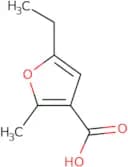
CAS:<p>Versatile small molecule scaffold</p>Formula:C8H10O3Purity:Min. 95%Molecular weight:154.16 g/mol5-Aminopyridine-2-sulfonamide
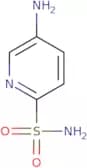
CAS:5-Aminopyridine-2-sulfonamide (5APS) is an inhibitor of carbonic anhydrase. It binds to the active site of the enzyme, which is a cavity in the protein's surface, and prevents the conversion of CO2 to HCO3-. The inhibition of this process leads to a decrease in the production of bicarbonate ions and an increase in acidity. 5APS has been shown to have inhibitory properties against several isoforms of carbonic anhydrase, including those found in bacteria and erythrocytes. X-ray crystallographic studies have led to the rationalization of its binding mode within the active site. 5APS has been shown to be effective as a treatment for glaucoma by reducing intraocular pressure.Formula:C5H7N3O2SPurity:Min. 95%Molecular weight:173.19 g/mol3,6-Dimethoxypyridazine-4-carboxylic acid
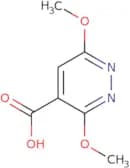
CAS:<p>Versatile small molecule scaffold</p>Formula:C7H8N2O4Purity:Min. 95%Molecular weight:184.15 g/mol3-Amino-4-sulfamoylbenzoic acid
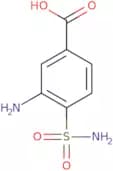
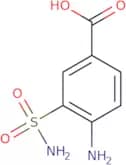
CAS:<p>Versatile small molecule scaffold</p>Formula:C7H8N2O4SPurity:Min. 95%Molecular weight:216.22 g/mol4-Amino-3-sulfamoylbenzoic acid
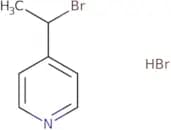
CAS:<p>Versatile small molecule scaffold</p>Formula:C7H8N2O4SPurity:Min. 95%Molecular weight:216.22 g/mol4-(1-Bromoethyl)pyridine hydrobromide
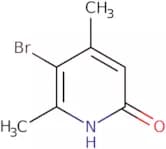
CAS:<p>Versatile small molecule scaffold</p>Formula:C7H9Br2NPurity:Min. 95%Molecular weight:266.96 g/mol5-Bromo-4,6-dimethylpyridin-2(1H)-one
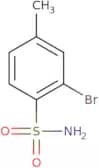
CAS:Versatile small molecule scaffoldFormula:C7H8BrNOPurity:Min. 95%Molecular weight:202.05 g/mol2-Bromo-4-methylbenzene-1-sulfonamide
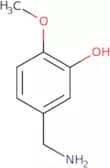
CAS:<p>Versatile small molecule scaffold</p>Formula:C7H8BrNO2SPurity:Min. 95%Molecular weight:250.12 g/mol5-(Aminomethyl)-2-methoxyphenol
CAS:<p>5-(Aminomethyl)-2-methoxyphenol is a xylene-soluble phenolic compound that has been used to diagnose aluminium in human serum. It is also commonly used as an antioxidant and preservative in food chemistry. 5-(Aminomethyl)-2-methoxyphenol has shown potential antitumor effects, as well as the ability to inhibit the growth of amine-producing cells. The mechanism of action for this compound remains unknown.</p>Formula:C8H11NO2Purity:Min. 95%Molecular weight:153.18 g/molSodium 1,4,5,6-tetrahydropyridine-2-carboxylate
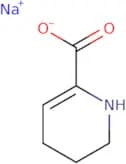
CAS:<p>Versatile small molecule scaffold</p>Formula:C6H8NNaO2Purity:Min. 95%Molecular weight:149.12 g/mol1,2,3,6-Tetrahydropyridin-1-amine hydrochloride
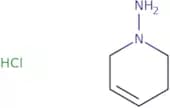
CAS:Versatile small molecule scaffoldFormula:C5H11ClN2Purity:Min. 95%Molecular weight:134.6 g/mol4-Bromo-5-methoxy-1-methyl-1H-pyrazole
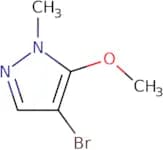
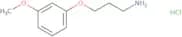
CAS:<p>Versatile small molecule scaffold</p>Formula:C5H7BrN2OPurity:Min. 95%Molecular weight:191.03 g/mol1-Propanamine, 3-(3-methoxyphenoxy)-, hydrochloride (1:1)
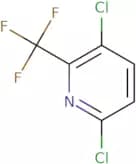
CAS:<p>Versatile small molecule scaffold</p>Formula:C10H16ClNO2Purity:Min. 95%Molecular weight:217.69 g/mol3,6-Dichloro-2-(trifluoromethyl)pyridine
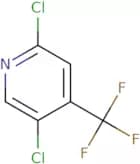
CAS:<p>Versatile small molecule scaffold</p>Formula:C6H2Cl2F3NPurity:Min. 95%Molecular weight:215.99 g/mol2,5-Dichloro-4-(trifluoromethyl)pyridine
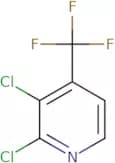
CAS:<p>Versatile small molecule scaffold</p>Formula:C6H2Cl2F3NPurity:Min. 95%Molecular weight:215.99 g/mol2,3-Dichloro-4-(trifluoromethyl)pyridine
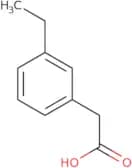
CAS:<p>Versatile small molecule scaffold</p>Formula:C6H2Cl2F3NPurity:Min. 95%Molecular weight:215.99 g/mol2-(3-Ethylphenyl)acetic acid
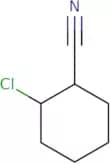
CAS:Versatile small molecule scaffoldFormula:C10H12O2Purity:Min. 95%Molecular weight:164.2 g/mol2-Chlorocyclohexane-1-carbonitrile
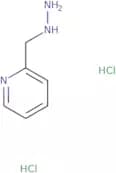
CAS:<p>2-Chlorocyclohexane-1-carbonitrile is an organic compound that belongs to the group of ethers. It is a colorless liquid with a sweet, chloroform-like odor. 2-Chlorocyclohexane-1-carbonitrile has been shown to have transition and steric factors that influence the reactivity of the molecule. The presence of the chlorine atom in this molecule causes it to be detectable by gas chromatography and mass spectrometry. The hydrogen chloride protonation and interaction with other molecules can lead to additional structural changes in 2-chlorocyclohexane-1-carbonitrile, which can also affect its reactivity.</p>Formula:C7H10ClNPurity:Min. 95%Molecular weight:143.61 g/mol2-(Hydrazinylmethyl)pyridine dihydrochloride
CAS:Versatile small molecule scaffoldFormula:C6H11Cl2N3Purity:Min. 95%Molecular weight:196.08 g/mol
![[4-(2-Amino-ethyl)-phenyl]-methanol](/_next/image/?url=https%3A%2Fstatic.cymitquimica.com%2Fproducts%2F3D%2Fthumb-webp%2FPCA35330.webp&w=3840&q=75)