Building Blocks
This section contains fundamental products for the synthesis of organic and biological compounds. Building blocks are the essential starting materials used to construct complex molecules through various chemical reactions. They play a critical role in drug discovery, material science, and chemical research. At CymitQuimica, we offer a diverse range of high-quality building blocks to support your innovative research and industrial projects, ensuring you have the essential components for successful synthesis.
Subcategories of "Building Blocks"
- Boronic Acids & Boronic Acid Derivatives(5,778 products)
- Chiral Building Blocks(1,242 products)
- Hydrocarbon Building Blocks(6,098 products)
- Organic Building Blocks(61,059 products)
Found 199580 products of "Building Blocks"
Sort by
Purity (%)
0
100
|
0
|
50
|
90
|
95
|
100
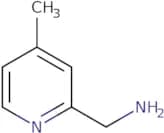
(4-Methylpyridin-2-yl)methanamine
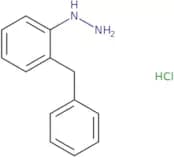
CAS:<p>Versatile small molecule scaffold</p>Formula:C7H10N2Purity:Min. 95%Molecular weight:122.17 g/mol(2-Benzylphenyl)hydrazine hydrochloride
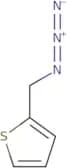
CAS:<p>Versatile small molecule scaffold</p>Formula:C13H15ClN2Purity:Min. 95%Molecular weight:234.72 g/mol2-(Azidomethyl)thiophene
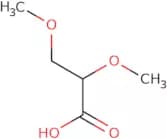
CAS:<p>Versatile small molecule scaffold</p>Formula:C5H5N3SPurity:Min. 95%Molecular weight:139.18 g/mol2,3-Dimethoxypropanoic acid
CAS:<p>Versatile small molecule scaffold</p>Formula:C5H10O4Purity:Min. 95%Molecular weight:134.13 g/mol2-Chloro-1-methoxy-4-[(E)-2-nitroethenyl]benzene
CAS:<p>Versatile small molecule scaffold</p>Formula:C9H8ClNO3Purity:Min. 95%Molecular weight:213.62 g/mol1-[(3-{[(Diaminomethylidene)amino]methyl}phenyl)methyl]guanidine dihydrochloride
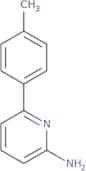
CAS:<p>Versatile small molecule scaffold</p>Formula:C10H18Cl2N6Purity:Min. 95%Molecular weight:293.19 g/mol6-(p-Tolyl)pyridin-2-amine
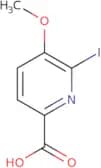
CAS:<p>Versatile small molecule scaffold</p>Formula:C12H12N2Purity:Min. 95%Molecular weight:184.24 g/mol6-Iodo-5-methoxypyridine-2-carboxylic acid
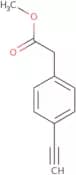
CAS:<p>Versatile small molecule scaffold</p>Formula:C7H6INO3Purity:Min. 95%Molecular weight:279.03 g/molMethyl 2-(4-ethynylphenyl)acetate
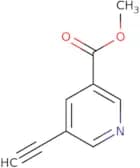
CAS:Versatile small molecule scaffoldFormula:C11H10O2Purity:Min. 95%Molecular weight:174.2 g/molMethyl 5-ethynylpyridine-3-carboxylate
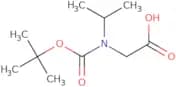
CAS:<p>Versatile small molecule scaffold</p>Formula:C9H7NO2Purity:Min. 95%Molecular weight:161.16 g/molN-Boc-N-isopropylamino-acetic acid
CAS:<p>Versatile small molecule scaffold</p>Formula:C10H19NO4Purity:Min. 95%Molecular weight:217.26 g/mol3-[(tert-Butyldimethylsilyl)oxy]piperidine
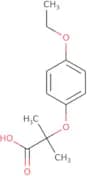
CAS:Versatile small molecule scaffoldFormula:C11H25NOSiPurity:Min. 95%Molecular weight:215.41 g/mol2-(4-Ethoxyphenoxy)-2-methylpropanoic acid
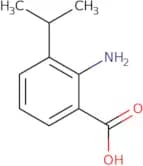
CAS:<p>Versatile small molecule scaffold</p>Formula:C12H16O4Purity:Min. 95%Molecular weight:224.25 g/mol2-Amino-3-(propan-2-yl)benzoic acid
CAS:2-Amino-3-(propan-2-yl)benzoic acid is a heterocyclic compound that can be used as a chemical intermediate in the synthesis of other chemicals. It is selective for dehydrogenation at the 2-position of cyclohexanone. The yield of the product, 2-amino-3-(propan-2-yl)cyclohexanecarboxylic acid, is about 98%. This compound can also be used to produce quinazolinones and cleavage products. 2-Amino-3-(propan-2-yl)benzoic acid undergoes autoxidation, but this reaction is not very fast due to steric hindrance caused by the bulky substituent at the 3 position.Formula:C10H13NO2Purity:Min. 95%Molecular weight:179.22 g/mol6-chloroimidazo[1,2-b]pyridazine-3-carbaldehyde
CAS:<p>Versatile small molecule scaffold</p>Formula:C7H4ClN3OPurity:Min. 95%Molecular weight:181.6 g/molMethyl 2-(1-methylpiperidin-4-ylidene)acetate
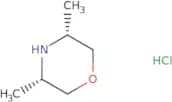
CAS:<p>Versatile small molecule scaffold</p>Formula:C9H15NO2Purity:Min. 95%Molecular weight:169.22 g/molcis-3,5-dimethyl-morpholine hcl
CAS:<p>Versatile small molecule scaffold</p>Formula:C6H14ClNOPurity:Min. 95%Molecular weight:151.63 g/molrac-(1R,4R)-4-[(Ethylamino)methyl]cyclohexane-1-carboxylic acid hydrochloride
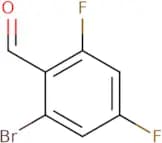
CAS:<p>Versatile small molecule scaffold</p>Formula:C10H20ClNO2Purity:Min. 95%Molecular weight:221.72 g/mol2-Bromo-4,6-difluorobenzaldehyde
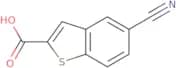
CAS:2-Bromo-4,6-difluorobenzaldehyde is an aromatic aldehyde that can be used as a reagent in the olefination of benzylic alcohols. This process involves the formation of an alkylidene derivative from an alkoxybenzene and an aldehyde. The reaction is catalyzed by palladium or nickel, which act as intramolecular oxidants. The resulting product is a ketone with two adjacent carbon atoms on one side of the double bond. 2-Bromo-4,6-difluorobenzaldehyde has been found to be more efficient than other types of aldehydes for this purpose because it does not require protection of the hydroxyl group during the reaction.Formula:C7H3BrF2OPurity:Min. 95%Molecular weight:221 g/mol5-Cyano-1-benzothiophene-2-carboxylic acid
CAS:<p>Versatile small molecule scaffold</p>Formula:C10H5NO2SPurity:Min. 95%Molecular weight:203.22 g/mol

![2-Chloro-1-methoxy-4-[(E)-2-nitroethenyl]benzene](/_next/image/?url=https%3A%2Fstatic.cymitquimica.com%2Fproducts%2F3D%2Fthumb-webp%2FEGA45559.webp&w=3840&q=75)
![1-[(3-{[(Diaminomethylidene)amino]methyl}phenyl)methyl]guanidine dihydrochloride](/_next/image/?url=https%3A%2Fstatic.cymitquimica.com%2Fproducts%2F3D%2Fthumb-webp%2FEGA47491.webp&w=3840&q=75)
![3-[(tert-Butyldimethylsilyl)oxy]piperidine](/_next/image/?url=https%3A%2Fstatic.cymitquimica.com%2Fproducts%2F3D%2Fthumb-webp%2FEGA54453.webp&w=3840&q=75)
![6-chloroimidazo[1,2-b]pyridazine-3-carbaldehyde](/_next/image/?url=https%3A%2Fstatic.cymitquimica.com%2Fproducts%2F3D%2Fthumb-webp%2FEGA57826.webp&w=3840&q=75)

![rac-(1R,4R)-4-[(Ethylamino)methyl]cyclohexane-1-carboxylic acid hydrochloride](/_next/image/?url=https%3A%2Fstatic.cymitquimica.com%2Fproducts%2F3D%2Fthumb-webp%2FEGA60253.webp&w=3840&q=75)