Building Blocks
This section contains fundamental products for the synthesis of organic and biological compounds. Building blocks are the essential starting materials used to construct complex molecules through various chemical reactions. They play a critical role in drug discovery, material science, and chemical research. At CymitQuimica, we offer a diverse range of high-quality building blocks to support your innovative research and industrial projects, ensuring you have the essential components for successful synthesis.
Subcategories of "Building Blocks"
- Boronic Acids & Boronic Acid Derivatives(5,778 products)
- Chiral Building Blocks(1,243 products)
- Hydrocarbon Building Blocks(6,097 products)
- Organic Building Blocks(61,048 products)
Found 203115 products of "Building Blocks"
Sort by
Purity (%)
0
100
|
0
|
50
|
90
|
95
|
100
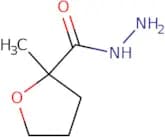
2-Methyloxolane-2-carbohydrazide
CAS:<p>Versatile small molecule scaffold</p>Formula:C6H12N2O2Purity:Min. 95%Molecular weight:144.17 g/mol1-[5-(Trifluoromethyl)pyridin-2-yl]ethan-1-ol
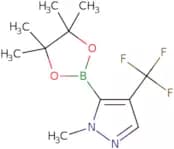
CAS:Versatile small molecule scaffoldFormula:C8H8F3NOPurity:Min. 95%Molecular weight:191.15 g/mol1-Methyl-5-(tetramethyl-1,3,2-dioxaborolan-2-yl)-4-(trifluoromethyl)-1H-pyrazole
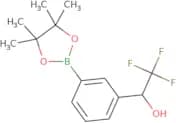
CAS:Versatile small molecule scaffoldFormula:C11H16BF3N2O2Purity:Min. 95%Molecular weight:276.07 g/mol(3-(2,2,2-Trifluoro-1-hydroxyethyl)phenyl)boronic acid pinacol ester
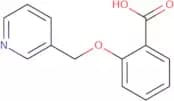
CAS:<p>Versatile small molecule scaffold</p>Formula:C14H18BF3O3Purity:Min. 95%Molecular weight:302.1 g/mol2-(Pyridin-3-ylmethoxy)benzoic acid
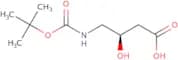
CAS:2-(Pyridin-3-ylmethoxy)benzoic acid is a chemical compound that belongs to the group of quinones. It is used as an ingredient in anti-aging cosmetics. 2-(Pyridin-3-ylmethoxy)benzoic acid has been shown to have an inhibitory effect on collagen degradation and the synthesis of arachidonic acid, which are both important for skin health. This compound also inhibits platelet aggregation, which may be due to its ability to bind with adenosine and chloride ion channels.Formula:C13H11NO3Purity:Min. 95%Molecular weight:229.23 g/mol(R)-4-((tert-Butoxycarbonyl)amino)-3-hydroxybutanoic acid
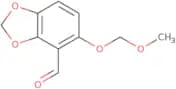
CAS:Versatile small molecule scaffoldFormula:C9H17NO5Purity:Min. 95%Molecular weight:219.23 g/mol5-(Methoxymethoxy)-1,3-dioxaindane-4-carbaldehyde
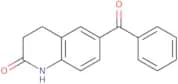
CAS:Versatile small molecule scaffoldFormula:C10H10O5Purity:Min. 95%Molecular weight:210.18 g/mol6-Benzoyl-1,2,3,4-tetrahydroquinolin-2-one
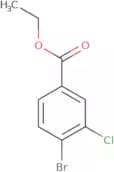
CAS:Versatile small molecule scaffoldFormula:C16H13NO2Purity:Min. 95%Molecular weight:251.28 g/molEthyl 4-Bromo-3-chlorobenzoate
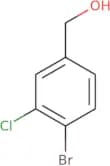
CAS:<p>Versatile small molecule scaffold</p>Formula:C9H8BrClO2Purity:Min. 95%Molecular weight:263.52 g/mol4-Bromo-3-chlorobenzyl Alcohol
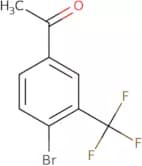
CAS:<p>Versatile small molecule scaffold</p>Formula:C7H6BrClOPurity:Min. 95%Molecular weight:221.48 g/mol4'-Bromo-3'-(trifluoromethyl)acetophenone
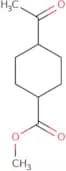
CAS:Versatile small molecule scaffoldFormula:C9H6BrF3OPurity:Min. 95%Molecular weight:267.04 g/molMethyl 4-acetylcyclohexanecarboxylate
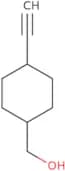
CAS:<p>Versatile small molecule scaffold</p>Formula:C10H16O3Purity:Min. 95%Molecular weight:184.23 g/mol(4-Ethynylcyclohexyl)methanol
CAS:<p>4-Ethynylcyclohexyl)methanol is a cyclohexanecarboxylic acid that has insecticidal activity. It is used as an intermediate in the synthesis of other chemical compounds and as an insecticide. 4-Ethynylcyclohexyl)methanol is made by reacting cyclohexane with formaldehyde and ethyne, which are two of its major geometric isomers. The reaction product is an example of a geometric isomer, which contains four different substituents on each carbon atom. The insecticidal properties of 4-Ethynylcyclohexyl)methanol have been shown to be due to the presence of these substituents.</p>Formula:C9H14OPurity:Min. 95%Molecular weight:138.21 g/mol3-(Prop-2-en-1-yl)-2-sulfanyl-3H,4H-thieno[3,2-d]pyrimidin-4-one
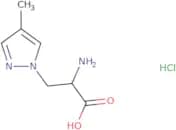
CAS:<p>Versatile small molecule scaffold</p>Formula:C9H8N2OS2Purity:Min. 95%Molecular weight:224.3 g/mol2-Amino-3-(4-methyl-1H-pyrazol-1-yl)propanoic acid hydrochloride
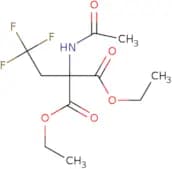
CAS:<p>Versatile small molecule scaffold</p>Formula:C7H12ClN3O2Purity:Min. 95%Molecular weight:205.64 g/mol1,3-Diethyl 2-acetamido-2-(2,2,2-trifluoroethyl)propanedioate
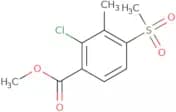
CAS:Versatile small molecule scaffoldFormula:C11H16F3NO5Purity:Min. 95%Molecular weight:299.24 g/molMethyl 2-chloro-4-methanesulfonyl-3-methylbenzoate
CAS:Versatile small molecule scaffoldFormula:C10H11ClO4SPurity:Min. 95%Molecular weight:262.71 g/molImidazo[2,1-b]thiazole-6-carbaldehyde
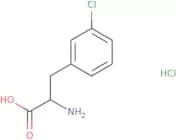
CAS:Versatile small molecule scaffoldFormula:C6H4N2OSPurity:Min. 95%Molecular weight:152.18 g/mol2-Amino-3-(3-chlorophenyl)propanoic acid hydrochloride
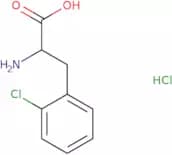
CAS:Controlled Product2-Amino-3-(3-chlorophenyl)propanoic acid hydrochloride (2APPAH) is an inhibitor of protein interactions that binds to the receptor site on a ligand. It has been shown to be an activator of the Ligand and a high purity research tool in Life Science. 2APPAH has also been used as a pharmacological tool for identifying ion channels, which are proteins that control the flow of ions across cell membranes. The CAS number for 2APPAH is 120108-62-5.Formula:C9H11Cl2NO2Purity:Min. 95%Molecular weight:236.09 g/mol2-Chlorophenylalanine hydrochloride
CAS:Versatile small molecule scaffoldFormula:C9H11Cl2NO2Purity:Min. 95%Molecular weight:236.09 g/mol

![1-[5-(Trifluoromethyl)pyridin-2-yl]ethan-1-ol](/_next/image/?url=https%3A%2Fstatic.cymitquimica.com%2Fproducts%2F3D%2Fthumb-webp%2FVDC97317.webp&w=3840&q=75)
![3-(Prop-2-en-1-yl)-2-sulfanyl-3H,4H-thieno[3,2-d]pyrimidin-4-one](/_next/image/?url=https%3A%2Fstatic.cymitquimica.com%2Fproducts%2F3D%2Fthumb-webp%2FVEA07981.webp&w=3840&q=75)
![Imidazo[2,1-b]thiazole-6-carbaldehyde](/_next/image/?url=https%3A%2Fstatic.cymitquimica.com%2Fproducts%2F3D%2Fthumb-webp%2FVEA10761.webp&w=3840&q=75)