Building Blocks
This section contains fundamental products for the synthesis of organic and biological compounds. Building blocks are the essential starting materials used to construct complex molecules through various chemical reactions. They play a critical role in drug discovery, material science, and chemical research. At CymitQuimica, we offer a diverse range of high-quality building blocks to support your innovative research and industrial projects, ensuring you have the essential components for successful synthesis.
Subcategories of "Building Blocks"
- Boronic Acids & Boronic Acid Derivatives(5,778 products)
- Chiral Building Blocks(1,242 products)
- Hydrocarbon Building Blocks(6,098 products)
- Organic Building Blocks(61,034 products)
Found 199601 products of "Building Blocks"
Sort by
Purity (%)
0
100
|
0
|
50
|
90
|
95
|
100
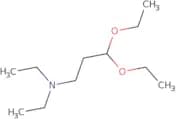
(3,3-Diethoxypropyl)diethylamine
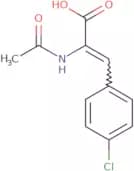
CAS:<p>Versatile small molecule scaffold</p>Formula:C11H25NO2Purity:Min. 95%Molecular weight:203.32 g/mol(2Z)-2-(Acetylamino)-3-(4-chlorophenyl)acrylic acid
CAS:<p>Versatile small molecule scaffold</p>Formula:C11H10ClNO3Purity:Min. 95%Molecular weight:239.65 g/mol2-{Spiro[3.3]heptan-2-yl}ethan-1-ol
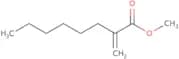
CAS:<p>Versatile small molecule scaffold</p>Formula:C9H16OPurity:Min. 95%Molecular weight:140.22 g/molMethyl 2-methylideneoctanoate
CAS:<p>Versatile small molecule scaffold</p>Formula:C10H18O2Purity:Min. 95%Molecular weight:170.25 g/mol4-Methyl-5-oxopentanenitrile
CAS:<p>Versatile small molecule scaffold</p>Formula:C6H9NOPurity:Min. 95%Molecular weight:111.14 g/mol1-Propyl-[1,4]diazepane
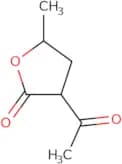
CAS:<p>Versatile small molecule scaffold</p>Formula:C8H18N2Purity:Min. 95%Molecular weight:142.25 g/mol3-Acetyl-5-methyloxolan-2-one
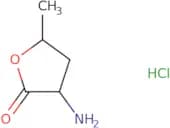
CAS:<p>Versatile small molecule scaffold</p>Formula:C7H10O3Purity:Min. 95%Molecular weight:142.15 g/mol3-Amino-5-methyloxolan-2-one hydrochloride
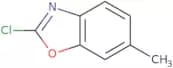
CAS:<p>Versatile small molecule scaffold</p>Formula:C5H10ClNO2Purity:Min. 95%Molecular weight:151.59 g/mol2-Chloro-6-methyl-1,3-benzoxazole
CAS:Versatile small molecule scaffoldFormula:C8H6ClNOPurity:Min. 95%Molecular weight:167.59 g/mol2-Chloro-6-(methylsulfonyl)benzo[d]thiazole
CAS:<p>Versatile small molecule scaffold</p>Formula:C8H6ClNO2S2Purity:Min. 95%Molecular weight:247.72 g/mol2-Chloro-5-methylbenzo[d]thiazole
CAS:<p>Versatile small molecule scaffold</p>Formula:C8H6ClNSPurity:Min. 95%Molecular weight:183.66 g/mol2-Chloro-4-methyl-benzothiazole
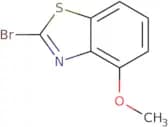
CAS:<p>Versatile small molecule scaffold</p>Formula:C8H6ClNSPurity:Min. 95%Molecular weight:183.66 g/mol2-Bromo-4-methoxybenzothiazole
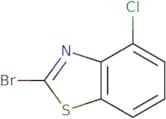
CAS:<p>Versatile small molecule scaffold</p>Formula:C8H6BrNOSPurity:Min. 95%Molecular weight:244.11 g/mol2-Bromo-4-chlorobenzothiazole
CAS:<p>Versatile small molecule scaffold</p>Formula:C7H3BrClNSPurity:Min. 95%Molecular weight:248.53 g/mol2-Bromo-7-methylbenzo[D]thiazole
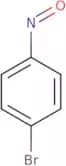
CAS:<p>Versatile small molecule scaffold</p>Formula:C8H6BrNSPurity:Min. 95%Molecular weight:228.11 g/mol1-Bromo-4-nitrosobenzene
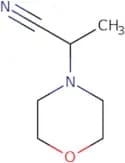
CAS:<p>1-Bromo-4-nitrosobenzene is a chemical compound that has been shown to be a stable, metastable molecule. It can undergo nucleophilic attack on the carbonyl group by deuterium atoms. This reaction is dependent on kinetic and thermodynamic factors, such as activation energy and the concentration of the reactants. The FT-IR spectroscopy for this compound reveals that it consists of two heterodimers: one containing three nitroso groups and one bromine atom and another with two nitroso groups and one bromine atom. The rates of reaction for these monomers are different because they are not equivalent in terms of their chemical properties.</p>Formula:C6H4BrNOPurity:Min. 95%Molecular weight:186.01 g/mol2-(Morpholin-4-yl)propanenitrile
CAS:<p>2-(Morpholin-4-yl)propanenitrile is a diaminodiphenylsulfone that inhibits the synthesis of pyrimidines, such as thymine and cytosine. It also has synergistic effects with sulphones, which are inhibitors of mycobacteria. The synergistic activity of 2-(Morpholin-4-yl)propanenitrile against mycobacteria has been shown to be due to its antimicrobial properties. This chemical compound has been shown to have a synergistic effect when combined with isoniazide, an inhibitor of the synthesis of mycolic acid in Mycobacterium tuberculosis.</p>Formula:C7H12N2OPurity:Min. 95%Molecular weight:140.18 g/molethyl 6-aminohexanoate,hydrochloride
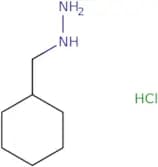
CAS:<p>Ethyl 6-aminohexanoate,hydrochloride is a monomer that can be polymerized with other ethyl 6-aminohexanoate,hydrochloride monomers to form polyelectrolytes. This compound has hydrophobic properties and reacts with functional groups. Ethyl 6-aminohexanoate,hydrochloride is fluorescent and has reactive properties. Polyelectrolytes are polymers that contain multiple charged groups which are able to form ionic bonds with other polymers or ions in solution. Ethyl 6-aminohexanoate,hydrochloride can be used as a crosslinker because it contains two methacrylate groups that react with the amino groups of proteins or polypeptides to form covalent bonds.</p>Formula:C8H18ClNO2Purity:Min. 95%Molecular weight:195.69 g/mol(Cyclohexylmethyl)hydrazine hydrochloride
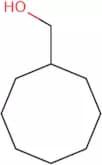
CAS:<p>Cyclohexylmethyl)hydrazine hydrochloride is a heterocyclic compound that has been used as a medicinal agent. It has shown to be effective in the treatment of cachexia, autoimmune diseases, diabetes, rheumatoid arthritis, and asthma. Cyclohexylmethyl)hydrazine hydrochloride has an inhibitory effect on the production of inflammatory cytokines and enzymes such as prostaglandin E2 synthase and cyclooxygenase-1 (COX-1). The drug also inhibits the growth of cells in human skin and erythematosus lesions. Cyclohexylmethyl)hydrazine hydrochloride is metabolized by hydroxamic acid.</p>Formula:C7H16N2·ClHPurity:Min. 95%Molecular weight:164.68 g/molCyclooctylmethanol
CAS:<p>Cyclooctylmethanol is a cancer drug that belongs to the class of amides. It has been shown to have anti-inflammatory properties and can be used in the treatment of bladder infections, as well as infectious diseases. Cyclooctylmethanol binds to the platelet membrane and inhibits the growth of cancer cells. This compound also has an inhibitory effect on nicotinic acetylcholine receptors and can be used to treat Alzheimer's disease. Cyclooctylmethanol has been shown to have growth factor activity, which may be due to its hydroxyl group or fatty acid moiety. This antibiotic also reacts with ruthenium complex, which causes it to become more active against bacteria.</p>Formula:C9H18OPurity:Min. 95%Molecular weight:142.23 g/mol

![2-{Spiro[3.3]heptan-2-yl}ethan-1-ol](/_next/image/?url=https%3A%2Fstatic.cymitquimica.com%2Fproducts%2F3D%2Fthumb-webp%2FDAA61781.webp&w=3840&q=75)

![1-Propyl-[1,4]diazepane](/_next/image/?url=https%3A%2Fstatic.cymitquimica.com%2Fproducts%2F3D%2Fthumb-webp%2FDAA61974.webp&w=3840&q=75)
![2-Chloro-6-(methylsulfonyl)benzo[d]thiazole](/_next/image/?url=https%3A%2Fstatic.cymitquimica.com%2Fproducts%2F3D%2Fthumb-webp%2FDAA62229.webp&w=3840&q=75)
![2-Chloro-5-methylbenzo[d]thiazole](/_next/image/?url=https%3A%2Fstatic.cymitquimica.com%2Fproducts%2F3D%2Fthumb-webp%2FDAA62231.webp&w=3840&q=75)

![2-Bromo-7-methylbenzo[D]thiazole](/_next/image/?url=https%3A%2Fstatic.cymitquimica.com%2Fproducts%2F3D%2Fthumb-webp%2FDAA62244.webp&w=3840&q=75)