Building Blocks
This section contains fundamental products for the synthesis of organic and biological compounds. Building blocks are the essential starting materials used to construct complex molecules through various chemical reactions. They play a critical role in drug discovery, material science, and chemical research. At CymitQuimica, we offer a diverse range of high-quality building blocks to support your innovative research and industrial projects, ensuring you have the essential components for successful synthesis.
Subcategories of "Building Blocks"
- Boronic Acids & Boronic Acid Derivatives(5,756 products)
- Chiral Building Blocks(1,242 products)
- Hydrocarbon Building Blocks(6,095 products)
- Organic Building Blocks(61,055 products)
Found 199650 products of "Building Blocks"
Sort by
Purity (%)
0
100
|
0
|
50
|
90
|
95
|
100
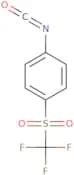
4-(Trifluoromethylsulfonyl)phenylisocyanate
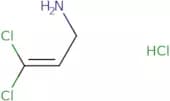
CAS:<p>Versatile small molecule scaffold</p>Formula:C8H4F3NO3SPurity:Min. 95%Molecular weight:251.18 g/mol3,3-Dichloroprop-2-en-1-amine hydrochloride
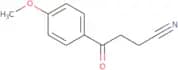
CAS:<p>Versatile small molecule scaffold</p>Formula:C3H6Cl3NPurity:Min. 95%Molecular weight:162.44 g/mol4-(4-Methoxyphenyl)-4-oxobutanenitrile
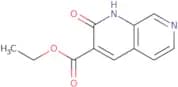
CAS:<p>Versatile small molecule scaffold</p>Formula:C11H11NO2Purity:Min. 95%Molecular weight:189.21 g/molEthyl 2-oxo-1,2-dihydro-1,7-naphthyridine-3-carboxylate
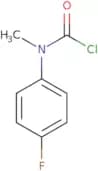
CAS:<p>Versatile small molecule scaffold</p>Formula:C11H10N2O3Purity:Min. 95%Molecular weight:218.21 g/molN-(4-Fluorophenyl)-N-methylcarbamoyl chloride
CAS:Versatile small molecule scaffoldFormula:C8H7ClFNOPurity:Min. 95%Molecular weight:187.6 g/mol(5-Ethylpyridin-2-yl)methanamine
CAS:<p>Versatile small molecule scaffold</p>Formula:C8H12N2Purity:Min. 95%Molecular weight:136.19 g/molN-Methyl-N-(2-phenylethyl)carbamoyl chloride
CAS:Versatile small molecule scaffoldFormula:C10H12ClNOPurity:Min. 95%Molecular weight:197.66 g/mol3-(3-Aminopropyl)phenol hydrochloride
CAS:<p>Versatile small molecule scaffold</p>Formula:C9H14ClNOPurity:Min. 95%Molecular weight:187.66 g/mol3-Benzylcyclobutanone
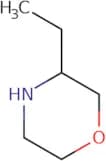
CAS:<p>3-Benzylcyclobutanone is a chiral, cyclic, sulfoxide that is synthesized via the asymmetric synthesis of 3-benzoylcyclobutanone and benzaldehyde. It can be used in the preparation of oxazolidinones, which are synthetic drugs with anti-inflammatory, analgesic and antipyretic properties. The optical purity of 3-benzylcyclobutanone has been shown to be greater than 99% by chiral GC analysis. This compound has also been synthesized using a preparative yield of 92%.</p>Formula:C11H12OPurity:Min. 95%Molecular weight:160.22 g/mol3-Ethylmorpholine hydrochloride
CAS:<p>3-Ethylmorpholine hydrochloride is a tryptic that is used to detect fingerprints, viruses, and tissue. It reacts with amines to form a product that can be detected by chromatography. 3-Ethylmorpholine hydrochloride has been shown to react with the transition state of the enzyme trypsin and inhibit its activity. 3-Ethylmorpholine hydrochloride is also reactive towards benzene, which may be due to its ability to form sulphone or primary amine intermediates. This would allow 3-Ethylmorpholine hydrochloride to undergo reactions with other solvents in the environment, such as cellular proteins in host cells.</p>Formula:C6H14ClNOPurity:Min. 95%Molecular weight:151.63 g/mol1-[(Propan-2-yl)amino]propan-2-one hydrochloride
CAS:<p>Versatile small molecule scaffold</p>Formula:C6H14ClNOPurity:Min. 95%Molecular weight:151.63 g/molrac-[(1R,2R)-1-Amino-2,3-dihydro-1H-inden-2-yl]methanol
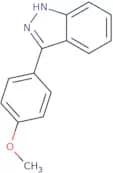
CAS:<p>Versatile small molecule scaffold</p>Formula:C10H13NOPurity:Min. 95%Molecular weight:163.22 g/mol3-(4-Methoxy-phenyl)-1H-indazole
CAS:<p>3-(4-Methoxy-phenyl)-1H-indazole is a kinase inhibitor that inhibits the activity of terminal kinases. It has been shown to inhibit the activity of indazole derivatives and may be useful in treating diseases associated with these kinases, such as cancer. 3-(4-Methoxy-phenyl)-1H-indazole is a potent inhibitor of human caspase 9, which plays an important role in apoptosis by activating downstream proteases. It also inhibits the activation of protein kinase B, which is involved in cellular signaling pathways and cell cycle regulation.</p>Formula:C14H12N2OPurity:Min. 95%Molecular weight:224.26 g/mol2-Amino-1-(4-methoxyphenyl)ethanol
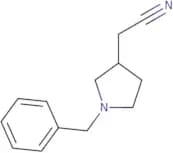
CAS:<p>2-Amino-1-(4-methoxyphenyl)ethanol is a lactam that is minimally reactive with biological systems. It has been shown to inhibit the binding of the linker molecule to calcitriol, which is a vital component of vitamin D synthesis. This compound can also be used in intra-articular injections for the treatment of arthritis and other inflammatory disorders. 2-Amino-1-(4-methoxyphenyl)ethanol has been synthesized from an endogenous amino acid precursor and conjugated with a fluorophore, enabling it to be tracked in vivo by fluorescence imaging. It has been demonstrated that 2-Amino-1-(4-methoxyphenyl)ethanol can be used as a traceless bioactive molecule in molecular modelling and simulations.</p>Formula:C9H13NO2Purity:Min. 95%Molecular weight:167.21 g/mol2-(1-Benzylpyrrolidin-3-yl)acetonitrile
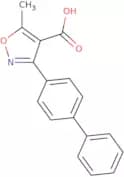
CAS:<p>Versatile small molecule scaffold</p>Formula:C13H16N2Purity:Min. 95%Molecular weight:200.28 g/mol5-Methyl-3-(4-phenylphenyl)-1,2-oxazole-4-carboxylic acid
CAS:<p>Versatile small molecule scaffold</p>Formula:C17H13NO3Purity:Min. 95%Molecular weight:279.29 g/mol3-Cyclohexyl-5-methyl-1,2-oxazole-4-carboxylic acid
CAS:<p>Versatile small molecule scaffold</p>Formula:C11H15NO3Purity:Min. 95%Molecular weight:209.24 g/molEthyl 2-cyclopropylidenepropanoate
CAS:<p>Versatile small molecule scaffold</p>Formula:C8H12O2Purity:Min. 95%Molecular weight:140.18 g/mol2-chloro-7-methyl-7H-purine
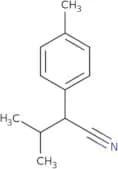
CAS:Versatile small molecule scaffoldFormula:C6H5ClN4Purity:Min. 95%Molecular weight:168.58 g/mol3-Methyl-2-(4-methylphenyl)butanenitrile
CAS:<p>Versatile small molecule scaffold</p>Formula:C12H15NPurity:Min. 95%Molecular weight:173.25 g/mol



![1-[(Propan-2-yl)amino]propan-2-one hydrochloride](/_next/image/?url=https%3A%2Fstatic.cymitquimica.com%2Fproducts%2F3D%2Fthumb-webp%2FFCA26840.webp&w=3840&q=75)
![rac-[(1R,2R)-1-Amino-2,3-dihydro-1H-inden-2-yl]methanol](/_next/image/?url=https%3A%2Fstatic.cymitquimica.com%2Fproducts%2F3D%2Fthumb-webp%2FFCA27004.webp&w=3840&q=75)