Building Blocks
This section contains fundamental products for the synthesis of organic and biological compounds. Building blocks are the essential starting materials used to construct complex molecules through various chemical reactions. They play a critical role in drug discovery, material science, and chemical research. At CymitQuimica, we offer a diverse range of high-quality building blocks to support your innovative research and industrial projects, ensuring you have the essential components for successful synthesis.
Subcategories of "Building Blocks"
- Boronic Acids & Boronic Acid Derivatives(5,756 products)
- Chiral Building Blocks(1,242 products)
- Hydrocarbon Building Blocks(6,095 products)
- Organic Building Blocks(61,055 products)
Found 199650 products of "Building Blocks"
Sort by
Purity (%)
0
100
|
0
|
50
|
90
|
95
|
100
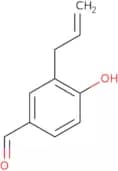
3-Allyl-4-hydroxybenzaldehyde
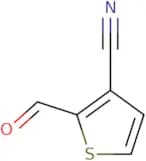
CAS:<p>3-Allyl-4-hydroxybenzaldehyde is a hydroxyalkyl, 6-membered, heteroaromatic ring with a hydroxyl group. It has a hydroxy, alkoxycarbonyl, formyl group, alkoxy group, acid group, alkenyl, alkyloxy, formyl and alkenyl group. 3-Allyl-4-hydroxybenzaldehyde can be found in the chemical family of nitro, carbamoyl.</p>Formula:C10H10O2Purity:Min. 95%Molecular weight:162.19 g/mol2-Formylthiophene-3-carbonitrile
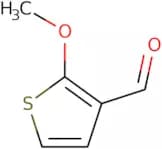
CAS:<p>Versatile small molecule scaffold</p>Formula:C6H3NOSPurity:Min. 95%Molecular weight:137.16 g/mol2-Methoxy-3-thiophenecarboxaldehyde
CAS:<p>Versatile small molecule scaffold</p>Formula:C6H6O2SPurity:Min. 95%Molecular weight:142.17 g/mol1',2'-Dihydrospiro[cyclopentane-1,3'-indole]-2'-one
CAS:1',2'-Dihydrospiro[cyclopentane-1,3'-indole]-2'-one is a bromodomain inhibitor that inhibits the function of the bromodomain and prevents it from binding to acetylated lysine residues in the N-terminal domain of histones. This drug has been shown to inhibit the growth and proliferation of cancer cells in vitro. 1',2'-Dihydrospiro[cyclopentane-1,3'-indole]-2'-one is used as an excipient or diluent in pharmaceutical formulations. The drug is also used therapeutically as bromodomain inhibitors for cancers including breast, prostate, and colorectal cancers.Formula:C12H13NOPurity:Min. 95%Molecular weight:187.24 g/mol3-Ethylhexanoic acid
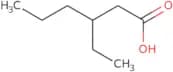
CAS:<p>3-Ethylhexanoic acid is an organic compound that can be synthesized by reacting benzyl chloride with triethylamine and aluminum chloride in the presence of a catalyst such as sulfuric acid. 3-Ethylhexanoic acid is used to produce polymers, solvents, and plasticizers. It has been shown that 3-ethylhexanoic acid reacts with birch wood to give a mixture of enolates, which can then be alkylated to produce a variety of compounds. The reduction of 3-ethylhexanoic acid using lithium reduces it to 2-ethylhexanol.</p>Formula:C8H16O2Purity:Min. 95%Molecular weight:144.21 g/mol1-(2-Chloro-4-methoxyphenyl)ethanone
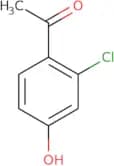
CAS:<p>Versatile small molecule scaffold</p>Formula:C9H9ClO2Purity:Min. 95%Molecular weight:184.62 g/mol3-Ethyl-1H-purine-2,6(3H,7H)-dione
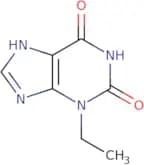
CAS:Controlled Product<p>3-Ethyl-1H-purine-2,6(3H,7H)-dione is a pharmaceutical preparation that is used in the treatment of cardiac diseases. It has been shown to be effective in the treatment of cardiac disease by lowering blood pressure and improving exercise tolerance. This medication should not be taken if you have a history of congestive heart failure or cardiogenic shock.</p>Formula:C7H8N4O2Purity:Min. 95%Molecular weight:180.16 g/mol2-[(Ethylcarbamoyl)amino]-2-oxoethanecarbonimidoyl cyanide
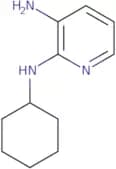
CAS:<p>Versatile small molecule scaffold</p>Formula:C6H8N4O3Purity:Min. 95%Molecular weight:184.15 g/mol2-N-Cyclohexylpyridine-2,3-diamine
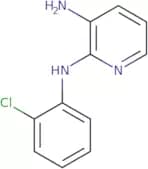
CAS:<p>Versatile small molecule scaffold</p>Formula:C11H17N3Purity:Min. 95%Molecular weight:191.27 g/mol2-N-(2-Chlorophenyl)pyridine-2,3-diamine
CAS:<p>Versatile small molecule scaffold</p>Formula:C11H10ClN3Purity:Min. 95%Molecular weight:219.67 g/mol1-Bromo-2-methylpropan-2-yl acetate
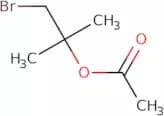
CAS:<p>1-Bromo-2-methylpropan-2-yl acetate is a glycol that is used as a stabilizer in the synthesis of other organic compounds. It can be used to cleave bonds and is useful for the production of drugs, such as antibiotics. In addition, 1-Bromo-2-methylpropan-2-yl acetate has been shown to inhibit the growth of staphylococcus aureus and other bacteria. This compound binds to the ribosome and inhibits protein synthesis by preventing peptide bond formation. It also has been shown to be effective against vancomycin resistance in strains of staphylococcus aureus.</p>Formula:C6H11BrO2Purity:Min. 95%Molecular weight:195.05 g/mol2-Methanesulfinylaniline
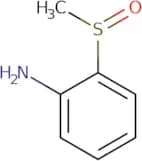
CAS:<p>2-Methanesulfinylaniline is a chemical compound that can be used as an arylating agent. It reacts with benzaldehyde or benzaldehydes to form benzylic alcohols. The reaction is catalyzed by acid and the regioselectivity of the reaction depends on the type of acid used. 2-Methanesulfinylaniline has been shown to be effective in the synthesis of 3-benzoylbenzoic acids, which are useful intermediates in organic chemistry.</p>Formula:C7H9NOSPurity:Min. 95%Molecular weight:155.22 g/mol(E,E)-Bis[(4-chlorophenyl)methylidene]hydrazine
CAS:<p>Versatile small molecule scaffold</p>Purity:Min. 95%Molecular weight:277.15 g/mol7-bromothieno[3,2-d]pyrimidine-2,4-diol
CAS:<p>Versatile small molecule scaffold</p>Formula:C6H3BrN2O2SPurity:Min. 95%Molecular weight:247.07 g/mol7-bromo-2,4-dichlorothieno[3,2-d]pyrimidine
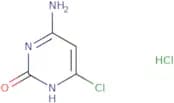
CAS:<p>Versatile small molecule scaffold</p>Formula:C6HBrCl2N2SPurity:Min. 95%Molecular weight:283.95 g/mol4-Amino-6-chloro-1,2-dihydropyrimidin-2-one hydrochloride
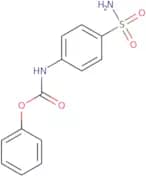
CAS:<p>Versatile small molecule scaffold</p>Formula:C4H5Cl2N3OPurity:Min. 95%Molecular weight:182.01 g/molPhenyl N-(4-sulfamoylphenyl)carbamate
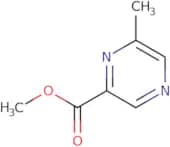
CAS:<p>Versatile small molecule scaffold</p>Formula:C13H12N2O4SPurity:Min. 95%Molecular weight:292.31 g/molMethyl 6-methylpyrazine-2-carboxylate
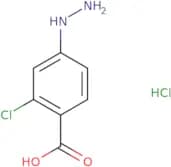
CAS:<p>Versatile small molecule scaffold</p>Formula:C7H8N2O2Purity:Min. 95%Molecular weight:152.15 g/mol2-Chloro-4-hydrazinylbenzoic Acid Hydrochloride
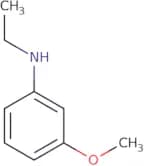
CAS:<p>Versatile small molecule scaffold</p>Formula:C7H7N2O2Cl·HClPurity:Min. 95%Molecular weight:223.05 g/molN-Ethyl-3-methoxyaniline
CAS:<p>N-Ethyl-3-methoxyaniline (NEM) is a biocompatible and biodegradable surrogate that can be used as a substitute for arginine in metathesis reactions. NEM has been shown to inhibit thrombin, an enzyme involved in the coagulation of blood. Cocrystallization with cobalt(II) chloride has been optimized to yield crystals with an x-ray crystal structure. The crystal structure was analyzed by x-ray diffraction and found to contain the cocrystallized product of NEM and cobalt(II) chloride.</p>Formula:C9H13NOPurity:Min. 95%Molecular weight:151.21 g/mol

![1',2'-Dihydrospiro[cyclopentane-1,3'-indole]-2'-one](/_next/image/?url=https%3A%2Fstatic.cymitquimica.com%2Fproducts%2F3D%2Fthumb-webp%2FRBA05867.webp&w=3840&q=75)
![2-[(Ethylcarbamoyl)amino]-2-oxoethanecarbonimidoyl cyanide](/_next/image/?url=https%3A%2Fstatic.cymitquimica.com%2Fproducts%2F3D%2Fthumb-webp%2FRBA07809.webp&w=3840&q=75)
![(E,E)-Bis[(4-chlorophenyl)methylidene]hydrazine](/_next/image/?url=https%3A%2Fstatic.cymitquimica.com%2Fproducts%2F3D%2Fthumb-webp%2FRBA09737.webp&w=3840&q=75)
![7-bromothieno[3,2-d]pyrimidine-2,4-diol](/_next/image/?url=https%3A%2Fstatic.cymitquimica.com%2Fproducts%2F3D%2Fthumb-webp%2FRBA10202.webp&w=3840&q=75)
![7-bromo-2,4-dichlorothieno[3,2-d]pyrimidine](/_next/image/?url=https%3A%2Fstatic.cymitquimica.com%2Fproducts%2F3D%2Fthumb-webp%2FRBA10225.webp&w=3840&q=75)