


Building Blocks
This section contains fundamental products for the synthesis of organic and biological compounds. Building blocks are the essential starting materials used to construct complex molecules through various chemical reactions. They play a critical role in drug discovery, material science, and chemical research. At CymitQuimica, we offer a diverse range of high-quality building blocks to support your innovative research and industrial projects, ensuring you have the essential components for successful synthesis.
Subcategories of "Building Blocks"
- Boronic Acids & Boronic Acid Derivatives(5,778 products)
- Chiral Building Blocks(1,242 products)
- Hydrocarbon Building Blocks(6,098 products)
- Organic Building Blocks(61,098 products)
Found 199594 products of "Building Blocks"
Sort by
Purity (%)
0
100
|
0
|
50
|
90
|
95
|
100
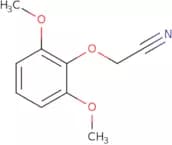
2-(2,6-Dimethoxyphenoxy)acetonitrile
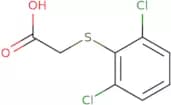
CAS:<p>Versatile small molecule scaffold</p>Formula:C10H11NO3Purity:Min. 95%Molecular weight:193.2 g/mol(2,6-Dichlorophenylthio)acetic acid
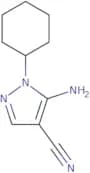
CAS:<p>Versatile small molecule scaffold</p>Formula:C8H6Cl2O2SPurity:Min. 95%Molecular weight:237.11 g/mol5-Amino-1-cyclohexyl-1H-pyrazole-4-carbonitrile
CAS:<p>5-Amino-1-cyclohexyl-1H-pyrazole-4-carbonitrile (5ACPC) is a ligand that is used in cancer therapy. It binds to the uptake mechanisms of cancer cells and prevents the uptake of amino acids, which are essential for cell growth and proliferation. Treatment with 5ACPC has been shown to inhibit cancer cell growth in vitro and in vivo by interfering with cellular processes such as transcription, DNA replication, and protein synthesis. 5ACPC has also been shown to be an immunoreceptor ligand that binds to the CD3 receptor on T cells, preventing activation and proliferation of these cells. 5ACPC can also act as a bispecific antibody that binds to two different antigens (e.g., tumor antigen and immune system antigen). This binding can lead to the destruction of cancer cells by complement mediated lysis or antibody dependent cell mediated cytotoxicity (ADCC).</p>Formula:C10H14N4Purity:Min. 95%Molecular weight:190.25 g/mol4-chloro-1-isopropyl-1h-pyrazolo[3,4-d]pyrimidine
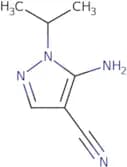
CAS:<p>Versatile small molecule scaffold</p>Formula:C8H9ClN4Purity:Min. 95%Molecular weight:196.64 g/mol5-amino-1-isopropyl-1h-pyrazole-4-carbonitrile
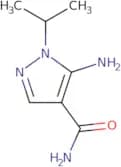
CAS:<p>Versatile small molecule scaffold</p>Formula:C7H10N4Purity:Min. 95%Molecular weight:150.19 g/mol5-amino-1-isopropyl-1h-pyrazole-4-carboxamide
CAS:<p>Versatile small molecule scaffold</p>Formula:C7H12N4OPurity:Min. 95%Molecular weight:168.2 g/mol4-Hydroxy-8-methoxyquinoline
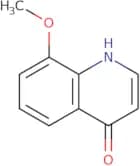
CAS:<p>4-Hydroxy-8-methoxyquinoline is a carcinogenic compound that is formed by the reaction of dehydroxylated 4-hydroxyquinoline with chloroform. It is excreted in the urine, where it can be detected by radioactivity spectra and identified by its characteristic xanthurenic acid. It has been shown to cause bladder cancer in humans. Other compounds found in the body that are related to this chemical are 8-methyl derivatives and decarboxylated intermediates. These compounds have not been as extensively studied as 4-hydroxy-8-methoxyquinoline, but they may also be carcinogenic.</p>Formula:C10H9NO2Purity:Min. 95%Molecular weight:175.18 g/mol4-(Ethoxycarbonyl)-1-methyl-1H-pyrazole-3-carboxylic acid
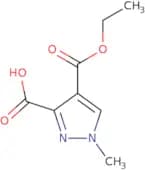
CAS:<p>Versatile small molecule scaffold</p>Formula:C8H10N2O4Purity:Min. 95%Molecular weight:198.18 g/mol2-Phenoxyethanol-1,1-d2
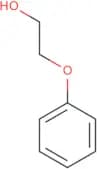
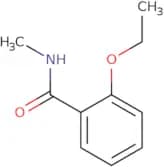
CAS:<p>Versatile small molecule scaffold</p>Formula:C8H10O2Purity:Min. 95%Molecular weight:140.18 g/mol2-Ethoxy-N-methylbenzamide
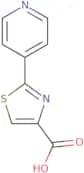
CAS:<p>Versatile small molecule scaffold</p>Formula:C10H13NO2Purity:Min. 95%Molecular weight:179.22 g/mol2-(4-Pyridyl)thiazole-4-carboxylic acid
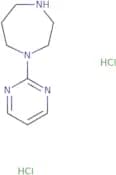
CAS:<p>2-(4-Pyridyl)thiazole-4-carboxylic acid is a supramolecular carboxylate that can form architectures with pyridinium. It has been shown to be able to bind ligands and form polymorphs, which are different crystal structures with the same chemical composition. 2-(4-Pyridyl)thiazole-4-carboxylic acid also forms interdigitated crystals, and its crystal x-ray diffraction pattern has been shown to have diffraction peaks that correspond to divalent conformations. This compound has chiral properties, which means it can exist in two forms that are mirror images of each other. 2-(4-Pyridyl)thiazole-4-carboxylic acid is an isonicotinic acid derivative and can show dihedral angles.</p>Formula:C9H6N2O2SPurity:Min. 95%Molecular weight:206.22 g/mol1-(Pyrimidin-2-yl)-1,4-diazepane dihydrochloride
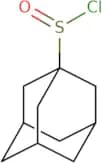
CAS:<p>Versatile small molecule scaffold</p>Formula:C9H16Cl2N4Purity:Min. 95%Molecular weight:251.15 g/molAdamantane-1-sulfinyl chloride
CAS:<p>Adamantane-1-sulfinyl chloride (ASCl) is a hydrolyzing agent that reacts with water to form hydrogen sulfide and an acid. ASCl can be used to synthesize polymers, as well as in the study of organic reactions. ASCl is also used in catalysis, which is the acceleration of a chemical reaction by a substance that does not participate in the reaction itself. ASCl has been shown to react with silicon and act as a nucleophile, attacking the silicon-oxygen bonds and forming siloxanes. This process requires a catalyst to achieve high yields.</p>Formula:C10H15ClOSPurity:Min. 95%Molecular weight:218.74 g/mol(2R)-2-{[(2S)-5-Oxopyrrolidin-2-yl]formamido}propanoic acid
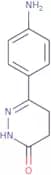
CAS:<p>Versatile small molecule scaffold</p>Formula:C8H12N2O4Purity:Min. 95%Molecular weight:200.19 g/mol6-(4-Aminophenyl)-2,3,4,5-tetrahydropyridazin-3-one
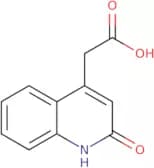
CAS:<p>Levosimendan is a drug that is used in the treatment of congestive heart failure. It is an orally active, positive inotropic agent with vasodilator properties. Levosimendan has been shown to be effective for the treatment of chronic heart failure and can be used as a substitute for dobutamine. This drug also has a structural similarity to phthalazinone, which has been shown to have clinical use in the treatment of acute myocardial infarction.</p>Formula:C10H11N3OPurity:Min. 95%Molecular weight:189.21 g/mol(2-Oxo-1,2-dihydro-quinolin-4-yl)-acetic acid
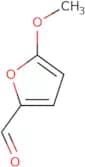
CAS:<p>Versatile small molecule scaffold</p>Formula:C11H9NO3Purity:Min. 95%Molecular weight:203.19 g/mol5-Methoxyfuran-2-carbaldehyde
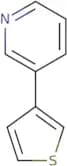
CAS:<p>5-Methoxyfuran-2-carbaldehyde is a fluorescent compound that has been used in the synthesis of cinnamic acid esters. This compound has also been used as a chromatographic reagent for the separation of p-coumaric acid and its derivatives from other compounds. 5-Methoxyfuran-2-carbaldehyde shows stereoselective desorption at high temperatures and is soluble in diethyl ether, but not in water. It can be synthesized by ring opening the epoxide with an acid moiety. The product is a racemic mixture with a melting point of 130°C.</p>Formula:C6H6O3Purity:Min. 95%Molecular weight:126.11 g/mol3-(Thiophen-3-yl)pyridine
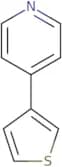
CAS:<p>Versatile small molecule scaffold</p>Formula:C9H7NSPurity:Min. 95%Molecular weight:161.23 g/mol4-(Thiophen-3-yl)pyridine
CAS:<p>Versatile small molecule scaffold</p>Formula:C9H7NSPurity:Min. 95%Molecular weight:161.22 g/mol{[1,3]Thiazolo[5,4-d]pyrimidin-7-yl}hydrazine
CAS:<p>Versatile small molecule scaffold</p>Formula:C5H5N5SPurity:Min. 95%Molecular weight:167.19 g/mol

![4-chloro-1-isopropyl-1h-pyrazolo[3,4-d]pyrimidine](/_next/image/?url=https%3A%2Fstatic.cymitquimica.com%2Fproducts%2F3D%2Fthumb-webp%2FWAA25415.webp&w=3840&q=75)
![(2R)-2-{[(2S)-5-Oxopyrrolidin-2-yl]formamido}propanoic acid](/_next/image/?url=https%3A%2Fstatic.cymitquimica.com%2Fproducts%2F3D%2Fthumb-webp%2FWAA28216.webp&w=3840&q=75)
![{[1,3]Thiazolo[5,4-d]pyrimidin-7-yl}hydrazine](/_next/image/?url=https%3A%2Fstatic.cymitquimica.com%2Fproducts%2F3D%2Fthumb-webp%2FWAA30893.webp&w=3840&q=75)