


Building Blocks
This section contains fundamental products for the synthesis of organic and biological compounds. Building blocks are the essential starting materials used to construct complex molecules through various chemical reactions. They play a critical role in drug discovery, material science, and chemical research. At CymitQuimica, we offer a diverse range of high-quality building blocks to support your innovative research and industrial projects, ensuring you have the essential components for successful synthesis.
Subcategories of "Building Blocks"
- Boronic Acids & Boronic Acid Derivatives(5,756 products)
- Chiral Building Blocks(1,242 products)
- Hydrocarbon Building Blocks(6,095 products)
- Organic Building Blocks(61,038 products)
Found 196817 products of "Building Blocks"
Sort by
Purity (%)
0
100
|
0
|
50
|
90
|
95
|
100
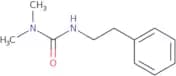
3,3-Dimethyl-1-(2-phenylethyl)urea
CAS:<p>3,3-Dimethyl-1-(2-phenylethyl)urea is a tertiary amine that can be synthesized by reacting isobutyraldehyde with ammonia. It has a molecular weight of 188.2 and a melting point of 117°C. The conformational energy of 3,3-dimethyl-1-(2-phenylethyl)urea has been determined using the electrostatic functional theory. This method was used to study the effect of the solvent on the conformational energy of 3,3-dimethyl-1-(2-phenylethyl)urea by calculating the interaction energies between molecules in different solvents.</p>Formula:C11H16N2OPurity:Min. 95%Molecular weight:192.26 g/mol4,7-Dimethoxy-1,3-benzothiazol-2-amine
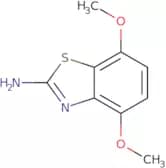
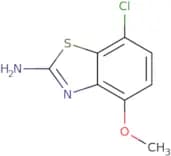
CAS:<p>Versatile small molecule scaffold</p>Formula:C9H10N2O2SPurity:Min. 95%Molecular weight:210.26 g/mol7-Chloro-4-methoxy-1,3-benzothiazol-2-amine
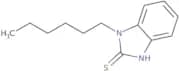
CAS:<p>Versatile small molecule scaffold</p>Formula:C8H7ClN2OSPurity:Min. 95%Molecular weight:214.67 g/mol1-Hexyl-1H-1,3-benzodiazole-2-thiol
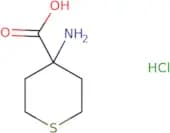
CAS:<p>Versatile small molecule scaffold</p>Formula:C13H18N2SPurity:Min. 95%Molecular weight:234.36 g/mol4-Aminothiane-4-carboxylic acid hydrochloride
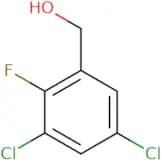
CAS:<p>Versatile small molecule scaffold</p>Formula:C6H12ClNO2SPurity:Min. 95%Molecular weight:197.68 g/mol(3,5-Dichloro-2-fluorophenyl)methanol
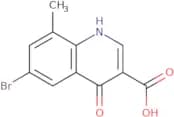
CAS:<p>Versatile small molecule scaffold</p>Formula:C7H5Cl2FOPurity:Min. 95%Molecular weight:195.01 g/mol6-Bromo-4-hydroxy-8-methylquinoline-3-carboxylic acid
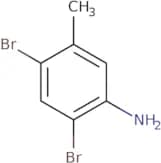
CAS:<p>Versatile small molecule scaffold</p>Formula:C11H8BrNO3Purity:Min. 95%Molecular weight:282.09 g/mol2,4-Dibromo-5-methylaniline
CAS:<p>Versatile small molecule scaffold</p>Formula:C7H7Br2NPurity:Min. 95%Molecular weight:264.94 g/mol4-[3-(Trifluoromethyl)phenyl]butan-2-one
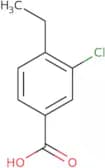
CAS:<p>Versatile small molecule scaffold</p>Formula:C11H11F3OPurity:Min. 95%Molecular weight:216.2 g/mol3-Chloro-4-ethylbenzoic acid
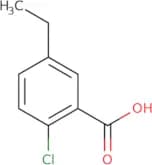
CAS:<p>Versatile small molecule scaffold</p>Formula:C9H9ClO2Purity:Min. 95%Molecular weight:184.62 g/mol2-Chloro-5-ethylbenzoic acid
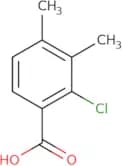
CAS:<p>Versatile small molecule scaffold</p>Formula:C9H9ClO2Purity:Min. 95%Molecular weight:184.62 g/mol2-Chloro-3,4-dimethylbenzoic acid
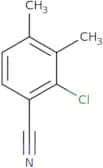
CAS:<p>Versatile small molecule scaffold</p>Formula:C9H9ClO2Purity:Min. 95%Molecular weight:184.62 g/mol2-Chloro-3,4-dimethylbenzonitrile
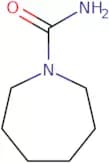
CAS:<p>Versatile small molecule scaffold</p>Formula:C9H8ClNPurity:Min. 95%Molecular weight:165.62 g/molAzepane-1-carboxamide
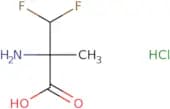
CAS:<p>Versatile small molecule scaffold</p>Formula:C7H14N2OPurity:Min. 95%Molecular weight:142.2 g/mol2-Amino-3,3-difluoro-2-methylpropanoic acid hydrochloride
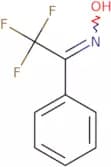
CAS:<p>Versatile small molecule scaffold</p>Formula:C4H8ClF2NO2Purity:Min. 95%Molecular weight:175.56 g/molN-(2,2,2-Trifluoro-1-phenylethylidene)hydroxylamine
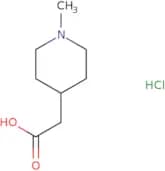
CAS:<p>Versatile small molecule scaffold</p>Formula:C8H6F3NOPurity:Min. 95%Molecular weight:189.13 g/mol(1-Methyl-piperidin-4-yl)-acetic acid hydrochloride
CAS:<p>Versatile small molecule scaffold</p>Formula:C8H16ClNO2Purity:Min. 95%Molecular weight:193.67 g/mol3',4'-Dihydro-2'H-spiro[cyclopropane-1,1'-naphthalene]-4'-one
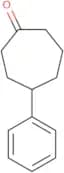
CAS:<p>Versatile small molecule scaffold</p>Formula:C12H12OPurity:Min. 95%Molecular weight:172.22 g/mol4-Phenylcycloheptan-1-one
CAS:<p>4-Phenylcycloheptan-1-one is a chemical compound that has been shown to have affinity for the piperidine receptor site in rat brain, which may be due to its structural similarity to piperidine. This chemical is a cyclohexanone derivative and is used as a medicinal agent. 4-Phenylcycloheptan-1-one has been shown to be an effective catalyst in asymmetric syntheses of cyclohexanones and other compounds, including catalytic asymmetric syntheses of phenylcycloheptanes.</p>Formula:C13H16OPurity:Min. 95%Molecular weight:188.26 g/mol4-[(Methylamino)methyl]benzoic acid hydrochloride
CAS:<p>Versatile small molecule scaffold</p>Formula:C9H12ClNO2Purity:Min. 95%Molecular weight:201.65 g/mol

![4-[3-(Trifluoromethyl)phenyl]butan-2-one](/_next/image/?url=https%3A%2Fstatic.cymitquimica.com%2Fproducts%2F3D%2Fthumb-webp%2FSCA64672.webp&w=3840&q=75)
![3',4'-Dihydro-2'H-spiro[cyclopropane-1,1'-naphthalene]-4'-one](/_next/image/?url=https%3A%2Fstatic.cymitquimica.com%2Fproducts%2F3D%2Fthumb-webp%2FSCA68827.webp&w=3840&q=75)
![4-[(Methylamino)methyl]benzoic acid hydrochloride](/_next/image/?url=https%3A%2Fstatic.cymitquimica.com%2Fproducts%2F3D%2Fthumb-webp%2FSCA68873.webp&w=3840&q=75)