Building Blocks
This section contains fundamental products for the synthesis of organic and biological compounds. Building blocks are the essential starting materials used to construct complex molecules through various chemical reactions. They play a critical role in drug discovery, material science, and chemical research. At CymitQuimica, we offer a diverse range of high-quality building blocks to support your innovative research and industrial projects, ensuring you have the essential components for successful synthesis.
Subcategories of "Building Blocks"
- Boronic Acids & Boronic Acid Derivatives(5,756 products)
- Chiral Building Blocks(1,242 products)
- Hydrocarbon Building Blocks(6,095 products)
- Organic Building Blocks(61,038 products)
Found 196817 products of "Building Blocks"
Sort by
Purity (%)
0
100
|
0
|
50
|
90
|
95
|
100
3,4-Dimethylbenzene-1,2-diol
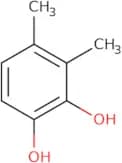
CAS:<p>3,4-Dimethylbenzyl alcohol is a colorless liquid with a low viscosity. It is used as an intermediate in the preparation of polycarboxylic acids and amides. 3,4-Dimethylbenzyl alcohol has been shown to increase the polymerization rate of unsaturated polyester resins. The compound can be synthesized from 3,4-dimethylbenzene-1,2-diol by treatment with sodium carbonate in methanol followed by hydrolysis of the resulting 3,4-dimethylbenzyl alcohol.<br>The compound has also been shown to have anti-inflammatory properties and be used as a solvent for tobacco products.<br>3,4-Dimethylbenzyl alcohol can be obtained through the reaction of fatty acid with potassium hydroxide in ethylene glycol at high temperatures.</p>Formula:C8H10O2Purity:Min. 95%Molecular weight:138.16 g/mol3,6-Dimethylbenzene-1,2-diol
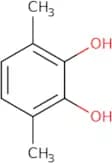
CAS:<p>3,6-Dimethylbenzene-1,2-diol is a bactericidal agent that belongs to the class of amides. It inhibits bacterial growth by binding to water molecules and thus preventing their availability for use in the construction of cell walls. 3,6-Dimethylbenzene-1,2-diol has been shown to be efficient when used as a catalyst for the reaction between 2-aminoterephthalic acid and benzodioxan under mild conditions. This process results in a fluorescent product with an intramolecular hydrogen bond. The catalytic mechanism is thought to involve an active site containing a hydroxyl group that attacks the substrate at the C3 position, followed by a proton transfer from water molecule to form a hydroxyl oxygen intermediate.</p>Formula:C8H10O2Purity:Min. 95%Molecular weight:138.17 g/mol2-Methoxy-4-propylphenol
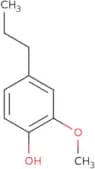
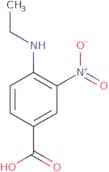
CAS:<p>2-Methoxy-4-propylphenol (2MPP) is a cross-linking agent that reacts with eugenol to form reaction intermediates. It has been shown to be effective in the treatment of skin conditions such as acne, eczema and dermatitis. This product is a reaction product of 2MPP and eugenol, which forms the intermediate 2-methoxyphenylpropene, which then reacts with another molecule of eugenol to form a second intermediate. The final reaction product is 3-(3,4-dimethoxyphenyl)propene. 2MPP has been shown to be an active ingredient in the treatment of acne and other skin conditions due to its ability to penetrate the skin, crosslink collagen and elastin fibers, and promote tissue repair.</p>Formula:C10H14O2Purity:Min. 95%Molecular weight:166.22 g/mol4-(Ethylamino)-3-nitrobenzoic acid
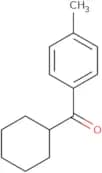
CAS:<p>4-(Ethylamino)-3-nitrobenzoic acid (4ENA) is a centrosymmetric molecule with a crystal structure that contains ammonium and nitro groups. It also forms dimers when in the presence of chloride or chloroformate, which can be seen by the absorption bands at 550 nm. The 4ENA molecule is sensitive to hydrogen chloride and ammonium carbonate, which can cause it to decompose into ethylamine and 3-nitrophenol. Nitric acid will cause 4ENA to form the nitro group attached to the benzene ring. 4ENA has been shown to inhibit platelet aggregation by inhibiting thrombus formation on damaged endothelium.</p>Formula:C9H10N2O4Purity:Min. 95%Molecular weight:210.19 g/molCyclohexyl(4-methylphenyl)methanone
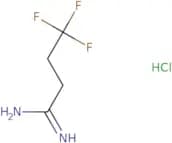
CAS:<p>Cyclohexyl(4-methylphenyl)methanone (CPM, CHMPM) is an organic compound that has a nitrogen atom and an alkoxy group. It is a low-toxicity, volatile, colorless liquid with a strong odor. CPM is used as a reagent in the synthesis of other compounds. The most common use of CPM is in Grignard reactions to form alcohols and ketones. It can also be used to prepare ethers and aralkyl compounds. CPM has been shown to have toxic effects on animals and should not be handled without gloves or protective clothing.</p>Formula:C14H18OPurity:Min. 95%Molecular weight:202.29 g/mol4,4,4-Trifluorobutanimidamide hydrochloride
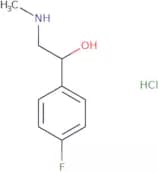
CAS:<p>Versatile small molecule scaffold</p>Formula:C4H8ClF3N2Purity:Min. 95%Molecular weight:176.57 g/mol1-(4-Fluorophenyl)-2-(methylamino)ethan-1-ol hydrochloride
CAS:<p>Versatile small molecule scaffold</p>Formula:C9H13ClFNOPurity:Min. 95%Molecular weight:205.66 g/mol3,3,3-Trifluoro-2-methylpropan-1-amine hydrochloride
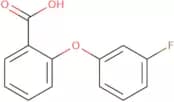
CAS:<p>Versatile small molecule scaffold</p>Formula:C4H9ClF3NPurity:Min. 95%Molecular weight:163.57 g/mol2-(3-Fluorophenoxy)benzoic acid
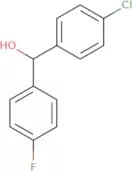
CAS:<p>Versatile small molecule scaffold</p>Formula:C13H9FO3Purity:Min. 95%Molecular weight:232.21 g/mol(4-Chlorophenyl)(4-fluorophenyl)methanol
CAS:<p>Versatile small molecule scaffold</p>Formula:C13H10ClFOPurity:Min. 95%Molecular weight:236.67 g/molQuinoclamine
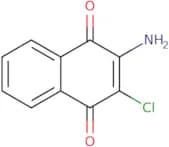
CAS:<p>Quinoclamine is a redox-active film-forming polymer that has been shown to be effective against bacterial strains such as S. aureus, E. coli and B. subtilis. Quinoclamine inhibits the growth of bacteria by targeting their respiratory electron transport chain and reducing its activity. This leads to an accumulation of reactive oxygen species (ROS) in the cells which can cause oxidative stress, leading to cell death. Quinoclamine has also been shown to have antibacterial efficacy against Hl-60 cells and prevents the formation of carbonyl groups in mitochondria, which are toxic to cells. Quinoclamine is metabolized by cytochrome P450 enzymes into quinolinic acid, which is then converted into nicotinamide adenine dinucleotide phosphate (NADP+).</p>Formula:C10H6ClNO2Purity:Min. 95%Molecular weight:207.61 g/mol3-Chloropropyl isothiocyanate
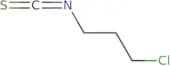
CAS:<p>3-Chloropropyl isothiocyanate (3CPITC) is a chemical compound that is used in research to produce an artificial reflux and to study the effects of acid on esterase activity. This compound is synthesized by reacting 2-chloroethyl chloride with triethylamine in the presence of methanol, followed by hydrolysis of the resulting 3-chloropropyl isothiocyanate. 3CPITC has been shown to have a neutral effect on esterase activity.</p>Formula:C4H6ClNSPurity:Min. 95%Molecular weight:135.61 g/mol3-Bromopropyl isothiocyanate
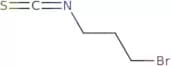
CAS:<p>3-Bromopropyl isothiocyanate (3BPITC) is a bifunctional molecule that has been used for radiolabeling and bifunctional labeling strategies. 3BPITC can be used to label amino acids, peptides, proteins, carbohydrates, and lipids with the same specificity as biotin. 3BPITC has been shown to be an effective radiolabeling agent for imaging of tumors in mice. The stereoisomers of 3BPITC can be separated by column chromatography or thin-layer chromatography. This compound can also be detected at the low picomolar level using nuclear magnetic resonance spectroscopy (NMR).</p>Formula:C4H6BrNSPurity:Min. 95%Molecular weight:180.07 g/mol1,3-Thiazinan-2-imine hydrochloride
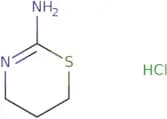
CAS:<p>Versatile small molecule scaffold</p>Formula:C4H9ClN2SPurity:Min. 95%Molecular weight:152.65 g/mol5,6-Dihydro-4H-1,3-thiazin-2-amine hydrobromide
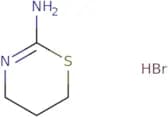
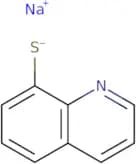
CAS:<p>5,6-Dihydro-4H-1,3-thiazin-2-amine hydrobromide is a chemical that is used in the diagnosis of diseases of the cardiovascular system. It has been shown to cause damage to the intestinal mucosa and also has effects on parameters such as blood pressure and ionizing radiation. 5,6-Dihydro-4H-1,3-thiazin-2-amine hydrobromide damages the intestinal tissue by reacting with reactive oxygen species (ROS) or reactive nitrogen species (RNS), which are generated from ionizing radiation. These ROS/RNS are generated in response to endotoxin exposure and can lead to cell death.</p>Formula:C4H9BrN2SPurity:Min. 95%Molecular weight:197.1 g/molSodium (quinolin-8-yl)sulfanide
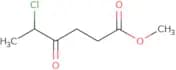
CAS:<p>Sodium (quinolin-8-yl)sulfanide is a sulfonamide compound that is structurally related to the quinoline derivatives. It has been shown to have high cytotoxicity against hepatoma and mouse melanoma cells, as well as good activity against human colon cancer. The preparation of this compound is difficult because it undergoes rapid dehydration to form anhydrous sodium sulfoxide. Sodium (quinolin-8-yl)sulfanide forms two polymorphs, one of which is hydrated and one of which is anhydrous. The hydrated polymorph has a lower solubility in water, but has higher solubilities in organic solvents and methanol. The anhydrous polymorph has higher solubilities in water and methanol, but lower solubilities in organic solvents like chloroform or dichloromethane.<br>!--</p>Formula:C9H6NNaSPurity:Min. 95%Molecular weight:183.21 g/molMethyl 5-chloro-4-oxohexanoate
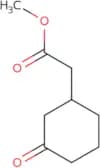
CAS:<p>Versatile small molecule scaffold</p>Formula:C7H11ClO3Purity:Min. 95%Molecular weight:178.61 g/molMethyl 2-(3-oxocyclohexyl)acetate
CAS:<p>Versatile small molecule scaffold</p>Formula:C9H14O3Purity:Min. 95%Molecular weight:170.21 g/mol[Hydroxy(phenyl)phosphonomethyl]phosphonic acid
CAS:<p>Versatile small molecule scaffold</p>Formula:C7H10O7P2Purity:Min. 95%Molecular weight:268.1 g/mol1-Ethynylcycloheptan-1-ol
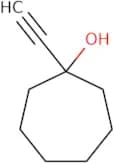
CAS:<p>1-Ethynylcycloheptan-1-ol is a synthetic drug that inhibits protease activity. It has been shown to have an inhibitory effect on the adenosine receptor and protonation of the skeleton. The 1-ethynylcycloheptan-1-ol molecule can be synthesised in two steps from phenylacetone. It has been shown to have hypoglycemic activity, which may be due to its ability to inhibit pancreatic alpha amylase. This drug also has a nucleophilic character, which is essential for its mechanism of action as it binds reversibly to the active site of the enzyme.</p>Formula:C9H14OPurity:Min. 95%Molecular weight:138.21 g/mol

![[Hydroxy(phenyl)phosphonomethyl]phosphonic acid](/_next/image/?url=https%3A%2Fstatic.cymitquimica.com%2Fproducts%2F3D%2Fthumb-webp%2FCAA80926.webp&w=3840&q=75)