Building Blocks
This section contains fundamental products for the synthesis of organic and biological compounds. Building blocks are the essential starting materials used to construct complex molecules through various chemical reactions. They play a critical role in drug discovery, material science, and chemical research. At CymitQuimica, we offer a diverse range of high-quality building blocks to support your innovative research and industrial projects, ensuring you have the essential components for successful synthesis.
Subcategories of "Building Blocks"
- Boronic Acids & Boronic Acid Derivatives(5,756 products)
- Chiral Building Blocks(1,242 products)
- Hydrocarbon Building Blocks(6,095 products)
- Organic Building Blocks(61,038 products)
Found 196817 products of "Building Blocks"
Sort by
Purity (%)
0
100
|
0
|
50
|
90
|
95
|
100
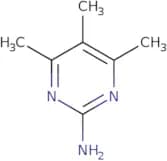
4,5,6-Trimethylpyrimidin-2-amine
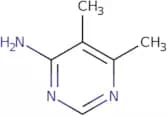
CAS:<p>4,5,6-Trimethylpyrimidin-2-amine is a human immunodeficiency virus (HIV) type 1 inhibitor that is currently in the early stages of development. It has shown antiviral activity against HIV type 1 strains and cytotoxicity against HIV-infected cells. In vitro studies have shown that 4,5,6-trimethylpyrimidin-2-amine inhibits the HIV transcriptional elongation factor TFIIS by binding to the enzyme. This inhibition leads to a decrease in viral RNA synthesis and consequently a decrease in virus production.</p>Formula:C7H11N3Purity:Min. 95%Molecular weight:137.18 g/mol5,6-dimethylpyrimidin-4-amine
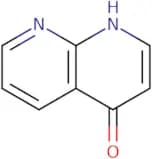
CAS:<p>Versatile small molecule scaffold</p>Formula:C6H9N3Purity:Min. 95%Molecular weight:123.15 g/mol1,8-Naphthyridin-4-ol
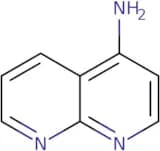
CAS:<p>1,8-Naphthyridin-4-ol is a synthetic compound with anti-inflammatory and pain relieving properties. It is used as an intermediate in the preparation of 1,8 naphthyridine and other compounds. This drug has been shown to have antiviral activity against herpes simplex virus type 2 in cell cultures. It also has been shown to be effective for the treatment of colitis and respiratory diseases, such as asthma. 1,8-Naphthyridin-4-ol inhibits the production of inflammatory cytokines by blocking cyclooxygenase (COX) enzymes. In addition, this compound may have antidepressant effects due to its ability to inhibit monoamine oxidase (MAO).</p>Formula:C8H6N2OPurity:Min. 95%Molecular weight:146.15 g/mol1,8-Naphthyridin-4-amine
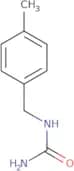
CAS:<p>1,8-Naphthyridin-4-amine is a genotoxic compound that has been detected in human glioblastoma cells. It can be used to investigate the molecular mechanism of cancer and the carcinogenesis process. 1,8-Naphthyridin-4-amine binds to DNA polymerase and inhibits its activity, which prevents the replication of DNA. This drug also induces p53 activation and increases chloride levels in cancer cells. 1,8-Naphthyridin-4-amine has also been shown to cause DNA repair by base excision.</p>Formula:C8H7N3Purity:Min. 95%Molecular weight:145.16 g/molN-(4-Methylbenzyl)urea
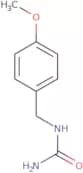
CAS:<p>Versatile small molecule scaffold</p>Formula:C9H12N2OPurity:Min. 95%Molecular weight:164.2 g/mol1-(4-Methoxybenzyl)urea
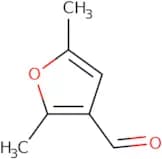
CAS:<p>1-(4-Methoxybenzyl)urea is a nitrosourea that inhibits the production of nitric oxide. It has been shown to inhibit the formation of peroxynitrite and nitrous oxide, which are products of the reaction between superoxide and nitric oxide. 1-(4-Methoxybenzyl)urea is also capable of inhibiting aerobic respiration in bacteria, by binding to anions such as bicarbonate. This drug has been shown to inhibit the oxidation of formaldehyde by oxidoreductases and form compounds with other aromatic amines.</p>Formula:C9H12N2O2Purity:Min. 95%Molecular weight:180.2 g/mol2,5-Dimethylfuran-3-carbaldehyde
CAS:<p>Versatile small molecule scaffold</p>Formula:C7H8O2Purity:Min. 95%Molecular weight:124.14 g/mol4-[(4-Bromophenyl)methoxy]phenol
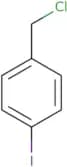
CAS:<p>Versatile small molecule scaffold</p>Formula:C13H11BrO2Purity:Min. 95%Molecular weight:279.13 g/molp-Iodobenzylchloride
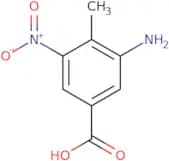
CAS:<p>Versatile small molecule scaffold</p>Formula:C7H6ClIPurity:Min. 95%Molecular weight:252.48 g/mol3-Amino-4-methyl-5-nitro-benzoic acid
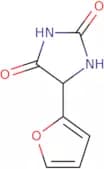
CAS:<p>Versatile small molecule scaffold</p>Formula:C8H8N2O4Purity:Min. 95%Molecular weight:196.16 g/mol5-(Furan-2-yl)imidazolidine-2,4-dione
CAS:<p>5-(Furan-2-yl)imidazolidine-2,4-dione is an organic compound that is used in the synthesis of other chemical compounds. It reacts with chlorine gas to form a chlorinated derivative, which can then be converted into a wide range of compounds. 5-(Furan-2-yl)imidazolidine-2,4-dione also reacts with thionyl chloride to form a chlorinating agent. The reaction scheme shows how 5-(Furan-2-yl)imidazolidine-2,4-dione can be converted into various compounds using hydroxylamine and ammonium carbonate as catalysts. Hydroxylamine converts furan to oxazine and ammonia; ammonium carbonate converts furan to hydantoin and ammonia. Chlorination with sodium hypochlorite gives furyl chloride as well as butylidene chloride. Chlorination with thionyl chloride gives chlor</p>Formula:C7H6N2O3Purity:Min. 95%Molecular weight:166.13 g/mol5-(2,4-Dimethoxyphenyl)imidazolidine-2,4-dione
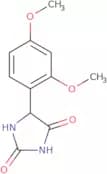
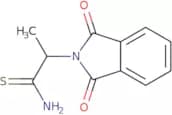
CAS:<p>Versatile small molecule scaffold</p>Formula:C11H12N2O4Purity:Min. 95%Molecular weight:236.22 g/mol2-(1,3-Dioxo-2,3-dihydro-1H-isoindol-2-yl)propanethioamide
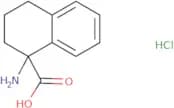
CAS:<p>Versatile small molecule scaffold</p>Formula:C11H10N2O2SPurity:Min. 95%Molecular weight:234.28 g/mol1-Amino-1,2,3,4-tetrahydro-1-naphthalenecarboxylic acid hydrochloride
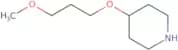
CAS:<p>Versatile small molecule scaffold</p>Formula:C11H14ClNO2Purity:Min. 95%Molecular weight:227.69 g/mol4-(3-Methoxypropoxy)piperidine
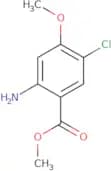
CAS:<p>Versatile small molecule scaffold</p>Formula:C9H19NO2Purity:Min. 95%Molecular weight:173.25 g/molMethyl 2-amino-5-chloro-4-methoxybenzoate
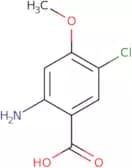
CAS:<p>Versatile small molecule scaffold</p>Formula:C9H10ClNO3Purity:Min. 95%Molecular weight:215.63 g/mol2-Amino-5-chloro-4-methoxy-benzoic acid
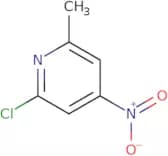
CAS:<p>2-Amino-5-chloro-4-methoxybenzoic acid is an alkynyl, piperazine, piperazino, alkoxy, and chlorinated molecule. It has a blood pressure lowering effect when orally administered to rats. This active form is hydrolyzed by carboxylesterase to 2-amino-5-(hydroxymethyl) benzoic acid and 2-aminoethanol. This product also reduces the level of lactic acid in the blood. The chlorination causes a change in the structure of the molecule that leads to increased water solubility and decreased lipid solubility.</p>Formula:C8H8ClNO3Purity:Min. 95%Molecular weight:201.61 g/mol2-Chloro-6-methyl-4-nitropyridine
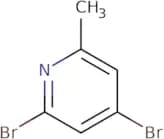
CAS:<p>2-Chloro-6-methyl-4-nitropyridine is a pyridine molecule with the molecular formula C6H5ClN3O2. This compound has a resonance energy of -331.9 kcal/mol. It is magnetic, with a spectrum that includes electron and electronic spectra. The multinuclear nature of this molecule results in different transition energies and intensities, which can be seen in the resonance and transition data.</p>Formula:C6H5ClN2O2Purity:Min. 95%Molecular weight:172.57 g/mol2,4-Dibromo-6-methylpyridine
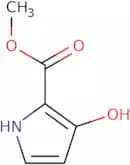
CAS:<p>Versatile small molecule scaffold</p>Formula:C6H5Br2NPurity:Min. 95%Molecular weight:250.92 g/molMethyl 3-hydroxy-1H-pyrrole-2-carboxylate
CAS:<p>Versatile small molecule scaffold</p>Formula:C6H7NO3Purity:Min. 95%Molecular weight:141.12 g/mol

![4-[(4-Bromophenyl)methoxy]phenol](/_next/image/?url=https%3A%2Fstatic.cymitquimica.com%2Fproducts%2F3D%2Fthumb-webp%2FECA58952.webp&w=3840&q=75)