Building Blocks
This section contains fundamental products for the synthesis of organic and biological compounds. Building blocks are the essential starting materials used to construct complex molecules through various chemical reactions. They play a critical role in drug discovery, material science, and chemical research. At CymitQuimica, we offer a diverse range of high-quality building blocks to support your innovative research and industrial projects, ensuring you have the essential components for successful synthesis.
Subcategories of "Building Blocks"
- Boronic Acids & Boronic Acid Derivatives(5,778 products)
- Chiral Building Blocks(1,242 products)
- Hydrocarbon Building Blocks(6,098 products)
- Organic Building Blocks(61,084 products)
Found 198714 products of "Building Blocks"
Sort by
Purity (%)
0
100
|
0
|
50
|
90
|
95
|
100
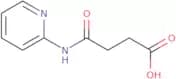
4-Oxo-4-(pyridin-2-ylamino)butanoic acid
CAS:4-Oxo-4-(pyridin-2-ylamino)butanoic acid is an amide compound that is synthesized by reacting a pyridine with butanoic acid. This heterocyclic compound has been shown to have magnetic properties and it can be used as a synthon to generate other heterocyclic compounds. 4-Oxo-4-(pyridin-2-ylamino)butanoic acid can be oxidized to form the nitrate salt. The square planar geometry of this molecule displays four chiral centers, which gives it the ability to bind to metal ions in order to form complexes. This chemical is also known as a ligand, because it binds reversibly with a metal ion, such as copper or silver.Formula:C9H10N2O3Purity:Min. 95%Molecular weight:194.19 g/molEthyl [1,2,4]triazolo[1,5-a]pyridine-2-carboxylate
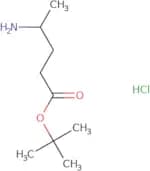
CAS:<p>Versatile small molecule scaffold</p>Formula:C9H9N3O2Purity:Min. 95%Molecular weight:191.19 g/moltert-Butyl 4-aminopentanoate hydrochloride
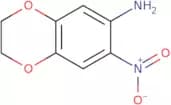
CAS:<p>Versatile small molecule scaffold</p>Formula:C9H20ClNO2Purity:Min. 95%Molecular weight:209.71 g/mol7-Nitro-2,3-dihydro-1,4-benzodioxin-6-amine
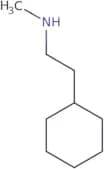
CAS:<p>Versatile small molecule scaffold</p>Formula:C8H8N2O4Purity:Min. 95%Molecular weight:196.16 g/mol(2-Cyclohexylethyl)(methyl)amine
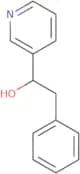
CAS:Versatile small molecule scaffoldFormula:C9H19NPurity:Min. 95%Molecular weight:141.25 g/mol2-Phenyl-1-(pyridin-3-yl)ethan-1-ol
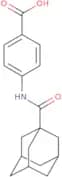
CAS:<p>Versatile small molecule scaffold</p>Formula:C13H13NOPurity:Min. 95%Molecular weight:199.25 g/mol4-(Adamantane-1-amido)benzoic acid
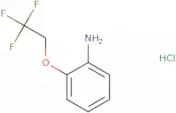
CAS:<p>Versatile small molecule scaffold</p>Formula:C18H21NO3Purity:Min. 95%Molecular weight:299.4 g/mol2-(2,2,2-Trifluoroethoxy)aniline hydrochloride
CAS:Versatile small molecule scaffoldFormula:C8H9ClF3NOPurity:Min. 95%Molecular weight:227.61 g/mol4-Bromopicolinic hydrazide
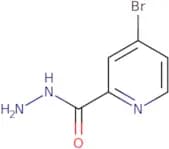
CAS:<p>4-Bromopicolinic hydrazide is a chemical compound that has antibacterial activity. It is active against bacteria like B. subtilis, P. pneumoniae, and S. aureus as well as fungi such as M. macrophomina and A. fumigatus. 4-Bromopicolinic hydrazide is effective against bacterial strains like phaseolina, K. pneumoniae, and C. sclerotium, but not against E. coli or other Gram-negative bacteria that have been shown to be resistant to ampicillin in vitro studies. It also has antifungal properties which are active against A. fumigatus and M. macrophomina in vitro studies.br>br><br>4-Bromopicolinic hydrazide inhibits the synthesis of DNA by binding to the enzyme DNA polymerase and preventing it from making copies of the bacterial DNA during replication.br>br><br>This drug has</p>Formula:C6H6BrN3OPurity:Min. 95%Molecular weight:216.04 g/mol2-(1H-Imidazol-1-ylmethyl)pyridine
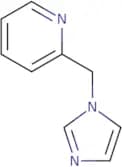
CAS:<p>Versatile small molecule scaffold</p>Formula:C9H9N3Purity:Min. 95%Molecular weight:159.19 g/mol3-Ethylbenzenethiol
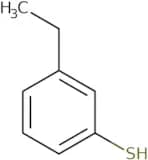
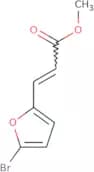
CAS:<p>3-Ethylbenzenethiol is a chlorinated derivative of benzenethiol that is used as a reagent in organic synthesis. It has been used to synthesize potassium and copper chlorides, and it has also been used in the preparation of 2-iodobenzoic acid. 3-Ethylbenzenethiol is a strong bronchodilator with cataleptic properties that can be used to control coughs. It has been shown to have antitussive effects when given at high doses, with no adverse side effects.</p>Formula:C8H10SPurity:Min. 95%Molecular weight:138.23 g/molMethyl (2E)-3-(5-bromofuran-2-yl)prop-2-enoate
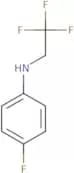
CAS:<p>Versatile small molecule scaffold</p>Formula:C8H7BrO3Purity:Min. 95%Molecular weight:231.04 g/mol(4-Fluoro-phenyl)-(2,2,2-trifluoro-ethyl)-amine
CAS:Versatile small molecule scaffoldFormula:C8H7F4NPurity:Min. 95%Molecular weight:193.14 g/mol1-(4-Methoxyphenyl)-5-phenyl-1H-pyrazole-3-carboxylic acid
CAS:<p>Versatile small molecule scaffold</p>Formula:C17H14N2O3Purity:Min. 95%Molecular weight:294.3 g/molSpiro[4.5]dec-3-en-2-one
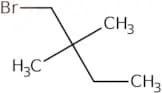
CAS:<p>Versatile small molecule scaffold</p>Formula:C10H14OPurity:Min. 95%Molecular weight:150.22 g/mol1-Bromo-2,2-dimethylbutane
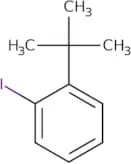
CAS:<p>Versatile small molecule scaffold</p>Formula:C6H13BrPurity:Min. 95%Molecular weight:165.07 g/mol1-tert-Butyl-2-iodobenzene
CAS:<p>Versatile small molecule scaffold</p>Formula:C10H13IPurity:Min. 95%Molecular weight:260.11 g/mol[2-(Methoxymethyl)phenyl]methanol
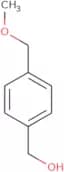
CAS:<p>Versatile small molecule scaffold</p>Formula:C9H12O2Purity:Min. 95%Molecular weight:152.19 g/mol(4-Methoxymethyl-phenyl)-methanol
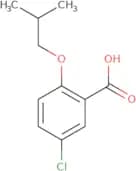
CAS:4-Methoxymethyl-phenyl)-methanol is an inorganic chemical. It is a synthetic compound that has been used as an experimental result to study the effects of introducing chloride into mosquitoes. The nitro group on the molecule was found to be of particular interest, as it may be able to react with a variety of organic compounds, including pyrethroid insecticides. 4-Methoxymethyl-phenyl)-methanol can be synthesized by reacting methoxymethyl chloride with potassium hydroxide in a constant temperature reaction.Formula:C9H12O2Purity:Min. 95%Molecular weight:152.19 g/mol2-Iso-butoxy-5-chlorobenzoic acid
CAS:<p>Versatile small molecule scaffold</p>Formula:C11H13ClO3Purity:Min. 95%Molecular weight:228.67 g/mol

![Ethyl [1,2,4]triazolo[1,5-a]pyridine-2-carboxylate](/_next/image/?url=https%3A%2Fstatic.cymitquimica.com%2Fproducts%2F3D%2Fthumb-webp%2FMCA13558.webp&w=3840&q=75)
![Spiro[4.5]dec-3-en-2-one](/_next/image/?url=https%3A%2Fstatic.cymitquimica.com%2Fproducts%2F3D%2Fthumb-webp%2FMCA16749.webp&w=3840&q=75)
![[2-(Methoxymethyl)phenyl]methanol](/_next/image/?url=https%3A%2Fstatic.cymitquimica.com%2Fproducts%2F3D%2Fthumb-webp%2FMCA17288.webp&w=3840&q=75)