Building Blocks
This section contains fundamental products for the synthesis of organic and biological compounds. Building blocks are the essential starting materials used to construct complex molecules through various chemical reactions. They play a critical role in drug discovery, material science, and chemical research. At CymitQuimica, we offer a diverse range of high-quality building blocks to support your innovative research and industrial projects, ensuring you have the essential components for successful synthesis.
Subcategories of "Building Blocks"
- Boronic Acids & Boronic Acid Derivatives(5,756 products)
- Chiral Building Blocks(1,242 products)
- Hydrocarbon Building Blocks(6,095 products)
- Organic Building Blocks(61,038 products)
Found 196817 products of "Building Blocks"
Sort by
Purity (%)
0
100
|
0
|
50
|
90
|
95
|
100
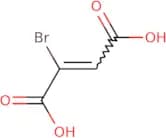
(2Z)-2-Bromo-2-butenedioic acid
CAS:<p>2-Bromobut-2-enedioic acid is a reactive chemical that can be used for the production of acrylates. It is also a hydroxyl compound with an acidic property. 2-Bromobut-2-enedioic acid has been shown to react with hydrogen fluoride, dimethyl fumarate, and fatty acids to form products with different structures and properties. The detection sensitivity of this compound was found to be 0.5 ppm in the gas phase and 0.1 ppm in the liquid phase. This compound has a particle size of 30 nm and an optical sensor that can detect its presence at concentrations of 1 ppm or higher.</p>Formula:C4H3BrO4Purity:Min. 95%Molecular weight:194.97 g/molDL-2-Aminocaprylic acid
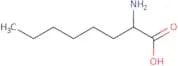
CAS:<p>DL-2-Aminocaprylic acid is a fatty acid that is synthesized from lysine by the enzyme lysine decarboxylase. It is one of the major lipids in cancer cells, and its level can be used to measure the severity of a cancerous tumor. DL-2-Aminocaprylic acid has been shown to have antimicrobial properties against bacteria and fungi. This compound also possesses an inhibitory effect on the biosynthesis of polyunsaturated fatty acids, which may contribute to its anticancer effects.</p>Formula:C8H17NO2Purity:Min. 95%Molecular weight:159.23 g/mol4²-Isopropylacetophenone
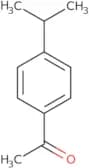
CAS:<p>Propiophenone is a propionic acid derivative that can be synthesized from acetone and formaldehyde. The reaction is selective for the 4-position of the phenyl ring, and the product is largely in the 2-isopropylacetophenone (2-IPAP) form. This compound is used to manufacture industrial chemicals such as propionitrile, which are used to make other chemicals such as acrylic acid. It can also be used to produce synthetic rubber and polymers.</p>Formula:C11H14OPurity:Min. 95%Molecular weight:162.23 g/molL-Histidine hydrochloride solution
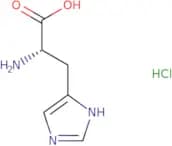
CAS:<p>L-Histidine hydrochloride solution is a chemical that is used as a nutrient in the treatment of bowel disease. It can be used to treat leukemia, autoimmune diseases, and bowel disease. L-histidine hydrochloride solution contains sodium citrate, which is an essential ingredient for the formation of blood clots. This chemical also has been shown to inhibit group P2 enzymes that are responsible for the degradation of heparin. L-histidine hydrochloride solution may have anti-inflammatory effects due to its ability to inhibit neutrophil chemotaxis and leukocyte adhesion, which are both important factors in inflammation.</p>Formula:C6H9N3O2·HClPurity:Min. 95%Molecular weight:191.62 g/mol2-Phenylhydrazinecarbothioamide
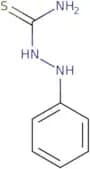
CAS:<p>2-Phenylhydrazinecarbothioamide is a chelating agent that has been used in wastewater treatment. It is a geometric isomer of phenylhydrazinecarbothioamide, which is the other type of chelating agent. 2-Phenylhydrazinecarbothioamide can be used for the production of ruthenium complexes and as an efficient method to corrode aluminum. 2-Phenylhydrazinecarbothioamide also inhibits fatty acid synthesis, leading to insulin resistance. Structural formula:</p>Formula:C7H9N3SPurity:Min. 95%Molecular weight:167.23 g/molN,N-Diethyl-p-toluenesulfonamide
CAS:<p>N,N-Diethyl-p-toluenesulfonamide is a sulfonamide compound that has the chemical formula CH3CONHCH2CH2SO2N(CH3)2. It is an organic amine with a sulfonic acid group. This compound is mainly used as a solvent for cellulose acetate and nitrocellulose, as well as in pharmaceuticals and photographic chemicals. N,N-Diethyl-p-toluenesulfonamide also has pharmacophoric properties and can be used to study biomolecules such as peptides and proteins. It reacts with organolithium reagents to form lithium salts. The bond cleavage of this compound occurs at temperatures between 190°C and 210°C, which make it useful in chromatographic science. N,N-Diethyl-p-toluenesulfonamide is synthesized by the condensation of amines with sulfonic acids</p>Formula:C11H17NO2SPurity:Min. 95%Molecular weight:227.32 g/mol4,5-Bis(trifluoromethyl)imidazole
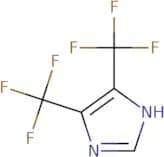
CAS:<p>4,5-Bis(trifluoromethyl)imidazole is a heterocyclic organic compound and a dimethylhydrazone derivative. It can be used as an intermediate in the synthesis of pharmaceuticals.</p>Formula:C5H2F6N2Purity:Min. 95%Molecular weight:204.08 g/mol5-Nitro-6-(trifluoromethyl)-1,2,3,4-tetrahydropyrimidine-2,4-dione
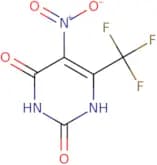
CAS:<p>Versatile small molecule scaffold</p>Formula:C5H2F3N3O4Purity:Min. 95%Molecular weight:225.08 g/mol1-(2,5-Difluorophenyl)-2,2-difluoroethan-1-one
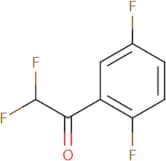
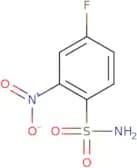
CAS:<p>Versatile small molecule scaffold</p>Formula:C8H4F4OPurity:Min. 95%Molecular weight:192.11 g/mol4-Fluoro-2-nitrobenzene-1-sulfonamide
CAS:<p>Versatile small molecule scaffold</p>Formula:C6H5FN2O4SPurity:Min. 95%Molecular weight:220.18 g/molThozalinone
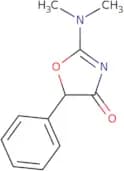
CAS:<p>Thozalinone is a synthetic compound that has been used as an antidepressant treatment for the symptoms of clinical depression. It binds to the CB2 receptor and prevents the reuptake of norepinephrine, which helps to increase levels of this neurotransmitter in the brain. Thozalinone has also shown efficacy in treating inflammatory bowel disease, hepatitis, and bowel diseases. This drug binds to a number of different substrate molecules, such as Toll-like receptor 4 (TLR4), which may be responsible for its ability to suppress inflammation. Thozalinone also acts as a substrate molecule for polymeric matrix metalloproteinases (MMPs), which are involved in tissue remodeling and degradation.</p>Formula:C11H12N2O2Purity:Min. 95%Molecular weight:204.23 g/mol1-(4-Chloro-phenyl)-2,2-difluoro-ethanone
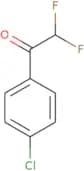
CAS:<p>Versatile small molecule scaffold</p>Formula:C8H5ClF2OPurity:Min. 95%Molecular weight:190.57 g/molN-[4-Chloro-3-(trifluoromethyl)phenyl]formamide
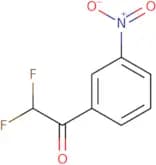
CAS:<p>Versatile small molecule scaffold</p>Formula:C8H5ClF3NOPurity:Min. 95%Molecular weight:223.58 g/mol2,2-Difluoro-1-(3-nitrophenyl)ethan-1-one
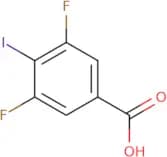
CAS:<p>Versatile small molecule scaffold</p>Formula:C8H5F2NO3Purity:Min. 95%Molecular weight:201.13 g/mol3,5-Difluoro-4-iodobenzoic acid
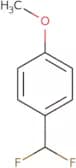
CAS:<p>Versatile small molecule scaffold</p>Formula:C7H3F2IO2Purity:Min. 95%Molecular weight:284 g/mol1-(Difluoromethyl)-4-methoxybenzene
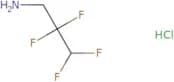
CAS:<p>Versatile small molecule scaffold</p>Formula:C8H8F2OPurity:Min. 95%Molecular weight:158.14 g/mol2,2,3,3-Tetrafluoropropan-1-amine hydrochloride
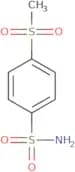
CAS:<p>Versatile small molecule scaffold</p>Formula:C3H6ClF4NPurity:Min. 95%Molecular weight:167.53 g/mol4-Methanesulfonylbenzene-1-sulfonamide
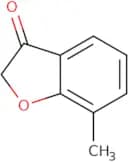
CAS:<p>4-Methanesulfonylbenzene-1-sulfonamide is a research chemical that is used in assays to study the metabolism of penicillium chrysogenum and other fungi. The metabolite 4-methanesulfonylbenzenesulfonic acid has been shown to inhibit fungal growth by inhibiting the synthesis of proteins, such as ribosomal proteins, which are necessary for cell division. This research chemical has also been shown to inhibit the production of aflatoxins, which are carcinogenic compounds produced by Aspergillus flavus and other species of fungi. 4-Methanesulfonylbenzene-1-sulfonamide has been found to be safe for use in humans and animals and can be used as a replacement for methyl bromide due to its sustainable functionality.</p>Formula:C7H9NO4S2Purity:Min. 95%Molecular weight:235.3 g/mol7-Methylbenzofuran-3(2H)-one
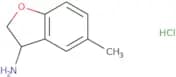
CAS:<p>7-Methylbenzofuran-3(2H)-one is a cyclic compound that consists of four rings in a furan and thiophene ring system. It is a reactive oxygen species (ROS) that can be found in the environment as an air pollutant. 7-Methylbenzofuran-3(2H)-one is used as an oxidant in organic synthesis and has been shown to have antiplatelet effects. This compound also reacts with sulfur compounds to form sulfides, which can be found in foods such as garlic, onion, and cabbage. The presence of ascorbic acid or other antioxidants may prevent this reaction from occurring. 7-Methylbenzofuran-3(2H)-one can also react with pyrazine to form hydroxypyrazines. This reaction product has been detected in human blood samples, where it may play a role in the development of atherosclerosis or heart disease.</p>Formula:C9H8O2Purity:Min. 95%Molecular weight:148.16 g/mol5-Methyl-2,3-dihydro-1-benzofuran-3-amine hydrochloride
CAS:<p>Versatile small molecule scaffold</p>Formula:C9H12ClNOPurity:Min. 95%Molecular weight:185.65 g/mol

![N-[4-Chloro-3-(trifluoromethyl)phenyl]formamide](/_next/image/?url=https%3A%2Fstatic.cymitquimica.com%2Fproducts%2F3D%2Fthumb-webp%2FAAA65696.webp&w=3840&q=75)