Building Blocks
This section contains fundamental products for the synthesis of organic and biological compounds. Building blocks are the essential starting materials used to construct complex molecules through various chemical reactions. They play a critical role in drug discovery, material science, and chemical research. At CymitQuimica, we offer a diverse range of high-quality building blocks to support your innovative research and industrial projects, ensuring you have the essential components for successful synthesis.
Subcategories of "Building Blocks"
- Boronic Acids & Boronic Acid Derivatives(5,756 products)
- Chiral Building Blocks(1,242 products)
- Hydrocarbon Building Blocks(6,095 products)
- Organic Building Blocks(61,055 products)
Found 199650 products of "Building Blocks"
Sort by
Purity (%)
0
100
|
0
|
50
|
90
|
95
|
100
{2-Methyl-2-azabicyclo[2.2.2]octan-6-yl}methanol
CAS:<p>Versatile small molecule scaffold</p>Formula:C9H17NOPurity:Min. 95%Molecular weight:155.24 g/mol3-(4-Bromophenyl)-2-(thiophen-2-yl)prop-2-enoic acid
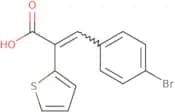
CAS:<p>Versatile small molecule scaffold</p>Formula:C13H9BrO2SPurity:Min. 95%Molecular weight:309.18 g/mol3-(Benzyloxy)piperidine hydrochloride
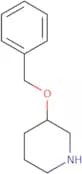
CAS:<p>Versatile small molecule scaffold</p>Formula:C12H18ClNOPurity:Min. 95%Molecular weight:227.74 g/mol3-Methylphthalic Acid
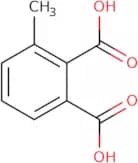
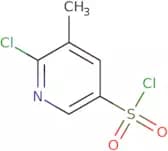
CAS:<p>3-Methylphthalic Acid is a chemical that is used in the production of polyvinyl chloride. It is produced by the dioxygenation of phthalic anhydride and methanol, which produces 3-methylphthalic acid as well as 1,1-dichloroethane. The chemical can be used as a surfactant in polyvinyl chloride and styrene production processes. 3-Methylphthalic Acid has been shown to have adverse health effects on laboratory animals, including polyvinyl chloride workers who are exposed to it for prolonged periods of time. The chemical can cause irritation and corrosion to skin and eyes, as well as damage to the liver and kidneys.</p>Formula:C9H8O4Purity:Min. 95%Molecular weight:180.16 g/mol6-Chloro-5-methyl-pyridine-3-sulphonyl chloride
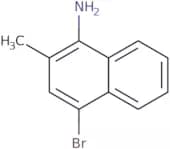
CAS:<p>Versatile small molecule scaffold</p>Formula:C6H5Cl2NO2SPurity:Min. 95%Molecular weight:226.07 g/mol4-Bromo-2-methylnaphthalen-1-amine
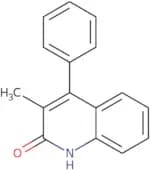
CAS:<p>Versatile small molecule scaffold</p>Formula:C11H10BrNPurity:Min. 95%Molecular weight:236.11 g/mol3-Methyl-4-phenyl-1,2-dihydroquinolin-2-one
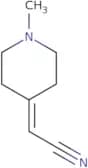
CAS:<p>Versatile small molecule scaffold</p>Formula:C16H13NOPurity:Min. 95%Molecular weight:235.28 g/mol2-(1-Methylpiperidin-4-ylidene)acetonitrile
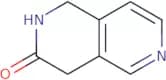
CAS:<p>Versatile small molecule scaffold</p>Formula:C8H12N2Purity:Min. 95%Molecular weight:136.19 g/mol1,2-Dihydro-2,6-naphthyridin-3(4H)-one
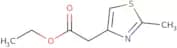
CAS:<p>Versatile small molecule scaffold</p>Formula:C8H8N2OPurity:Min. 95%Molecular weight:148.16 g/mol(2-Methyl-thiazol-4-yl)-acetic acid ethyl ester
CAS:<p>Versatile small molecule scaffold</p>Formula:C8H11NO2SPurity:Min. 95%Molecular weight:185.25 g/mol3-(Pyridine-3-carbonyl)-1H-indole
CAS:Controlled Product<p>Versatile small molecule scaffold</p>Formula:C14H10N2OPurity:Min. 95%Molecular weight:222.24 g/mol2-(Furan-2-yl)-1H-1,3-benzodiazol-5-amine
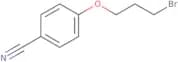
CAS:Versatile small molecule scaffoldFormula:C11H9N3OPurity:Min. 95%Molecular weight:199.21 g/mol4-(3-Bromopropoxy)benzonitrile
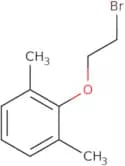
CAS:<p>Versatile small molecule scaffold</p>Formula:C10H10BrNOPurity:Min. 95%Molecular weight:240.1 g/mol2-(2-Bromo-ethoxy)-1,3-dimethyl-benzene
CAS:<p>Versatile small molecule scaffold</p>Formula:C10H13BrOPurity:Min. 95%Molecular weight:229.12 g/mol1-(2-Bromo-ethoxy)-3,5-dimethyl-benzene
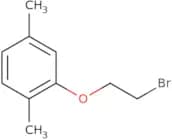
CAS:<p>1-(2-Bromo-ethoxy)-3,5-dimethyl-benzene is a potential drug that has immunosuppressive effects. It binds to the pyrimidine ring of human immunodeficiency virus (HIV) and inhibits its activity. This inhibitor blocks the synthesis of viral DNA and RNA by binding to the sulfur atom of the pyrimidine ring. The substituents on this molecule are bromine and ethoxy groups, which are alkylated.</p>Formula:C10H13BrOPurity:Min. 95%Molecular weight:229.12 g/mol2-(2-Bromo-ethoxy)-1,4-dimethyl-benzene
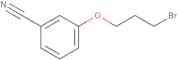
CAS:<p>Versatile small molecule scaffold</p>Formula:C10H13BrOPurity:Min. 95%Molecular weight:229.12 g/mol3-(3-Bromopropoxy)benzonitrile
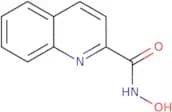
CAS:<p>Versatile small molecule scaffold</p>Formula:C10H10BrNOPurity:Min. 95%Molecular weight:240.1 g/molN-Hydroxyquinoline-2-carboxamide
CAS:<p>N-Hydoxyquinoline-2-carboxamide is a molecule that belongs to the hydroxamic acid class. It is a zirconium-containing derivative of hydroxylamine and, as such, is tautomeric with respect to the carboxylic acid moiety. This compound has been shown to be mutagenic in Salmonella typhimurium strains TA98 and TA100 and in Escherichia coli strain WP2 uvrA. N-Hydroxyquinoline-2-carboxamide has also been found to be an inducer of sulfation and conjugates with glutathione and other organic acids.</p>Formula:C10H8N2O2Purity:Min. 95%Molecular weight:188.18 g/mol7-Hydrazinyl-5-methyl-[1,2,4]triazolo[1,5-a]pyrimidine
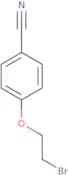
CAS:<p>Versatile small molecule scaffold</p>Formula:C6H8N6Purity:Min. 95%Molecular weight:164.17 g/mol4-(2-Bromoethoxy)benzonitrile
CAS:<p>Versatile small molecule scaffold</p>Formula:C9H8BrNOPurity:Min. 95%Molecular weight:226.07 g/mol
![{2-Methyl-2-azabicyclo[2.2.2]octan-6-yl}methanol](/_next/image/?url=https%3A%2Fstatic.cymitquimica.com%2Fproducts%2F3D%2Fthumb-webp%2FMBA08966.webp&w=3840&q=75)




![7-Hydrazinyl-5-methyl-[1,2,4]triazolo[1,5-a]pyrimidine](/_next/image/?url=https%3A%2Fstatic.cymitquimica.com%2Fproducts%2F3D%2Fthumb-webp%2FMBA14008.webp&w=3840&q=75)