Building Blocks
This section contains fundamental products for the synthesis of organic and biological compounds. Building blocks are the essential starting materials used to construct complex molecules through various chemical reactions. They play a critical role in drug discovery, material science, and chemical research. At CymitQuimica, we offer a diverse range of high-quality building blocks to support your innovative research and industrial projects, ensuring you have the essential components for successful synthesis.
Subcategories of "Building Blocks"
- Boronic Acids & Boronic Acid Derivatives(5,756 products)
- Chiral Building Blocks(1,242 products)
- Hydrocarbon Building Blocks(6,093 products)
- Organic Building Blocks(60,525 products)
Found 195533 products of "Building Blocks"
Sort by
Purity (%)
0
100
|
0
|
50
|
90
|
95
|
100
Methyl 2-amino-2-(2,3-dihydro-1H-inden-2-yl)acetate hydrochloride
CAS:<p>Versatile small molecule scaffold</p>Formula:C12H16ClNO2Purity:Min. 95%Molecular weight:241.71 g/mol2-{[(tert-Butoxy)carbonyl]amino}-2-(2,3-dihydro-1H-inden-2-yl)acetic acid
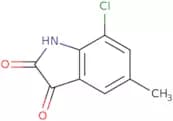
CAS:<p>Versatile small molecule scaffold</p>Formula:C16H21NO4Purity:Min. 95%Molecular weight:291.34 g/mol7-Chloro-5-methyl-2,3-dihydro-1H-indole-2,3-dione
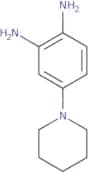
CAS:<p>Versatile small molecule scaffold</p>Formula:C9H6ClNO2Purity:Min. 95%Molecular weight:195.6 g/mol4-(Piperidin-1-yl)benzene-1,2-diamine
CAS:<p>Versatile small molecule scaffold</p>Formula:C11H17N3Purity:Min. 95%Molecular weight:191.27 g/mol1,2-Benzoxazol-3-ylmethanamine
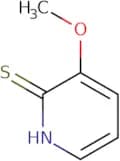
CAS:<p>Versatile small molecule scaffold</p>Formula:C8H8N2OPurity:Min. 95%Molecular weight:148.16 g/mol3-Methoxypyridine-2-thiol
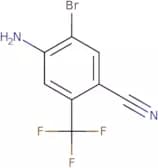
CAS:<p>Versatile small molecule scaffold</p>Formula:C6H7NOSPurity:Min. 95%Molecular weight:141.19 g/mol4-Amino-5-bromo-2-(trifluoromethyl)benzonitrile
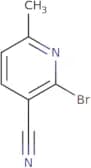
CAS:<p>Versatile small molecule scaffold</p>Formula:C8H4BrF3N2Purity:Min. 95%Molecular weight:265.3 g/mol2-Bromo-6-methylnicotinonitrile
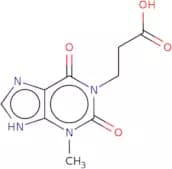
CAS:<p>2-Bromo-6-methylnicotinonitrile is a reactive heterocyclic compound that has been used as a palladium catalyst. It undergoes substitution reactions with halides and polyhalogenated compounds. The yield of this reaction depends on the substituents and functional groups present. 2-Bromo-6-methylnicotinonitrile can also be used to form alkynes, alkynes, and heterocycles.<br>2-Bromo-6-methylnicotinonitrile is an alkyne that has two functional groups: a nitrile group and a bromine group. It reacts with nucleophiles such as ammonia or amines to form the corresponding amide or amine in good yields.</p>Formula:C7H5BrN2Purity:Min. 95%Molecular weight:197.03 g/mol3-(3-Methyl-2,6-dioxo-2,3,6,9-tetrahydro-1H-purin-1-yl)propanoic acid
CAS:Controlled Product<p>Versatile small molecule scaffold</p>Formula:C9H10N4O4Purity:Min. 95%Molecular weight:238.2 g/mol3-(Piperidin-4-yl)propan-1-ol hydrochloride
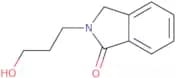
CAS:<p>Versatile small molecule scaffold</p>Formula:C8H18ClNOPurity:Min. 95%Molecular weight:179.69 g/mol2-(3-Hydroxypropyl)isoindolin-1-one
CAS:<p>Versatile small molecule scaffold</p>Formula:C11H13NO2Purity:Min. 95%Molecular weight:191.23 g/mol5-(1,3-Dioxolan-2-yl)thiophene-3-carbaldehyde
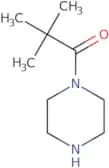
CAS:<p>Versatile small molecule scaffold</p>Formula:C8H8O3SPurity:Min. 95%Molecular weight:184.21 g/mol1-Pivaloyl-piperazine
CAS:<p>Versatile small molecule scaffold</p>Formula:C9H18N2OPurity:Min. 95%Molecular weight:170.26 g/mol1-[(tert-Butoxy)carbonyl]-4,4-dimethylpiperidine-2-carboxylic acid
CAS:<p>Versatile small molecule scaffold</p>Formula:C13H23NO4Purity:Min. 95%Molecular weight:257.33 g/molN-Cyclobutylaniline
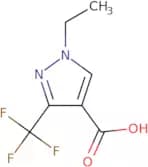
CAS:<p>N-Cyclobutylaniline is an organic compound that contains a hydroxyl group, a hydroxy group, and an alkylthio group. It is mainly used as an intermediate for the production of dyes and pharmaceuticals. N-Cyclobutylaniline has been shown to inhibit viral polymerase activity in vitro and in vivo. This inhibition is due to its ability to react with the chlorine atom on the viral DNA polymerase, which results in termination of the transfer reaction.<br>N-Cyclobutylaniline also inhibits the ns5b polymerase, which is responsible for transcription of viral RNA. N-Cyclobutylaniline binds to the carboxylic acid site on the enzyme and prevents it from functioning properly.</p>Formula:C10H13NPurity:Min. 95%Molecular weight:147.22 g/mol1-Ethyl-3-(trifluoromethyl)-1H-pyrazole-4-carboxylic acid
CAS:<p>Versatile small molecule scaffold</p>Formula:C7H7F3N2O2Purity:Min. 95%Molecular weight:208.14 g/mol(2E)-3-[4-(Chlorosulfonyl)phenyl]prop-2-enoic acid
CAS:<p>(2E)-3-[4-(Chlorosulfonyl)phenyl]prop-2-enoic acid is a chemical compound that has been shown to be useful in the synthesis of stereoselectively propanoic acid. The resulting propanoic acid can then be used in the synthesis of amines, which are often precursors to pharmaceuticals. This process was found to be more efficient when done using microwave irradiation.</p>Formula:C9H7ClO4SPurity:Min. 95%Molecular weight:246.67 g/molMethyl 1-formylcyclobutane-1-carboxylate
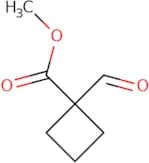
CAS:<p>Versatile small molecule scaffold</p>Formula:C7H10O3Purity:Min. 95%Molecular weight:142.15 g/moltert-Butyl 5-amino-2-hydroxybenzoate
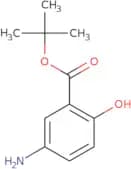
CAS:<p>Versatile small molecule scaffold</p>Formula:C11H15NO3Purity:Min. 95%Molecular weight:209.24 g/mol2-Chloro-5-(propan-2-yl)-1,3-benzoxazole
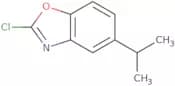
CAS:<p>Versatile small molecule scaffold</p>Formula:C10H10ClNOPurity:Min. 95%Molecular weight:195.64 g/mol


![2-{[(tert-Butoxy)carbonyl]amino}-2-(2,3-dihydro-1H-inden-2-yl)acetic acid](/_next/image/?url=https%3A%2Fstatic.cymitquimica.com%2Fproducts%2F3D%2Fthumb-webp%2FFGA17273.webp&w=3840&q=75)



![1-[(tert-Butoxy)carbonyl]-4,4-dimethylpiperidine-2-carboxylic acid](/_next/image/?url=https%3A%2Fstatic.cymitquimica.com%2Fproducts%2F3D%2Fthumb-webp%2FFGA30206.webp&w=3840&q=75)

![(2E)-3-[4-(Chlorosulfonyl)phenyl]prop-2-enoic acid](/_next/image/?url=https%3A%2Fstatic.cymitquimica.com%2Fproducts%2F3D%2Fthumb-webp%2FFGA37873.webp&w=3840&q=75)