Building Blocks
This section contains fundamental products for the synthesis of organic and biological compounds. Building blocks are the essential starting materials used to construct complex molecules through various chemical reactions. They play a critical role in drug discovery, material science, and chemical research. At CymitQuimica, we offer a diverse range of high-quality building blocks to support your innovative research and industrial projects, ensuring you have the essential components for successful synthesis.
Subcategories of "Building Blocks"
- Boronic Acids & Boronic Acid Derivatives(5,756 products)
- Chiral Building Blocks(1,242 products)
- Hydrocarbon Building Blocks(6,095 products)
- Organic Building Blocks(61,038 products)
Found 196817 products of "Building Blocks"
Sort by
Purity (%)
0
100
|
0
|
50
|
90
|
95
|
100
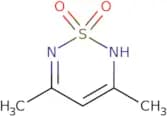
3,5-Dimethyl-2H-1,2,6-thiadiazine-1,1-dione
CAS:<p>Versatile small molecule scaffold</p>Formula:C5H8N2O2SPurity:Min. 95%Molecular weight:160.2 g/molTricyclo[2.2.1.0,2,6]heptane-3-carboxylic acid
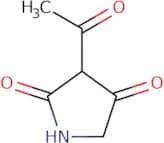
CAS:<p>Versatile small molecule scaffold</p>Formula:C8H10O2Purity:Min. 95%Molecular weight:138.16 g/mol3-Acetylpyrrolidine-2,4-dione
CAS:<p>3-Acetylpyrrolidine-2,4-dione is an experimental drug that belongs to the class of metal hydroxides. It has been shown to have anti-tumor activity in vitro and in vivo against a variety of malignant tumors. 3-Acetylpyrrolidine-2,4-dione also inhibits the growth of pigweed and other plants by inhibiting the production of tenuazonic acid. This compound is a tautomeric form of tenuazonic acid, which is also known as 2,4-pentanedione. The carboxylate group on this molecule may be responsible for its herbicidal activity.</p>Formula:C6H7NO3Purity:Min. 95%Molecular weight:141.12 g/mol7-Chlorothieno[2,3-d]pyridazine
CAS:<p>Versatile small molecule scaffold</p>Formula:C6H3ClN2SPurity:Min. 95%Molecular weight:170.62 g/mol6H,7H-Thieno[2,3-d]pyridazin-7-one
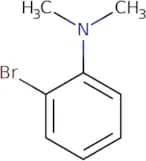
CAS:<p>Versatile small molecule scaffold</p>Formula:C6H4N2OSPurity:Min. 95%Molecular weight:152.18 g/mol2-Bromo-N,N-dimethylaniline
CAS:<p>2-Bromo-N,N-dimethylaniline is a chemical compound that belongs to the class of alkylating agents. It is prepared by the reaction of 2-bromoaniline with a Grignard reagent, followed by acidification and removal of the volatile bromide. 2-Bromo-N,N-dimethylaniline has been used in the preparation of ligands for metal complexes and as an acetal protecting group for alcohols and phenols. 2-Bromo-N,N-dimethylaniline has been shown to be a good cross-coupling agent for halides or aromatic heterocycles, which is an important property in organic synthesis. The mechanism involves initial abstraction of hydrogen from the substrate molecule by 2-bromo-N,N-dimethylaniline forming an intermediate cationic species. This intermediate cationic species then reacts with the substrate molecule</p>Formula:C8H10BrNPurity:Min. 95%Molecular weight:200.08 g/mola-Chlorobenzaldoxime
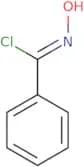
CAS:<p>a-Chlorobenzaldoxime is a potent antibacterial agent that inhibits bacterial growth by binding to the enzyme protein, thereby preventing the synthesis of essential proteins. It also has insecticidal activities. a-Chlorobenzaldoxime is an inorganic compound and is not metabolized by the body. This makes it an efficient method for treating bacterial infections.</p>Formula:C7H6ClNOPurity:Min. 95%Molecular weight:155.58 g/mol(2,4-Dimethylpyrimidin-5-yl)methanol
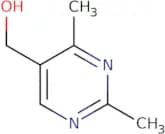
CAS:<p>(2,4-Dimethylpyrimidin-5-yl)methanol is an ethylene diamine molecule that is covalently bonded to a cyclic peptide. It has been shown to have strong antimicrobial activity against various types of bacteria and fungi. (2,4-Dimethylpyrimidin-5-yl)methanol is able to kill bacteria by inhibiting protein synthesis, which may be due to its ability to form hydrogen bonds with the transfer reactions of the ribosome. In addition, (2,4-Dimethylpyrimidin-5-yl)methanol has also been shown to form acid in the presence of malonic acid and inhibitor molecules. This results in inhibition of bacterial growth and structural analysis by electrochemical impedance spectroscopy.</p>Formula:C7H10N2OPurity:Min. 95%Molecular weight:138.17 g/mol4-Chloro-5-methoxy-2-methylpyrimidine
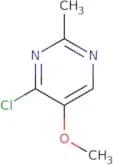
CAS:<p>Versatile small molecule scaffold</p>Formula:C6H7ClN2OPurity:Min. 95%Molecular weight:158.58 g/mol5-Methoxy-2-methylpyrimidin-4-amine
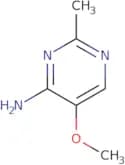
CAS:<p>Versatile small molecule scaffold</p>Formula:C6H9N3OPurity:Min. 95%Molecular weight:139.16 g/mol5-Methoxy-2-methyl-1,4-dihydropyrimidin-4-one
CAS:<p>Versatile small molecule scaffold</p>Formula:C6H8N2O2Purity:Min. 95%Molecular weight:140.14 g/mol2-chloro-[1,2,4]triazolo[1,5-a]pyridine
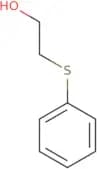
CAS:<p>Versatile small molecule scaffold</p>Formula:C6H4ClN3Purity:Min. 95%Molecular weight:153.57 g/mol2-(Phenylthio)ethanol
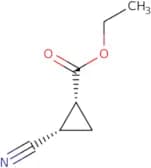
CAS:<p>2-Phenylthioethanol is a monomer that is used in the synthesis of silver trifluoromethanesulfonate. 2-Phenylthioethanol reacts with hydroxyl groups to form an ether linkage, which is the basis for its use as a monomer. 2-Phenylthioethanol has been shown to react with orthophosphate to form an ester linkage. This reaction is catalyzed by a nucleophile (e.g., chloride) and occurs at neutral pH in the presence of aluminium powder. The rate of this reaction increases with temperature and can be accelerated by diphenyl sulfoxide. The coatings industry uses 2-phenylthioethanol as a solvent for polyvinylchloride and polyurethane coatings, due to its ability to dissolve these materials without degrading them.</p>Formula:C8H10OSPurity:Min. 95%Molecular weight:154.23 g/molcis-ethyl (1R,2S)-2-cyanocyclopropane-1-carboxylate
CAS:<p>Versatile small molecule scaffold</p>Formula:C7H9NO2Purity:Min. 95%Molecular weight:139.15 g/mol1,3-Diazaspiro[4.4]nonane-2,4-dione
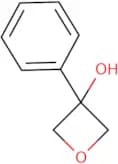
CAS:<p>1,3-Diazaspiro[4.4]nonane-2,4-dione (1) is a new fungicide that was shown to have fungicidal activity in vitro against the grapevine pathogens Plasmopara viticola and Plasmopara obducens. This compound has been isolated from the plant Express erythroxylum coca (Erythroxylum coca). The compound belongs to the class of diaza spiro compounds and is a member of a family of diaza spiro compounds with antifungal activity. One possible mode of action for 1 is that it inhibits the synthesis of DNA by binding to bacterial DNA gyrase.</p>Formula:C7H10N2O2Purity:Min. 95%Molecular weight:154.17 g/mol3-Phenyloxetan-3-ol
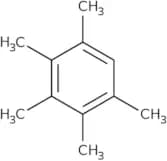
CAS:<p>3-Phenyloxetan-3-ol is a degassing agent that can be used to regulate the sensitivity of metal plates. It has been shown to increase the efficiency of hydroelectric power generation by reducing the amount of turbidity in water. 3-Phenyloxetan-3-ol is not resistant to impurities, and can form metal oxides with copper and other elements. 3-Phenyloxetan-3-ol is a liquid that has a particle size of about 1 micrometre, which makes it useful for industrial applications such as plates and alloys.</p>Formula:C9H10O2Purity:Min. 95%Molecular weight:150.17 g/molPentamethylbenzene
CAS:<p>Pentamethylbenzene is a reactive organic chemical that is used in the production of other chemicals and is used as a solvent. It has been shown to have high reactivity with hydrochloric acid, pentamethylbenzene, and trifluoroacetic acid. Pentamethylbenzene reacts with redox potentials to form bicyclic heterocycles. This reaction mechanism leads to metabolic disorders such as protonation of amino acids and deamination of nucleosides. Pentamethylbenzene also reacts with oxygen in vivo to form trifluoroacetic acid, which may lead to treatment of metabolic disorders by reducing the concentration of proton ions.</p>Formula:C11H16Purity:Min. 95%Molecular weight:148.25 g/molBicyclo[2.2.1]hept-5-ene-2-sulfonyl fluoride, somers
CAS:<p>Versatile small molecule scaffold</p>Formula:C7H9FO2SPurity:Min. 95%Molecular weight:176.21 g/mol1-(Propan-2-yl)-1,3-diazinane-2,4-dione
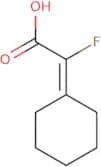
CAS:<p>Versatile small molecule scaffold</p>Formula:C7H12N2O2Purity:Min. 95%Molecular weight:156.18 g/mol2-Cyclohexylidene-2-fluoroacetic acid
CAS:<p>2-Cyclohexylidene-2-fluoroacetic acid is a geometrically constrained molecule that has been synthesized and characterized by X-ray crystallography. The compound adopts three conformations, each of which is related to the other two by a rotation of the cyclohexane ring around the central fluoroacetate group.</p>Formula:C8H11FO2Purity:Min. 95%Molecular weight:158.17 g/mol

![Tricyclo[2.2.1.0,2,6]heptane-3-carboxylic acid](/_next/image/?url=https%3A%2Fstatic.cymitquimica.com%2Fproducts%2F3D%2Fthumb-webp%2FAAA69756.webp&w=3840&q=75)
![7-Chlorothieno[2,3-d]pyridazine](/_next/image/?url=https%3A%2Fstatic.cymitquimica.com%2Fproducts%2F3D%2Fthumb-webp%2FAAA69771.webp&w=3840&q=75)
![6H,7H-Thieno[2,3-d]pyridazin-7-one](/_next/image/?url=https%3A%2Fstatic.cymitquimica.com%2Fproducts%2F3D%2Fthumb-webp%2FAAA69772.webp&w=3840&q=75)

![2-chloro-[1,2,4]triazolo[1,5-a]pyridine](/_next/image/?url=https%3A%2Fstatic.cymitquimica.com%2Fproducts%2F3D%2Fthumb-webp%2FAAA69843.webp&w=3840&q=75)
![1,3-Diazaspiro[4.4]nonane-2,4-dione](/_next/image/?url=https%3A%2Fstatic.cymitquimica.com%2Fproducts%2F3D%2Fthumb-webp%2FAAA69951.webp&w=3840&q=75)
![Bicyclo[2.2.1]hept-5-ene-2-sulfonyl fluoride, somers](/_next/image/?url=https%3A%2Fstatic.cymitquimica.com%2Fproducts%2F3D%2Fthumb-webp%2FAAA70026.webp&w=3840&q=75)