Building Blocks
This section contains fundamental products for the synthesis of organic and biological compounds. Building blocks are the essential starting materials used to construct complex molecules through various chemical reactions. They play a critical role in drug discovery, material science, and chemical research. At CymitQuimica, we offer a diverse range of high-quality building blocks to support your innovative research and industrial projects, ensuring you have the essential components for successful synthesis.
Subcategories of "Building Blocks"
- Boronic Acids & Boronic Acid Derivatives(5,756 products)
- Chiral Building Blocks(1,242 products)
- Hydrocarbon Building Blocks(6,093 products)
- Organic Building Blocks(60,525 products)
Found 195533 products of "Building Blocks"
Sort by
Purity (%)
0
100
|
0
|
50
|
90
|
95
|
100
2-Phenylfuro[3,2-b]pyridine
CAS:<p>2-Phenylfuro[3,2-b]pyridine (2PFBP) is a synthetic compound that has antibacterial activity. It is a stereoselective compound, which means it selectively binds to one of the two enantiomers of an enzyme. The selectivity of 2PFBP for methicillin-resistant Staphylococcus aureus (MRSA) was demonstrated in a study using mcf-7 cells, which are human cancer cells that have been transformed by the gene encoding methicillin resistance. The compound inhibited MRSA cell growth and induced apoptosis in MRSA cells. 2PFBP also has antibacterial activity against other bacteria such as S. aureus and S. epidermidis strains. 2PFBP inhibits bacterial growth by binding to DNA-dependent RNA polymerase, thereby preventing transcription and replication. The high frequency of human activity has been shown using a patch-clamp technique on human erythrocytes</p>Formula:C13H9NOPurity:Min. 95%Molecular weight:195.22 g/molMethyl 5-bromo-2-hydroxy-3-iodobenzenecarboxylate
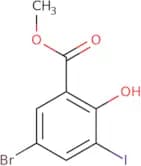
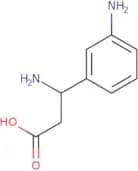
CAS:<p>Versatile small molecule scaffold</p>Formula:C8H6BrIO3Purity:Min. 95%Molecular weight:356.95 g/mol3-Amino-3-(3-aminophenyl)propanoic acid
CAS:<p>Versatile small molecule scaffold</p>Formula:C9H12N2O2Purity:Min. 95%Molecular weight:180.2 g/mol1,3-Bis[1-(2-hydroxyethyl)-4-piperidyl]propane
CAS:<p>Versatile small molecule scaffold</p>Formula:C17H34N2O2Purity:Min. 95%Molecular weight:298.47 g/mol2-Ethynylbicyclo[2.2.1]heptan-2-ol
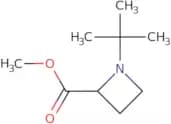
CAS:<p>Versatile small molecule scaffold</p>Formula:C9H12OPurity:Min. 95%Molecular weight:136.19 g/molMethyl 1-tert-butylazetidine-2-carboxylate
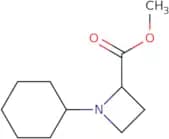
CAS:<p>Versatile small molecule scaffold</p>Formula:C9H17NO2Purity:Min. 95%Molecular weight:171.24 g/molMethyl 1-cyclohexylazetidine-2-carboxylate
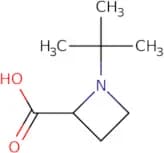
CAS:<p>Versatile small molecule scaffold</p>Formula:C11H19NO2Purity:Min. 95%Molecular weight:197.3 g/mol1-tert-Butyl-azetidine-2-carboxylic acid
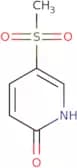
CAS:<p>Versatile small molecule scaffold</p>Formula:C8H15NO2Purity:Min. 95%Molecular weight:157.21 g/mol5-Methanesulfonyl-1,2-dihydropyridin-2-one
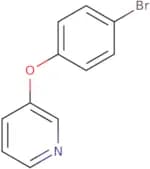
CAS:<p>5-Methanesulfonyl-1,2-dihydropyridin-2-one is an electrophilic compound that is used in the treatment of type 2 diabetes. It is a competitive inhibitor of glucokinase and blocks the phosphorylation of glucose to glucose-6-phosphate by glucokinase. 5MSDHP binds to liver microsomes and inhibits the activity of glucokinase and other enzymes, such as glutathione S transferases, glutathione peroxidases, and NADPH oxidases. This drug also has been shown to activate glucokinase activators, such as sulforaphane in human liver cells.</p>Formula:C6H7NO3SPurity:Min. 95%Molecular weight:173.19 g/mol3-(4-Bromophenoxy)-pyridine
CAS:<p>Versatile small molecule scaffold</p>Formula:C11H8BrNOPurity:Min. 95%Molecular weight:250.09 g/mol4,5-Dimethyl-2-nitrophenol
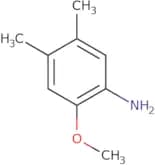
CAS:<p>4,5-Dimethyl-2-nitrophenol is a phenolic compound that can be synthesized from a variety of precursors. It has been shown to react with hydrogen peroxide and chloride to produce nitrobenzene. Nitrobenzene has been used as an intermediate in the synthesis of other organic compounds. 4,5-Dimethyl-2-nitrophenol also reacts with hydrogen peroxide to form the fluorescent product 2,6-dichloro-4-(p-hydroxyphenyl)phenol. This reaction is used for detection of hydrogen peroxide in environmental chemistry. 4,5-Dimethyl-2-nitrophenol can undergo tautomeric shifts between its dienone and enedione forms. The ligand interactions of these two forms are different, which may lead to different reactions with other molecules.</p>Formula:C8H9NO3Purity:Min. 95%Molecular weight:167.16 g/mol2-Methoxy-4,5-dimethylaniline
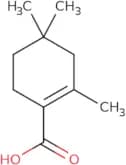
CAS:<p>Versatile small molecule scaffold</p>Formula:C9H13NOPurity:Min. 95%Molecular weight:151.21 g/mol2,4,4-Trimethylcyclohex-1-ene-1-carboxylic acid
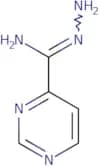
CAS:<p>Versatile small molecule scaffold</p>Formula:C10H16O2Purity:Min. 95%Molecular weight:168.23 g/molN-Aminopyrimidine-4-carboximidamide
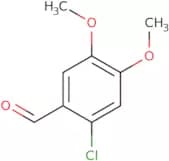
CAS:<p>Versatile small molecule scaffold</p>Formula:C5H7N5Purity:Min. 95%Molecular weight:137.14 g/mol2-Chloro-4,5-dimethoxybenzaldehyde
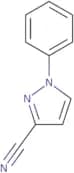
CAS:<p>2-Chloro-4,5-dimethoxybenzaldehyde is a functional group that can be used as a nucleophile in organic synthesis. It has been shown to react with amines to produce nitro compounds. This functional group also reacts with acidic substances such as malic acid and ethanol extractions, forming chlorinated products. 2-Chloro-4,5-dimethoxybenzaldehyde can be extracted from the surface of plants using piperazine or morpholine.</p>Formula:C9H9ClO3Purity:Min. 95%Molecular weight:200.62 g/mol1-Phenyl-1H-pyrazole-3-carbonitrile
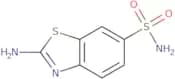
CAS:<p>Versatile small molecule scaffold</p>Formula:C10H7N3Purity:Min. 95%Molecular weight:169.18 g/mol2-Amino-benzothiazole-6-sulfonic acid amide
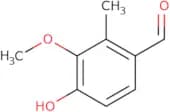
CAS:<p>2-Amino-benzothiazole-6-sulfonic acid amide is a drug that belongs to the class of anhydrase inhibitors. It has been found to have a potent inhibitory effect on carbonic anhydrase, which is thought to be involved in the pathogenesis of some cancers. This drug has also been shown to have antiviral effects against HIV and Herpes simplex virus type 1, as well as antibacterial activity against Entamoeba histolytica and Giardia lamblia. 2-Amino-benzothiazole-6-sulfonic acid amide has been shown to reduce inflammation by inhibiting immunodeficiency, which may be due to its inhibition of the enzyme carrageenan synthase. The carrageenan synthase enzyme is required for the production of polysaccharides found in red blood cells and microorganisms that are involved in inflammatory processes.</p>Formula:C7H7N3O2S2Purity:Min. 95%Molecular weight:229.28 g/mol4-Hydroxy-3-methoxy-2-methylbenzaldehyde
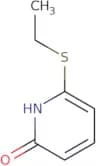
CAS:<p>Versatile small molecule scaffold</p>Formula:C9H10O3Purity:Min. 95%Molecular weight:166.17 g/mol6-(Ethylthio)pyridin-2(1H)-one
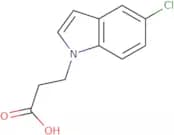
CAS:<p>Versatile small molecule scaffold</p>Formula:C7H9NOSPurity:Min. 95%Molecular weight:155.22 g/mol3-(5-Chloro-1H-indol-1-yl)propanoic acid
CAS:<p>Versatile small molecule scaffold</p>Formula:C11H10ClNO2Purity:Min. 95%Molecular weight:223.65 g/mol
![2-Phenylfuro[3,2-b]pyridine](/_next/image/?url=https%3A%2Fstatic.cymitquimica.com%2Fproducts%2F3D%2Fthumb-webp%2FTAA06882.webp&w=3840&q=75)

![1,3-Bis[1-(2-hydroxyethyl)-4-piperidyl]propane](/_next/image/?url=https%3A%2Fstatic.cymitquimica.com%2Fproducts%2F3D%2Fthumb-webp%2FTAA07384.webp&w=3840&q=75)
![2-Ethynylbicyclo[2.2.1]heptan-2-ol](/_next/image/?url=https%3A%2Fstatic.cymitquimica.com%2Fproducts%2F3D%2Fthumb-webp%2FTAA08403.webp&w=3840&q=75)