Building Blocks
This section contains fundamental products for the synthesis of organic and biological compounds. Building blocks are the essential starting materials used to construct complex molecules through various chemical reactions. They play a critical role in drug discovery, material science, and chemical research. At CymitQuimica, we offer a diverse range of high-quality building blocks to support your innovative research and industrial projects, ensuring you have the essential components for successful synthesis.
Subcategories of "Building Blocks"
- Boronic Acids & Boronic Acid Derivatives(5,778 products)
- Chiral Building Blocks(1,242 products)
- Hydrocarbon Building Blocks(6,098 products)
- Organic Building Blocks(61,034 products)
Found 199601 products of "Building Blocks"
Sort by
Purity (%)
0
100
|
0
|
50
|
90
|
95
|
100
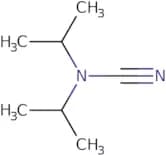
Diisopropylcyanamide
CAS:<p>Diisopropylcyanamide is a labile organic solvent that reacts with triazine and pyridine compounds to form cyanuric acid. It is used as a crystallization solvent in the synthesis of various ligands, including growth factors. The compound has been shown to be thermally stable, reacting at temperatures up to 200°C under vacuum conditions. Diisopropylcyanamide can be synthesized by reacting an amine with hydrogen cyanide. This reaction takes place in an organic solvent such as chloroform or dichloromethane and requires heating for 2 hours at 60°C.</p>Formula:C7H14N2Purity:Min. 95%Molecular weight:126.2 g/mol3'-Amino-6'-hydroxy-3H-spiro[2-benzofuran-1,9'-xanthen]-3-one
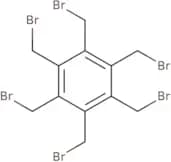
CAS:<p>Versatile small molecule scaffold</p>Formula:C20H13NO4Purity:Min. 95%Molecular weight:331.3 g/molHexakis(bromomethyl)benzene
CAS:<p>Hexakis(bromomethyl)benzene (HBB) is a dendron with a large, stable, and rigid structure. It is a green-emitting material that can be used as an organic light-emitting diode (OLED) emitter. HBB is soluble in common organic solvents, such as benzene and chloroform, which makes it easy to synthesize and purify. HBB has luminescent properties that can be tuned by altering the size of the dendron or changing the substituent on the benzene ring. Hexakis(bromomethyl)benzene has been shown to interact with chloride ions and form a crystal lattice that exists in two different crystal systems: orthorhombic and monoclinic.</p>Formula:C12H12Br6Purity:Min. 95%Molecular weight:635.65 g/mol3-Methoxy-2-methyl-3-oxopropanoic acid
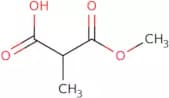
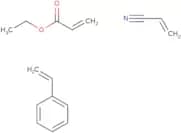
CAS:Methoxy-2-methyl-3-oxopropanoic acid is a chemical compound that belongs to the class of phenoxy. It is used in the preparation of esters, amides, lactams, and other organic compounds. Methoxy-2-methyl-3-oxopropanoic acid can be prepared by reacting phosphorus pentachloride with an alcohol such as hydroxyethanol or octahydroethanol. The chloride ions can be removed by hydrolysis with a base such as potassium hydroxide or sodium hydroxide. This product is reactive towards acids and bases, but not towards halogens or oxidizing agents. It has been used to synthesize monoethylacrylate and diethyl ester from acrylonitrile and ethyl alcohol respectively.Formula:C5H8O4Purity:Min. 95%Molecular weight:132.11 g/mol1-(5-Acetyl-2,4-dimethoxyphenyl)ethan-1-one
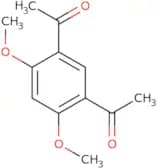
CAS:Versatile small molecule scaffoldFormula:C12H14O4Purity:Min. 95%Molecular weight:222.24 g/mol1-Amino-2-naphthonitrile
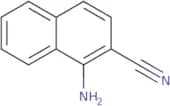
CAS:<p>1-Amino-2-naphthonitrile is a chemical compound that is used in the production of 4,4'-diaminodiphenyl ether. It is also a precursor to the synthesis of 1-aminoanthracene, which is an electrophile and has been shown to induce cancer in experimental animals. The skeleton of 1-amino-2-naphthonitrile contains a phenyl group and can be detected using x-ray crystallography. This compound also forms carbocations during reactions with carbon disulfide. Carbon disulfide reacts with 1-amino-2-naphthonitrile and yields methyl ketones. The methyl ketones are then reacted with ethylene glycol to yield 4,4'-diaminodiphenyl ether.</p>Formula:C7H5FN2SPurity:Min. 95%Molecular weight:168.19 g/mol4-tert-Butylphenyl Glycidyl Ether
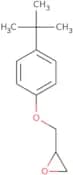
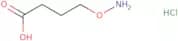
CAS:<p>4-tert-Butylphenyl Glycidyl Ether is a reactive chemical species that can react with human actin filaments. This chemical has been shown to bind to the surface of hamster V79 cells and mammalian cells, as well as electron microscopy studies. 4-tert-Butylphenyl Glycidyl Ether has been shown to cause allergic reactions in mice and has clinical relevance for humans. It binds to dopamine receptors in the brain, which may have effects on mood, appetite, sleep patterns, and other functions related to the central nervous system.</p>Formula:C13H18O2Purity:Min. 95%Molecular weight:206.29 g/mol4-(Aminooxy)butanoic acid hydrochloride
CAS:Versatile small molecule scaffoldFormula:C4H10ClNO3Purity:Min. 95%Molecular weight:155.58 g/mol1-[3-(Trifluoromethyl)phenyl]prop-2-yn-1-ol
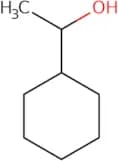
CAS:<p>Versatile small molecule scaffold</p>Formula:C10H7F3OPurity:Min. 95%Molecular weight:200.16 g/mol(1S)-1-Cyclohexylethan-1-ol
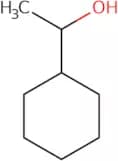
CAS:<p>Versatile small molecule scaffold</p>Formula:C8H16OPurity:Min. 95%Molecular weight:128.21 g/mol(1R)-1-Cyclohexylethan-1-ol
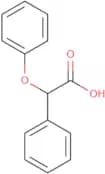
CAS:<p>Versatile small molecule scaffold</p>Formula:C8H16OPurity:Min. 95%Molecular weight:128.21 g/mol2-Phenoxy-2-phenylacetic acid
CAS:<p>2-Phenoxy-2-phenylacetic acid is an immunosuppressant, which has been shown to bind to the glucocorticoid receptor. It binds in a similar manner to other drugs that are used for the treatment of inflammatory bowel disease and congestive heart failure. 2-Phenoxy-2-phenylacetic acid also inhibits the activity of pparγ, which is a nuclear receptor that regulates lipid metabolism. This drug has been shown to have anti-inflammatory effects in mice by inhibiting lipopolysaccharide (LPS) induced inflammation. 2-Phenoxy-2-phenylacetic acid has also been shown to inhibit NFκB activation through inhibition of diazonium salt or diphenyl ether, both of which are electrophiles.</p>Formula:C14H12O3Purity:Min. 95%Molecular weight:228.24 g/mola-methyl-1-naphthaleneacetic acid
CAS:<p>a-methyl-1-naphthaleneacetic acid is a metabolite of butyric acid that has been shown to have anticoagulant properties. It is also a precursor for the synthesis of naphthoic acid, which can be used to make coatings and inks. It is an anti-inflammatory agent that has been shown to inhibit inflammatory bowel disease and cancer. The mechanism of action is not known, but it may involve its ability to inhibit the synthesis of proinflammatory cytokines and tumor necrosis factor (TNF).</p>Formula:C13H12O2Purity:Min. 95%Molecular weight:200.23 g/mol9-Azatricyclo[6.2.2.0,2,7]dodeca-2,4,6-trien-10-one
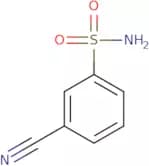
CAS:<p>Versatile small molecule scaffold</p>Formula:C11H11NOPurity:Min. 95%Molecular weight:173.21 g/mol3-Cyanobenzenesulfonamide
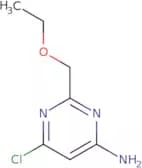
CAS:<p>Versatile small molecule scaffold</p>Formula:C7H6N2O2SPurity:Min. 95%Molecular weight:182.2 g/mol6-Chloro-2-(ethoxymethyl)pyrimidin-4-amine
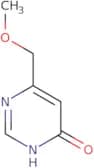
CAS:<p>Versatile small molecule scaffold</p>Formula:C7H10ClN3OPurity:Min. 95%Molecular weight:187.63 g/mol6-(Methoxymethyl)-4-pyrimidinol
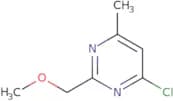
CAS:<p>Versatile small molecule scaffold</p>Formula:C6H8N2O2Purity:Min. 95%Molecular weight:140.14 g/mol4-chloro-2-(methoxymethyl)-6-methylpyrimidine
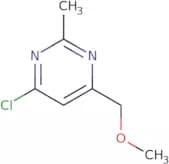
CAS:Versatile small molecule scaffoldFormula:C7H9N2OClPurity:Min. 95%Molecular weight:172.61 g/mol4-Chloro-6-methoxymethyl-2-methyl-pyrimidine
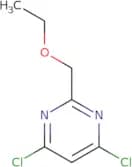
CAS:<p>Versatile small molecule scaffold</p>Formula:C7H9ClN2OPurity:Min. 95%Molecular weight:172.61 g/mol4,6-Dichloro-2-(ethoxymethyl)pyrimidine
CAS:<p>Versatile small molecule scaffold</p>Formula:C7H8Cl2N2OPurity:Min. 95%Molecular weight:207.05 g/mol

![3'-Amino-6'-hydroxy-3H-spiro[2-benzofuran-1,9'-xanthen]-3-one](/_next/image/?url=https%3A%2Fstatic.cymitquimica.com%2Fproducts%2F3D%2Fthumb-webp%2FDAA08644.webp&w=3840&q=75)
![1-[3-(Trifluoromethyl)phenyl]prop-2-yn-1-ol](/_next/image/?url=https%3A%2Fstatic.cymitquimica.com%2Fproducts%2F3D%2Fthumb-webp%2FDAA10833.webp&w=3840&q=75)
![9-Azatricyclo[6.2.2.0,2,7]dodeca-2,4,6-trien-10-one](/_next/image/?url=https%3A%2Fstatic.cymitquimica.com%2Fproducts%2F3D%2Fthumb-webp%2FDAA11816.webp&w=3840&q=75)