Building Blocks
This section contains fundamental products for the synthesis of organic and biological compounds. Building blocks are the essential starting materials used to construct complex molecules through various chemical reactions. They play a critical role in drug discovery, material science, and chemical research. At CymitQuimica, we offer a diverse range of high-quality building blocks to support your innovative research and industrial projects, ensuring you have the essential components for successful synthesis.
Subcategories of "Building Blocks"
- Boronic Acids & Boronic Acid Derivatives(5,756 products)
- Chiral Building Blocks(1,242 products)
- Hydrocarbon Building Blocks(6,095 products)
- Organic Building Blocks(61,038 products)
Found 196817 products of "Building Blocks"
Sort by
Purity (%)
0
100
|
0
|
50
|
90
|
95
|
100
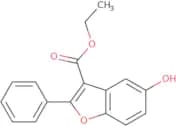
Ethyl 5-hydroxy-2-phenyl-1-benzofuran-3-carboxylate
CAS:<p>Versatile small molecule scaffold</p>Formula:C17H14O4Purity:Min. 95%Molecular weight:282.29 g/mol5-amino-6-chloro-3,4-dihydropyrimidine-4-thione
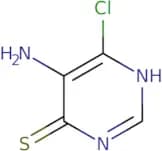
CAS:<p>5-Amino-6-chloro-3,4-dihydropyrimidine-4-thione is a pyridine derivative with a molecular formula of C5H7ClN2. It is soluble in water and has a melting point of 159°C. 5-Amino-6-chloro-3,4-dihydropyrimidine-4-thione can be classified as a heterocycle and is also known as 5,6,3',4'-tetrahydropyrimidinethione or 1,2,3,4,5,6,7,8,-hexahydrobenzopyrimidine. This compound has been shown to react with nitriles to form substances that have been used for spectroscopy purposes.</p>Formula:C4H4ClN3SPurity:Min. 95%Molecular weight:161.6 g/mol6-(4-Hydroxyphenyl)-2H-pyridazin-3-one
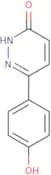
CAS:<p>6-(4-Hydroxyphenyl)-2H-pyridazin-3-one is a monomer that is used to make polymers. The polymerization of 6-(4-hydroxyphenyl)-2H-pyridazin-3-one requires the use of solvents, such as chloroform. It is a dipolar molecule and has two moieties, which are hydroxyls and pyridazine rings. Polymerization occurs by means of polycondensation, which is a process in which two molecules react with each other to form a larger molecule. Polymers are made from copolymers, which are created by combining at least two different monomers. The temperature required for this process ranges between 50°C and 200°C, depending on the type of polymer being created. 6-(4-hydroxyphenyl)-2H-pyridazin-3-one can be used as</p>Formula:C10H8N2O2Purity:Min. 95%Molecular weight:188.18 g/mol2-Bromo-4-chloro-6-methylphenol
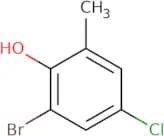
CAS:<p>2-Bromo-4-chloro-6-methylphenol is a benzonitrile derivative that has been investigated computationally for its energies and reactivity. It has been found to be reactive in the presence of anilines, morpholine, and trifluoromethylbenzene. The experimental analysis of the gas phase reaction between 2-bromo-4-chloro-6-methylphenol and aniline show that it is activated by the amine group. In addition, 2-bromo-4-chloro-6 methylphenol reacts with morpholine and a variety of other molecules at elevated temperatures. The reactivity of this molecule has also been studied using microcalorimetry and toluene as a solvent.</p>Formula:C6H6BrClN2Purity:Min. 95%Molecular weight:221.48 g/mol5,6-Dimethyl-2-(methylsulfanyl)pyrimidin-4-ol
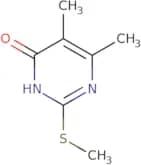
CAS:<p>Versatile small molecule scaffold</p>Formula:C7H10N2OSPurity:Min. 95%Molecular weight:170.23 g/mol2-Amino-4-methylpyridine-3-carbaldehyde
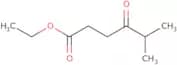
CAS:<p>Versatile small molecule scaffold</p>Formula:C7H8N2OPurity:Min. 95%Molecular weight:136.15 g/molEthyl 5-methyl-4-oxohexanoate
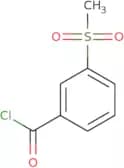
CAS:<p>Versatile small molecule scaffold</p>Formula:C9H16O3Purity:Min. 95%Molecular weight:172.22 g/mol3-Methanesulfonylbenzoyl chloride
CAS:<p>Versatile small molecule scaffold</p>Formula:C8H7ClO3SPurity:Min. 95%Molecular weight:218.66 g/mol5-Chloro-2-(4-methoxyphenyl)-1H-indole
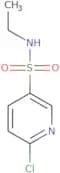
CAS:<p>Versatile small molecule scaffold</p>Formula:C15H12ClNOPurity:Min. 95%Molecular weight:257.71 g/mol6-Chloro-N-ethylpyridine-3-sulfonamide
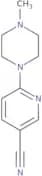
CAS:<p>Versatile small molecule scaffold</p>Formula:C7H9ClN2O2SPurity:Min. 95%Molecular weight:220.68 g/mol6-(4-Methylpiperazin-1-yl)nicotinonitrile
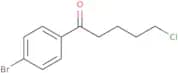
CAS:<p>Versatile small molecule scaffold</p>Formula:C11H14N4Purity:Min. 95%Molecular weight:202.26 g/mol1-(4-Bromophenyl)-5-chloropentan-1-one
CAS:<p>Versatile small molecule scaffold</p>Formula:C11H12BrClOPurity:Min. 95%Molecular weight:275.57 g/molbenzyl(2,2-dimethoxyethyl)amine
CAS:<p>Benzyl(2,2-dimethoxyethyl)amine is an amine that is used as a synthetic reagent for the production of threonine. It has been shown to be catalytic in the formation of glycolaldehyde from formaldehyde and threonine. This compound can be synthesized from morpholine and amines with high yields under synthetically mild conditions. Benzyl(2,2-dimethoxyethyl)amine has also been shown to be useful as a chemical reagent for the synthesis of semisynthetic morpholines.</p>Formula:C11H17NO2Purity:Min. 95%Molecular weight:195.26 g/mol1-Benzylazetidin-3-ol
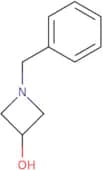
CAS:<p>1-Benzylazetidin-3-ol is a synthetic intermediate for the production of carbapenem, which is an antibiotic that inhibits bacterial cell wall synthesis. This drug has been shown to be effective against human infections in the past and can be administered orally. 1-Benzylazetidin-3-ol is also formed from the reaction of azetidine with an alkali metal chloride in a high yield. The benzyl group and organic solvent are used as a skeleton and residue respectively.</p>Formula:C10H13NOPurity:Min. 95%Molecular weight:163.22 g/mol6-Ethyl-2-oxo-1,2-dihydropyridine-4-carboxylic acid
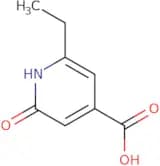
CAS:<p>Versatile small molecule scaffold</p>Formula:C8H9NO3Purity:Min. 95%Molecular weight:167.16 g/mol2-Chloro-6-ethylpyridine-4-carboxylic acid
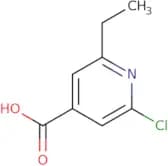
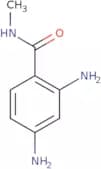
CAS:<p>Versatile small molecule scaffold</p>Formula:C8H8ClNO2Purity:Min. 95%Molecular weight:185.61 g/mol2,4-Diamino-N-methylbenzamide
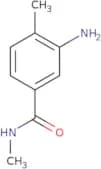
CAS:<p>Versatile small molecule scaffold</p>Formula:C8H11N3OPurity:Min. 95%Molecular weight:165.19 g/mol3-Amino-N,4-dimethylbenzamide
CAS:<p>Versatile small molecule scaffold</p>Formula:C9H12N2OPurity:Min. 95%Molecular weight:164.2 g/mol3,8-Dioxabicyclo[3.2.1]octane-2,4-dione
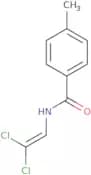
CAS:<p>Versatile small molecule scaffold</p>Formula:C6H6O4Purity:Min. 95%Molecular weight:142.11 g/molN-(2,2-Dichloroethenyl)-4-methylbenzamide
CAS:<p>Versatile small molecule scaffold</p>Formula:C10H9Cl2NOPurity:Min. 95%Molecular weight:230.09 g/mol


![3,8-Dioxabicyclo[3.2.1]octane-2,4-dione](/_next/image/?url=https%3A%2Fstatic.cymitquimica.com%2Fproducts%2F3D%2Fthumb-webp%2FECA88506.webp&w=3840&q=75)