Building Blocks
This section contains fundamental products for the synthesis of organic and biological compounds. Building blocks are the essential starting materials used to construct complex molecules through various chemical reactions. They play a critical role in drug discovery, material science, and chemical research. At CymitQuimica, we offer a diverse range of high-quality building blocks to support your innovative research and industrial projects, ensuring you have the essential components for successful synthesis.
Subcategories of "Building Blocks"
- Boronic Acids & Boronic Acid Derivatives(5,778 products)
- Chiral Building Blocks(1,242 products)
- Hydrocarbon Building Blocks(6,098 products)
- Organic Building Blocks(61,092 products)
Found 199296 products of "Building Blocks"
Sort by
Purity (%)
0
100
|
0
|
50
|
90
|
95
|
100
Pyrazolo[1,5-a]pyridine-3-carbonitrile
CAS:<p>Pyrazolo[1,5-a]pyridine-3-carbonitrile is a crystalline solid in the form of an amorphous or polymorph. It has been shown to inhibit the kinase activity of protein tyrosine phosphatases and may be useful for the treatment of gastrointestinal disorders. The compound has also been shown to have antioxidant properties, which may be related to its ability to inhibit oxidative phosphorylation by inhibiting the mitochondrial membrane potential. Pyrazolo[1,5-a]pyridine-3-carbonitrile has also been shown to suppress proliferation and induce apoptosis in some types of cancer cells. This compound can serve as a nitrogen source for microbial growth and can inhibit bacterial growth by acting as an inhibitor of indolizine synthesis or nitrogen fixation.</p>Formula:C8H5N3Purity:Min. 95%Molecular weight:143.15 g/mol4-Bromo-1,2-thiazol-3-ol
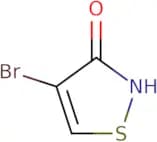
CAS:<p>4-Bromo-1,2-thiazol-3-ol is a palladium acetate catalyst that is used in the palladium-catalyzed synthesis of isothiazoles. It reacts with olefins to form (4-bromo)isothiazoles. 4-Bromo-1,2-thiazol-3-ol has been found to be effective for the synthesis of different types of isothiazoles.</p>Formula:C3H2BrNOSPurity:Min. 95%Molecular weight:180.03 g/mol3-Hydroxy-5-methanesulfonyl-1,2-thiazole-4-carbonitrile
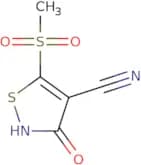
CAS:Versatile small molecule scaffoldFormula:C5H4N2O3S2Purity:Min. 95%Molecular weight:204.2 g/mol(1-Methyl-1,2,3,4-tetrahydronaphthalen-1-yl)methanol
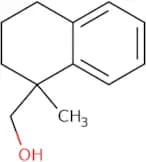
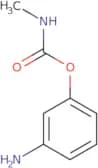
CAS:<p>Versatile small molecule scaffold</p>Formula:C12H16OPurity:Min. 95%Molecular weight:176.25 g/mol3-Aminophenyl N-methylcarbamate
CAS:<p>Versatile small molecule scaffold</p>Formula:C8H10N2O2Purity:Min. 95%Molecular weight:166.18 g/mol1-Benzyl-1 H -[1,2,4]triazol-3-ylamine
CAS:<p>Versatile small molecule scaffold</p>Formula:C9H10N4Purity:Min. 95%Molecular weight:174.2 g/mol3,5-Dichlorophthalic acid
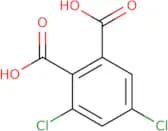
CAS:<p>3,5-Dichlorophthalic acid is a divalent organic acid that is used as an intermediate in the production of other chemicals. 3,5-Dichlorophthalic acid is used as a regulator of plant growth and development. It can also be used to make different n-substituted compounds, such as naphthalene, phthalic anhydride, and 2,6-dichloro-pyridine.</p>Formula:C8H4Cl2O4Purity:Min. 95%Molecular weight:235.02 g/mol2-[(3-Chlorophenyl)methyl]oxirane
CAS:<p>Versatile small molecule scaffold</p>Formula:C9H9ClOPurity:Min. 95%Molecular weight:168.62 g/mol4-{[(Diaminomethylidene)amino]methyl}benzoic acid hydrochloride
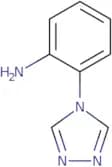
CAS:Versatile small molecule scaffoldFormula:C9H12ClN3O2Purity:Min. 95%Molecular weight:229.66 g/mol2-(4H-1,2,4-Triazol-4-yl)aniline
CAS:<p>Versatile small molecule scaffold</p>Formula:C8H8N4Purity:Min. 95%Molecular weight:160.18 g/mol1-Benzyl-2-(bromomethyl)aziridine
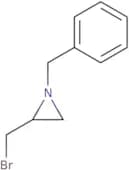
CAS:<p>1-Benzyl-2-(bromomethyl)aziridine is a nucleophile that can be used as an intermediate in the synthesis of epoxides. It is used as a reactant in the formation of chiral epoxides, which are important for pharmaceuticals and agrochemicals. The addition of aziridines to activated esters provides the corresponding carboxylic acid. The reaction proceeds stereoselectively with 1-benzyl-2-(bromomethyl)aziridine, but not with other diamino compounds such as 1-benzyl-2-(chloromethyl)aziridine or 2-(bromomethyl)azetidine. Bromine is used to activate the carboxylic acid, which leads to a more reactive intermediate than other nonactivated forms.</p>Formula:C10H12BrNPurity:Min. 95%Molecular weight:226.11 g/molMethyl cyclohex-2-enecarboxylate
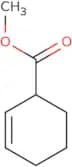
CAS:<p>Methyl cyclohex-2-enecarboxylate (MCHC) is a volatile compound that is found in actinomycetes and has been identified as the second major product of phenolic metabolism. MCHC is produced by the addition of an enolizable acetyl group to 2-cyclohexene-1-carboxylic acid. It can also be synthesized by the oxidation of cyclohexenyl alcohol, which is one of its main precursors. MCHC is a short-chain volatile compound that can exist as cis or trans isomers and has a boiling point of 136°C. The biosynthesis of MCHC occurs through a series of reactions that are difficult to identify because they have not yet been fully elucidated.<br>MCHC has been shown to cause cancer in animals, but it does not exhibit carcinogenic properties in humans because it does not bind well to DNA. The aromatic hydrocarbon content</p>Formula:C8H12O2Purity:Min. 95%Molecular weight:140.18 g/mol2-(tert-Butoxy)ethane-1-thiol
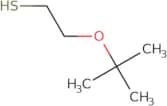
CAS:<p>Versatile small molecule scaffold</p>Formula:C6H14OSPurity:Min. 95%Molecular weight:134.2 g/mol{1H,2H,3H,4H,9H-Pyrido[3,4-b]indol-3-yl}methanol
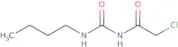
CAS:<p>Versatile small molecule scaffold</p>Formula:C12H14N2OPurity:Min. 95%Molecular weight:202.25 g/mol1-Butyl-3-(2-chloroacetyl)urea
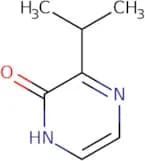
CAS:<p>Versatile small molecule scaffold</p>Formula:C7H13ClN2O2Purity:Min. 95%Molecular weight:192.64 g/mol3-isopropylpyrazin-2-ol
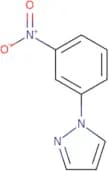
CAS:<p>3-isopropylpyrazin-2-ol is a volatile and catalytic compound that is used in the synthesis of methylated flavonols such as quercetin. It is a hydroxypyrazine that can be synthesized from the amino acid isobutylamine. 3-isopropylpyrazin-2-ol has been shown to inhibit o-methyltransferases and flavonol quercetin biosynthesis in tissues, and can be used for the production of other derivatives. This compound has also been shown to inhibit e coli growth, which may be due to its ability to inhibit enzymes involved in bacterial DNA replication.</p>Formula:C7H10N2OPurity:Min. 95%Molecular weight:138.17 g/mol1-(3-Nitrophenyl)-1H-pyrazole
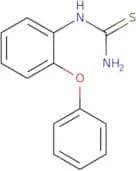
CAS:<p>1-(3-Nitrophenyl)-1H-pyrazole is a small molecule inhibitor of p38 kinase. It can be used to treat arthritis and other diseases that are caused by the overactivation of p38 kinase. 1-(3-Nitrophenyl)-1H-pyrazole also has the potential to be used as a combinatorial library for the discovery of new inhibitors for protein kinases.</p>Formula:C9H7N3O2Purity:Min. 95%Molecular weight:189.17 g/mol(2-Phenoxyphenyl)thiourea
CAS:<p>Versatile small molecule scaffold</p>Formula:C13H12N2OSPurity:Min. 95%Molecular weight:244.31 g/molMethyl (2E)-4-amino-2-methylbut-2-enoate hydrochloride
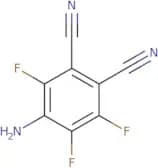
CAS:<p>Versatile small molecule scaffold</p>Formula:C6H12ClNO2Purity:Min. 95%Molecular weight:165.6 g/mol4-Amino-3,5,6-trifluorobenzene-1,2-dicarbonitrile
CAS:4-Amino-3,5,6-trifluorobenzene-1,2-dicarbonitrile (4AF) is a chemical compound that has been found to have antimicrobial properties. 4AF inhibits the growth of bacteria by hydrolyzing into 3,5,6-trifluoroaniline and trifluoroacetic acid. It also binds to polyamide and prevents the formation of bacterial cell walls. This process stops the synthesis of DNA and protein in the bacterial cell.Formula:C8H2F3N3Purity:Min. 95%Molecular weight:197.12 g/mol
![Pyrazolo[1,5-a]pyridine-3-carbonitrile](/_next/image/?url=https%3A%2Fstatic.cymitquimica.com%2Fproducts%2F3D%2Fthumb-webp%2FABA62789.webp&w=3840&q=75)

![1-Benzyl-1 H -[1,2,4]triazol-3-ylamine](/_next/image/?url=https%3A%2Fstatic.cymitquimica.com%2Fproducts%2F3D%2Fthumb-webp%2FABA63743.webp&w=3840&q=75)
![2-[(3-Chlorophenyl)methyl]oxirane](/_next/image/?url=https%3A%2Fstatic.cymitquimica.com%2Fproducts%2F3D%2Fthumb-webp%2FABA64208.webp&w=3840&q=75)
![4-{[(Diaminomethylidene)amino]methyl}benzoic acid hydrochloride](/_next/image/?url=https%3A%2Fstatic.cymitquimica.com%2Fproducts%2F3D%2Fthumb-webp%2FABA64725.webp&w=3840&q=75)
![{1H,2H,3H,4H,9H-Pyrido[3,4-b]indol-3-yl}methanol](/_next/image/?url=https%3A%2Fstatic.cymitquimica.com%2Fproducts%2F3D%2Fthumb-webp%2FABA67471.webp&w=3840&q=75)