


Building Blocks
This section contains fundamental products for the synthesis of organic and biological compounds. Building blocks are the essential starting materials used to construct complex molecules through various chemical reactions. They play a critical role in drug discovery, material science, and chemical research. At CymitQuimica, we offer a diverse range of high-quality building blocks to support your innovative research and industrial projects, ensuring you have the essential components for successful synthesis.
Subcategories of "Building Blocks"
- Boronic Acids & Boronic Acid Derivatives(5,778 products)
- Chiral Building Blocks(1,242 products)
- Hydrocarbon Building Blocks(6,098 products)
- Organic Building Blocks(61,034 products)
Found 199601 products of "Building Blocks"
Sort by
Purity (%)
0
100
|
0
|
50
|
90
|
95
|
100
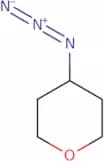
4-Azidooxane
CAS:<p>Versatile small molecule scaffold</p>Formula:C5H9N3OPurity:Min. 95%Molecular weight:127.1 g/mol2-[2-(Diphenylmethoxy)acetamido]-2-phenylacetamide
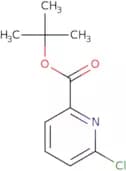
CAS:Versatile small molecule scaffoldFormula:C23H22N2O3Purity:Min. 95%Molecular weight:374.4 g/moltert-Butyl 6-chloropicolinate
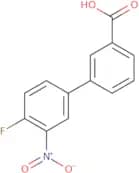
CAS:<p>Versatile small molecule scaffold</p>Formula:C10H12ClNO2Purity:Min. 95%Molecular weight:213.66 g/mol4'-Fluoro-3'-nitrobiphenyl-3-carboxylic acid
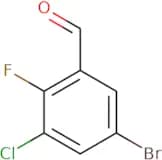
CAS:Versatile small molecule scaffoldFormula:C13H8FNO4Purity:Min. 95%Molecular weight:261.21 g/mol5-bromo-3-chloro-2-fluorobenzaldehyde
CAS:<p>Versatile small molecule scaffold</p>Formula:C7H3BrClFOPurity:Min. 95%Molecular weight:237.5 g/mol6-[(3-Methoxyphenyl)methyl]-4-methyl-5H,6H-[1,2]diazolo[3,4-c]pyrazol-3-amine
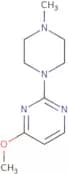
CAS:<p>Versatile small molecule scaffold</p>Formula:C13H15N5OPurity:Min. 95%Molecular weight:257.29 g/mol4-Methoxy-2-(4-methylpiperazin-1-yl)pyrimidine
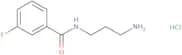
CAS:Versatile small molecule scaffoldFormula:C10H16N4OPurity:Min. 95%Molecular weight:208.26 g/molN-(3-Aminopropyl)-3-fluorobenzamide hydrochloride
CAS:<p>Versatile small molecule scaffold</p>Formula:C10H14ClFN2OPurity:Min. 95%Molecular weight:232.68 g/molCyanogen bromide
CAS:<p>Used as a condensing agent during chemical ligation of oligodeoxyribonucleotides, for peptide cleavage and in protein immobilization procedures. Other applications include inorganic synthesis to prepare cyanamides, dicyanamides, cyanuric bromide, guanidines and hydroxylguanidines.</p>Formula:CNBrPurity:Min. 95%Color and Shape:PowderMolecular weight:105.92 g/molCyclobutyl bromide
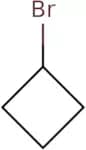
CAS:<p>Cyclobutyl bromide is a cyclopentyl compound that has an hydroxyl group. It is a potent inhibitor of the CB2 receptor, which is primarily expressed on cells of the immune system. Cyclobutyl bromide has been shown to inhibit the uptake of uv light and also has anti-inflammatory properties. Studies have confirmed that this drug inhibits the production of cytokines and chemokines in chronic bronchitis patients, as well as other inflammatory diseases such as rheumatoid arthritis.</p>Formula:C4H7BrPurity:Min. 95%Color and Shape:Clear LiquidMolecular weight:135 g/mol4-Cyanobenzoic acid
CAS:<p>4-Cyanobenzoic acid (4CB) is a benzene derivative that inhibits the activity of tyrosinase, an enzyme involved in the production of melanin. It is synthesized by reacting 2,4-dichlorobenzoic acid with sodium hydroxide and acetone. 4CB has been shown to have a potent inhibitory effect on the enzyme, with an isolated yield of up to 83%. The compound also shows strong hydrogen bonding interactions with water molecules and coordinates in a geometry where one of its oxygen atoms is double bonded to two nitrogen atoms. This structural analysis suggests that 4 CB may bind to tyrosinase through adsorption mechanism.</p>Formula:C8H5NO2Purity:Min. 95%Color and Shape:White PowderMolecular weight:147.13 g/mol5-Chloro-1H-imidazo[4,5-b]pyridin-2(3H)-one
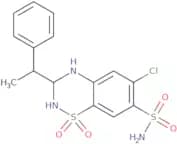
CAS:5-Chloro-1H-imidazo[4,5-b]pyridin-2(3H)-one is a chemical compound that is used in analytical chemistry as an insecticide. It has been shown to cause genotoxic activity in weevils exposed to light. The compound has also been shown to have long term efficacy in plants and toxicity studies on animals. 5-Chloro-1H-imidazo[4,5-b]pyridin-2(3H)-one is metabolized by detoxification enzymes and excreted through the urine.Purity:Min. 95%6-Chloro-3,4-dihydro-3-(a-methylbenzyl)-2H-1,2,4-benzothiadiazine-7-sulfonamide 1,1-dioxide
CAS:<p>6-Chloro-3,4-dihydro-3-(a-methylbenzyl)-2H-1,2,4-benzothiadiazine-7-sulfonamide 1,1-dioxide is an active metabolite of the drug benzbromarone. It is primarily administered as a diuretic to treat high blood pressure and congestive heart failure. The pharmacodynamics of this drug are related to its ability to inhibit the activity of sodium channels in vascular smooth muscle cells and thereby reduce the force of contraction and relax the vessel wall. 6CBDMTD has shown an increase in glomerular filtration rate in patients with congestive heart failure. This drug also decreases the plasma concentration of fatty acids by inhibiting the formation of lipoprotein particles. 6CBDMTD has been shown to be effective at lowering diastolic and systolic blood pressure levels in patients with hypertension.</p>Formula:C15H16ClN3O4S2Purity:Min. 95%Molecular weight:401.89 g/mol4-Chloro-2-aminophenol
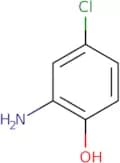
CAS:<p>4-Chloro-2-aminophenol is a chemical compound that can be found in nature or synthesized. It has antibacterial properties and is used as an antimicrobial agent. 4-Chloro-2-aminophenol inhibits the growth of bacteria by inhibiting nitrogenase enzyme activity, which is required for the production of amino acids and nucleic acids. This compound also induces cytotoxicity and significant cell death in colorectal adenocarcinoma cells. 4-Chloro-2-aminophenol is a weak acid that reacts with hydrochloric acid to form a diazonium salt, which reacts with benzene to form an intramolecular hydrogen bond. The final product of this reaction is a solid phase microextraction (SPME) sorbent that can be used to extract analytes from liquid samples.</p>Formula:C6H6ClNOPurity:Min. 95%Molecular weight:143.57 g/molCreatine phosphate di(tris) salt
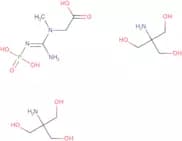
CAS:<p>Creatine phosphate di(tris) salt is a cyclase and rectifier of potassium ion channels. It is a potent activator of calcium ion channels, expressed in the cells of the ng108-15 mouse neuroblastoma line. Creatine phosphate di(tris) salt also potently activates guanylate cyclase and l-type calcium ion channels. This drug has been shown to stimulate prostaglandin synthesis and inhibit the production of prostaglandin E1 in biological chemistry studies. Creatine phosphate di(tris) salt is a cyclase and rectifier of potassium ion channels. It is a potent activator of calcium ion channels, expressed in the cells of the ng108-15 mouse neuroblastoma line. Creatine phosphate di(tris) salt also potently activates guanylate cyclase and l-type calcium ion channels. This drug has been shown to stimulate prostaglandin synthesis and inhibit the production of prostaglandin E1 in</p>Formula:C12H32N5O11PPurity:Min. 95%Molecular weight:453.38 g/mol4-Chloro-2,3-dimethylpyridine N-oxide
CAS:<p>4-Chloro-2,3-dimethylpyridine N-oxide is a chemical compound that belongs to the class of medicines. It is used in the manufacture of hydrogen peroxide, which is an oxidizing agent and a bleaching agent. 4-Chloro-2,3-dimethylpyridine N-oxide has been used as a reagent for organic synthesis and as a catalyst in organic reactions. This compound also has the ability to inhibit proton pumps, which are membrane proteins that pump protons across biological membranes. The presence of sodium impurities can lead to scaling problems because it affects the solubility of 4-chloro-2,3-dimethylpyridine N-oxide. The exothermic reaction with chlorine leads to the formation of chloride, sulfoxide, and chloride ions. These products are more soluble than 4-chloro-2,3-dimethylpyridine N-oxide itself.</p>Formula:C7H8ClNOPurity:Min. 95%Color and Shape:Off-White PowderMolecular weight:157.6 g/mol1-[(4-Chlorophenyl)phenylmethyl]piperazine
CAS:Controlled Product<p>1-[(4-Chlorophenyl)phenylmethyl]piperazine is an analytical reagent that is used in the determination of meclozine, a drug used for the treatment of nausea and vomiting. 1-[(4-Chlorophenyl)phenylmethyl]piperazine is a nucleophile, which means that it can donate electrons to other molecules. It can be used as a catalyst to increase the rate of chemical reactions. 1-[(4-Chlorophenyl)phenylmethyl]piperazine may also be used in wastewater treatment because it has been shown to have phospholipidosis inhibiting properties. The levorotatory form (1R-enantiomer) of this compound has been shown to inhibit protein synthesis in vitro and is an amine oxidase inhibitor that binds to proteins with nitrogen atoms. This nucleophilic compound may also be converted into an n-oxide or dinucleotide phosphate by hydrochloric acid and</p>Formula:C17H19ClN2Purity:Min. 95%Molecular weight:286.8 g/mol4-Chlorophenylacetylene
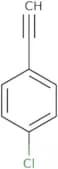
CAS:<p>4-Chlorophenylacetylene is a compound that is created by the reaction of chloroform and acetylene. The reaction yield can be increased by using a catalytic amount of silicon, which increases the rate of hydration. Terminal alkynes react with 4-chlorophenylacetylene to form polymers, which are insoluble in most solvents. 4-Chlorophenylacetylene has been shown to have inhibitory activity against the growth of bacteria and fungi when tested in model species such as Escherichia coli and Saccharomyces cerevisiae.</p>Formula:C8H5ClPurity:Min. 95%Color and Shape:PowderMolecular weight:136.58 g/molClonidine hydrochloride
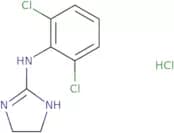
CAS:<p>Clonidine hydrochloride is a drug used in the treatment of hypertension and other cardiac diseases. It belongs to the class of drugs called centrally acting alpha-2 adrenergic agonists. Clonidine hydrochloride is also used for its antihypertensive effects in patients with neurogenic orthostatic hypotension, diabetic neuropathy, and glomerular filtration rate. The long-term efficacy and safety profile of clonidine hydrochloride has been established in clinical trials that have shown it to be effective in reducing symptoms of chronic pain and opioid withdrawal, as well as improving quality of life. Clonidine hydrochloride may be administered orally or transdermally. Clonidine binds to both alpha-1 and alpha-2 adrenergic receptors, which are responsible for vasoconstriction, inhibition of renin secretion from the kidneys, decreased sympathetic nerve activity, and increased parasympathetic nerve activity. This drug also has a protective effect on bone cancer cells</p>Formula:C9H9Cl2N3•HClPurity:Min. 95%Color and Shape:PowderMolecular weight:266.55 g/mol4-Chloro-1H-imidazo[4,5-c]pyridine
CAS:<p>4-Chloro-1H-imidazo[4,5-c]pyridine (4CI) is a nucleoside analog that inhibits the replication of RNA and DNA. It has significant inhibitory activity against herpes simplex virus type 1 and human immunodeficiency virus type 1 (HIV-1). 4CI inhibits the synthesis of adenosine, an important component in the synthesis of RNA and DNA. This drug also has antiviral properties against influenza A and B viruses. 4CI's effect on plasma cholesterol levels is thought to be due to inhibition of 3-hydroxy-3-methylglutaryl coenzyme A reductase.</p>Formula:C6H4ClN3Purity:Min. 95%Color and Shape:Off-White SolidMolecular weight:153.57 g/mol

![2-[2-(Diphenylmethoxy)acetamido]-2-phenylacetamide](/_next/image/?url=https%3A%2Fstatic.cymitquimica.com%2Fproducts%2F3D%2Fthumb-webp%2FFBC77910.webp&w=3840&q=75)
![6-[(3-Methoxyphenyl)methyl]-4-methyl-5H,6H-[1,2]diazolo[3,4-c]pyrazol-3-amine](/_next/image/?url=https%3A%2Fstatic.cymitquimica.com%2Fproducts%2F3D%2Fthumb-webp%2FFBC80428.webp&w=3840&q=75)


![5-Chloro-1H-imidazo[4,5-b]pyridin-2(3H)-one](/_next/image/?url=https%3A%2Fstatic.cymitquimica.com%2Fproducts%2F3D%2Fthumb-webp%2FFC142316.webp&w=3840&q=75)

![1-[(4-Chlorophenyl)phenylmethyl]piperazine](/_next/image/?url=https%3A%2Fstatic.cymitquimica.com%2Fproducts%2F3D%2Fthumb-webp%2FFC20350.webp&w=3840&q=75)
![4-Chloro-1H-imidazo[4,5-c]pyridine](/_next/image/?url=https%3A%2Fstatic.cymitquimica.com%2Fproducts%2F3D%2Fthumb-webp%2FFC32403.webp&w=3840&q=75)