Building Blocks
This section contains fundamental products for the synthesis of organic and biological compounds. Building blocks are the essential starting materials used to construct complex molecules through various chemical reactions. They play a critical role in drug discovery, material science, and chemical research. At CymitQuimica, we offer a diverse range of high-quality building blocks to support your innovative research and industrial projects, ensuring you have the essential components for successful synthesis.
Subcategories of "Building Blocks"
- Boronic Acids & Boronic Acid Derivatives(5,756 products)
- Chiral Building Blocks(1,242 products)
- Hydrocarbon Building Blocks(6,095 products)
- Organic Building Blocks(61,055 products)
Found 199650 products of "Building Blocks"
Sort by
Purity (%)
0
100
|
0
|
50
|
90
|
95
|
100
S,S-Diphenyl-sulfoximine
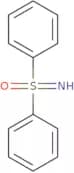
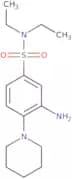
CAS:<p>S,S-Diphenyl sulfoximine is a sulfoxide with the chemical formula C6H6O2S. It has been used as a synthetic intermediate for the production of other chemicals. S,S-Diphenyl sulfoximine is also an efficient method for methylation reactions in organic solvents and radical coupling. In addition, it can be used to form functional groups with the functional theory and its analogs have been used as control experiments. S,S-Diphenyl sulfoximine is monosubstituted by two phenyl groups.</p>Formula:C12H11NOSPurity:Min. 95%Molecular weight:217.29 g/mol3-Amino-N,N-diethyl-4-piperidin-1-yl-benzenesulfonamide
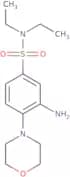
CAS:<p>Versatile small molecule scaffold</p>Formula:C15H25N3O2SPurity:Min. 95%Molecular weight:311.4 g/mol3-Amino-N,N-diethyl-4-(morpholin-4-yl)benzene-1-sulfonamide
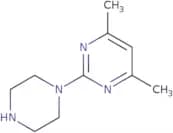
CAS:<p>Versatile small molecule scaffold</p>Formula:C14H23N3O3SPurity:Min. 95%Molecular weight:313.42 g/mol4,6-Dimethyl-2-(piperazin-1-yl)pyrimidine
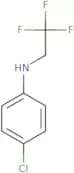
CAS:<p>Versatile small molecule scaffold</p>Formula:C10H16N4Purity:Min. 95%Molecular weight:192.26 g/mol4-Chloro-N-(2,2,2-trifluoroethyl)aniline
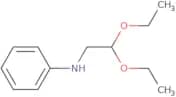
CAS:<p>Versatile small molecule scaffold</p>Formula:C8H7ClF3NPurity:Min. 95%Molecular weight:209.59 g/molAnilinoacetaldehyde diethyl acetal
CAS:<p>Anilinoacetaldehyde diethyl acetal is a surfactant that has been shown to have an inhibitory effect on osteoclasts. It also inhibits bone resorption by inhibiting the enzymatic activity of cathepsin K. Anilinoacetaldehyde diethyl acetal works synergistically with other drugs such as hydrochloric acid and methoxy, and can be used in combination with hydrogenated polyvinyl alcohol for drug delivery. The particle size is typically around 1 micrometre.</p>Formula:C12H19NO2Purity:Min. 95%Molecular weight:209.28 g/mol1-(2-piperidinoethyl)piperazine
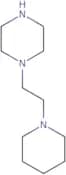
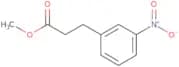
CAS:<p>Versatile small molecule scaffold</p>Formula:C11H23N3Purity:Min. 95%Molecular weight:197.32 g/molMethyl 3-(3-nitrophenyl)propanoate
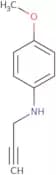
CAS:<p>Versatile small molecule scaffold</p>Formula:C10H11NO4Purity:Min. 95%Molecular weight:209.2 g/mol4-Methoxy-N-(prop-2-yn-1-yl)aniline
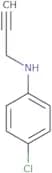
CAS:<p>Versatile small molecule scaffold</p>Formula:C10H11NOPurity:Min. 95%Molecular weight:161.2 g/mol(4-Chloro-phenyl)-prop-2-ynyl-amine
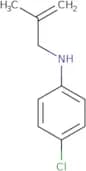
CAS:<p>Versatile small molecule scaffold</p>Formula:C9H8ClNPurity:Min. 95%Molecular weight:165.62 g/mol4-Chloro-N-(2-methylprop-2-en-1-yl)aniline
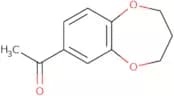
CAS:<p>Versatile small molecule scaffold</p>Formula:C10H12ClNPurity:Min. 95%Molecular weight:181.66 g/mol1-(3,4-Dihydro-2H-1,5-benzodioxepin-7-yl)ethan-1-one
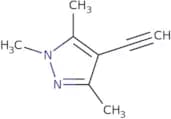
CAS:<p>Versatile small molecule scaffold</p>Formula:C11H12O3Purity:Min. 95%Molecular weight:192.21 g/mol4-Ethynyl-1,3,5-trimethyl-1H-pyrazole
CAS:<p>4-Ethynyl-1,3,5-trimethyl-1H-pyrazole is an aromatic compound that belongs to the pyrazole family. It has been shown to be a potent inhibitor of the dehydrochlorination of 4-ethynylphenol by chlorine at low pH. The spectral data indicate that 4-ethynyl-1,3,5-trimethylpyrazole is a n-substituted pyrazole with a ketone group in the para position.</p>Formula:C8H10N2Purity:Min. 95%Molecular weight:134.18 g/mol2-{[(2E)-3-(4-Methoxyphenyl)prop-2-enoyl]amino}benzoic acid
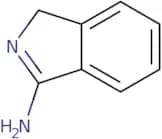
CAS:<p>2-{[(2E)-3-(4-Methoxyphenyl)prop-2-enoyl]amino}benzoic acid is a carboxamide, benzoic acid, anthranilic acid, and anthranilic. It has been shown to inhibit the growth of Mycobacterium tuberculosis and Mycobacterium avium complex. This compound also has anti-inflammatory properties that may be due to its ability to inhibit prostaglandin synthesis.</p>Formula:C17H15NO4Purity:Min. 95%Molecular weight:297.3 g/mol1H-Isoindol-3-amine
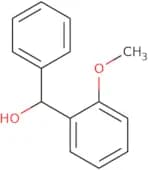
CAS:<p>1H-Isoindol-3-amine is a coordination complex with a palladium atom coordinated to three active methylene ligands. It is used as an intermediate in the synthesis of organic compounds. 1H-Isoindol-3-amine can be synthesized by the reaction of sodium hydrogen with hydroxybenzoic acid, followed by the Suzuki coupling reaction with copper chloride and an aryl chloride. The coordination chemistry between 1H-Isoindol-3-amine and palladium has been studied using viscosity measurements and X-ray diffraction data. The coordination complexes are usually based on aryl chlorides, which are electron rich, electron deficient, or electrophilic. The reaction mechanism for 1H-Isoindol-3-amine has been recorded.</p>Formula:C8H8N2Purity:Min. 95%Molecular weight:132.16 g/mol(2-Methoxyphenyl)(phenyl)methanol
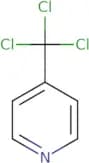
CAS:<p>2-Methoxyphenyl)(phenyl)methanol is a protonated molecule that becomes deuterium-labeled when it is treated with deuterium gas. The deuterium label can be used to measure the rate of proton transport in biological systems, including mitochondria and chloroplasts. 2-Methoxyphenyl)(phenyl)methanol has been shown to have a high yield of labeled product, which allows for the study of reactions involving carbonyl groups. This compound can also be used for labeling chalcones and other elements. It has been shown to catalyze benzene ring formation from phenol.</p>Formula:C14H14O2Purity:Min. 95%Molecular weight:214.26 g/mol4-(Trichloromethyl)pyridine
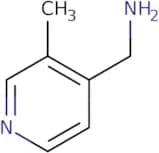
CAS:<p>4-(Trichloromethyl)pyridine is an organic compound that can be used as a pesticide. It is the main active ingredient in chloropicrin, which is used primarily for agricultural purposes to help protect crops from insect damage. 4-(Trichloromethyl)pyridine has been shown to have toxic effects on animals, including humans, and may cause adverse health effects such as headaches, nausea, vomiting and dizziness. The chemical reacts with hydrogen chloride in the presence of an organic solvent to form the chlorinated derivative of 4-chloropyridinol. The reactivity of 4-(trichloromethyl)pyridine towards nucleophilic inorganic bases has also been studied and it was found that it reacts with potassium hydroxide at room temperature to form a 1:1 mixture of 4-chloropyridinol and potassium chloride.</p>Formula:C6H4Cl3NPurity:Min. 95%Molecular weight:196.5 g/mol(3-Methylpyridin-4-yl)methanamine
CAS:<p>Versatile small molecule scaffold</p>Formula:C7H10N2Purity:Min. 95%Molecular weight:122.17 g/mol2-Cyclohexylbenzoic Acid
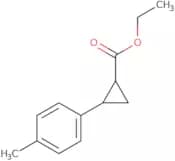
CAS:<p>2-Cyclohexylbenzoic acid is a chiral compound that belongs to the class of pharmaceutical preparations. It is used as an inhibitor of enzymes such as hydroxylase, which is involved in the production of prostaglandins and leukotrienes, and has been shown to be effective in treating bowel disease. 2-Cyclohexylbenzoic acid may also be effective in the treatment of chronic bronchitis and autoimmune diseases. <br>2-Cyclohexylbenzoic acid binds to the active site on certain enzymes, thereby inhibiting their function. This drug also has a strong inhibitory effect on inflammation and oxidative stress, which may be due to its ability to inhibit phospholipase A2 (PLA2), an enzyme that triggers inflammatory reactions by catalyzing the release of arachidonic acid from membrane phospholipids. The light exposure can cause photochemical damage to the skin by inducing oxidation or perox</p>Formula:C13H16O2Purity:Min. 95%Molecular weight:204.26 g/molEthyl 2-(4-methylphenyl)cyclopropane-1-carboxylate
CAS:Versatile small molecule scaffoldFormula:C13H16O2Purity:Min. 95%Molecular weight:204.26 g/mol

![2-{[(2E)-3-(4-Methoxyphenyl)prop-2-enoyl]amino}benzoic acid](/_next/image/?url=https%3A%2Fstatic.cymitquimica.com%2Fproducts%2F3D%2Fthumb-webp%2FXAA78032.webp&w=3840&q=75)