Building Blocks
This section contains fundamental products for the synthesis of organic and biological compounds. Building blocks are the essential starting materials used to construct complex molecules through various chemical reactions. They play a critical role in drug discovery, material science, and chemical research. At CymitQuimica, we offer a diverse range of high-quality building blocks to support your innovative research and industrial projects, ensuring you have the essential components for successful synthesis.
Subcategories of "Building Blocks"
- Boronic Acids & Boronic Acid Derivatives(5,756 products)
- Chiral Building Blocks(1,242 products)
- Hydrocarbon Building Blocks(6,093 products)
- Organic Building Blocks(60,522 products)
Found 195533 products of "Building Blocks"
Sort by
Purity (%)
0
100
|
0
|
50
|
90
|
95
|
100
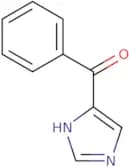
(1H-Imidazol-4-yl)(phenyl)methanone
CAS:<p>(1H-Imidazol-4-yl)(phenyl)methanone is a synthetic compound that belongs to the class of phenylalkylamines. It was developed as an anti-ulcer drug, but it also has tranquilizing, carbon atoms, and anti-inflammatory properties. It is used in mixtures for its diuretic, analgesic, and fluoro properties. This compound also has pharmacological activity. The hydroxy group on this molecule is responsible for the pharmacological activity of this compound.</p>Formula:C10H8N2OPurity:Min. 95%Molecular weight:172.18 g/molMethyl 2-oxobicyclo[3.1.0]hexane-1-carboxylate
CAS:<p>Methyl 2-oxobicyclo[3.1.0]hexane-1-carboxylate is an organic reagent that can be used in research for functionalization of a variety of molecules, such as diacetates and cyclopentanes. It is also useful for the synthesis of iodobenzene derivatives. Methyl 2-oxobicyclo[3.1.0]hexane-1-carboxylate undergoes hypervalent substitutions with electrophiles, such as iodine or bromine to form new carbon–carbon bonds. This process has been extensively studied in the chemical literature and synopses are available on this website.</p>Formula:C8H10O3Purity:Min. 95%Molecular weight:154.16 g/molN-Methyl-N-(pyridin-2-yl)acetamide
CAS:<p>Versatile small molecule scaffold</p>Formula:C8H10N2OPurity:Min. 95%Molecular weight:150.18 g/mol6,7-Dihydroxy-4-methyl-1,2-dihydroquinolin-2-one
CAS:<p>Versatile small molecule scaffold</p>Formula:C10H9NO3Purity:Min. 95%Molecular weight:191.2 g/mol4,4-Difluoro-1-(piperidin-4-yl)piperidine
CAS:<p>Versatile small molecule scaffold</p>Formula:C10H18F2N2Purity:Min. 95%Molecular weight:204.26 g/mol3-[(2-Methylphenyl)methoxy]aniline
CAS:<p>Versatile small molecule scaffold</p>Formula:C14H15NOPurity:Min. 95%Molecular weight:213.27 g/mol1,4-dioxa-9-azadispiro[4.2.4¸.2µ]tetradecan-10-one
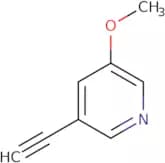
CAS:<p>Versatile small molecule scaffold</p>Formula:C11H17NO3Purity:Min. 95%Molecular weight:211.26 g/mol3-Ethynyl-5-methoxypyridine
CAS:<p>3-Ethynyl-5-methoxypyridine is a nitrogenous organic compound that belongs to the group of pyridines. It is a crystalline solid with a melting point of about 173 degrees Celsius. 3-Ethynyl-5-methoxypyridine can be synthesized from methoxyacetaldehyde and ammonia, and its conformation can be stabilized by a number of different groups, such as an electron withdrawing group at the position 3 or 5 on the ring. 3-Ethynyl-5-methoxypyridine has shown structural and crystallographic features that are similar to those found in biomolecules such as proteins. This suggests that it could be used for crystallographic studies of biomolecules.</p>Formula:C8H7NOPurity:Min. 95%Molecular weight:133.15 g/mol[5-Fluoro-2-(oxan-2-ylmethoxy)phenyl]boronic acid
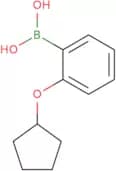
CAS:<p>Versatile small molecule scaffold</p>Formula:C12H16BFO4Purity:Min. 95%Molecular weight:254.06 g/mol2-(Cyclopentyloxy)phenylboronic acid
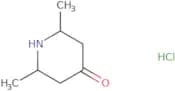
CAS:<p>Versatile small molecule scaffold</p>Formula:C11H15BO3Purity:Min. 95%Molecular weight:206.05 g/molTrans-2,6-dimethyl-4-oxo-piperidine hydrochloride
CAS:<p>Versatile small molecule scaffold</p>Formula:C7H14ClNOPurity:Min. 95%Molecular weight:163.64 g/mol{3-[2-(Piperidin-1-yl)ethoxy]phenyl}boronic acid
CAS:<p>Versatile small molecule scaffold</p>Formula:C13H20BNO3Purity:Min. 95%Molecular weight:249.12 g/mol[5-Fluoro-2-(2-phenylethoxy)phenyl]boronic acid
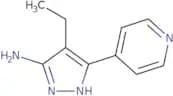
CAS:<p>Versatile small molecule scaffold</p>Formula:C14H14BFO3Purity:Min. 95%Molecular weight:260.07 g/mol4-Ethyl-3-(pyridin-4-yl)-1H-pyrazol-5-amine
CAS:<p>Versatile small molecule scaffold</p>Formula:C10H12N4Purity:Min. 95%Molecular weight:188.23 g/mol{2-[(2-Chloro-4-fluorophenyl)methoxy]phenyl}boronic acid
CAS:<p>Versatile small molecule scaffold</p>Formula:C13H11BClFO3Purity:Min. 95%Molecular weight:280.49 g/mol3-Methyl-2-(1H-1,2,3,4-tetrazol-1-yl)butanoic acid
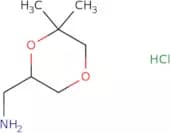
CAS:<p>Versatile small molecule scaffold</p>Formula:C6H10N4O2Purity:Min. 95%Molecular weight:170.2 g/mol(6,6-Dimethyl-1,4-dioxan-2-yl)methanamine hydrochloride
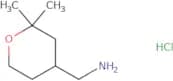
CAS:<p>Versatile small molecule scaffold</p>Formula:C7H16ClNO2Purity:Min. 95%Molecular weight:181.66 g/mol(2,2-dimethyltetrahydro-2h-pyran-4-yl)methanamine hcl
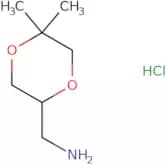
CAS:<p>Versatile small molecule scaffold</p>Formula:C8H18ClNOPurity:Min. 95%Molecular weight:179.69 g/mol(5,5-Dimethyl-1,4-dioxan-2-yl)methanamine hydrochloride
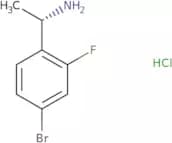
CAS:<p>Versatile small molecule scaffold</p>Formula:C7H16ClNO2Purity:Min. 95%Molecular weight:181.66 g/mol(S)-1-(4-Bromo-2-fluorophenyl)ethanamine hydrochloride
CAS:<p>Versatile small molecule scaffold</p>Formula:C8H10BrClFNPurity:Min. 95%Molecular weight:254.53 g/mol

![Methyl 2-oxobicyclo[3.1.0]hexane-1-carboxylate](/_next/image/?url=https%3A%2Fstatic.cymitquimica.com%2Fproducts%2F3D%2Fthumb-webp%2FLCA99611.webp&w=3840&q=75)


![3-[(2-Methylphenyl)methoxy]aniline](/_next/image/?url=https%3A%2Fstatic.cymitquimica.com%2Fproducts%2F3D%2Fthumb-webp%2FLCB34266.webp&w=3840&q=75)
![1,4-dioxa-9-azadispiro[4.2.4¸.2µ]tetradecan-10-one](/_next/image/?url=https%3A%2Fstatic.cymitquimica.com%2Fproducts%2F3D%2Fthumb-webp%2FLCB72363.webp&w=3840&q=75)
![[5-Fluoro-2-(oxan-2-ylmethoxy)phenyl]boronic acid](/_next/image/?url=https%3A%2Fstatic.cymitquimica.com%2Fproducts%2F3D%2Fthumb-webp%2FLCC14636.webp&w=3840&q=75)
![{3-[2-(Piperidin-1-yl)ethoxy]phenyl}boronic acid](/_next/image/?url=https%3A%2Fstatic.cymitquimica.com%2Fproducts%2F3D%2Fthumb-webp%2FLCC16607.webp&w=3840&q=75)
![[5-Fluoro-2-(2-phenylethoxy)phenyl]boronic acid](/_next/image/?url=https%3A%2Fstatic.cymitquimica.com%2Fproducts%2F3D%2Fthumb-webp%2FLCC16612.webp&w=3840&q=75)
![{2-[(2-Chloro-4-fluorophenyl)methoxy]phenyl}boronic acid](/_next/image/?url=https%3A%2Fstatic.cymitquimica.com%2Fproducts%2F3D%2Fthumb-webp%2FLCC18495.webp&w=3840&q=75)