Building Blocks
This section contains fundamental products for the synthesis of organic and biological compounds. Building blocks are the essential starting materials used to construct complex molecules through various chemical reactions. They play a critical role in drug discovery, material science, and chemical research. At CymitQuimica, we offer a diverse range of high-quality building blocks to support your innovative research and industrial projects, ensuring you have the essential components for successful synthesis.
Subcategories of "Building Blocks"
- Boronic Acids & Boronic Acid Derivatives(5,756 products)
- Chiral Building Blocks(1,242 products)
- Hydrocarbon Building Blocks(6,095 products)
- Organic Building Blocks(61,051 products)
Found 199813 products of "Building Blocks"
Sort by
Purity (%)
0
100
|
0
|
50
|
90
|
95
|
100
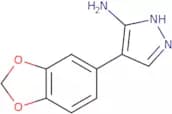
4-(1,3-Dioxaindan-5-yl)-1H-pyrazol-5-amine
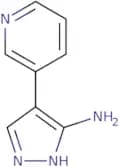
CAS:<p>Versatile small molecule scaffold</p>Formula:C10H9N3O2Purity:Min. 95%Molecular weight:203.2 g/mol4-Pyridin-3-yl-2H-pyrazol-3-ylamine
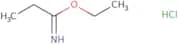
CAS:<p>Versatile small molecule scaffold</p>Formula:C8H8N4Purity:Min. 95%Molecular weight:160.18 g/molethyl propionimidate hydrochloride
CAS:<p>Ethyl propionimidate hydrochloride is a non-selective, irreversible inhibitor of the glutamate-gated chloride channel. It is used to treat some types of psychosis, esophageal spasms, and prostatic hypertrophy. It has also been shown to inhibit metabotropic glutamate receptors and inflammatory diseases. This drug binds to an oxygen atom in the active site of the glutamate receptor and blocks its activity. Ethyl propionimidate hydrochloride has been shown to be effective against animal health as well as obesity in animal models. This drug does not have any effect on insulin resistance or blood glucose levels but does have a relaxing effect on bronchial muscles.</p>Formula:C5H12ClNOPurity:Min. 95%Molecular weight:137.61 g/mol3-Bromopyrrolidin-2-one
CAS:<p>3-Bromopyrrolidin-2-one is a homolytic, dehydrohalogenation thermochemical reagent that induces chemical diversity. It is synthesised from brominated and chloride compounds and has been used for the synthesis of 8-bromoadenine. The energy of the molecule is 8.1 kcal/mol, which makes it relevant in the dehydrogenation of organic compounds. 3-Bromopyrrolidin-2-one can be used as a reagent to induce chemical diversity.</p>Formula:C4H6BrNOPurity:Min. 95%Molecular weight:164 g/mol2-tert-Butylcyclopentan-1-one
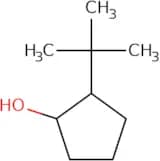
CAS:<p>2-tert-Butylcyclopentan-1-one is a small molecule that can be used in the synthesis of pharmaceuticals, agrochemicals, and other organic compounds. It is an example of a stereocontrolled reaction, which means that the product has been synthesized by using a specific stereocenter to direct the product's configuration. This molecule has been synthesized from two different fluorine sources in order to create a pseudoequatorial structure. The selectivity for this reaction was determined by observing x-ray crystallography data and nmr spectra. The temperature at which this reaction occurred was determined through correlations between chiralities of cyclic hydroxyalkyl groups with temperatures.</p>Formula:C9H16OPurity:Min. 95%Molecular weight:140.22 g/molrac-(1R,2S)-2-tert-Butylcyclopentan-1-ol
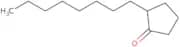
CAS:<p>Versatile small molecule scaffold</p>Formula:C9H18OPurity:Min. 95%Molecular weight:142.2 g/mol2-Octylcyclopentan-1-one
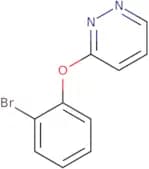
CAS:<p>Versatile small molecule scaffold</p>Formula:C13H24OPurity:Min. 95%Molecular weight:196.33 g/mol3-(2-Bromophenoxy)pyridazine
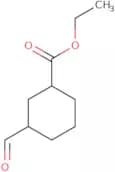
CAS:<p>3-(2-Bromophenoxy)pyridazine is a monoclonal antibody that binds to the epidermal growth factor receptor (EGFR), which is found on the surface of cancer cells. It can also be used to diagnose cervical cancer in women. The 3-(2-bromophenoxy)pyridazine was developed to find a treatment for cancers that have EGFR receptors, and it has been shown to be potent in inhibiting tumor growth in vivo. This drug binds to the EGFR with an affinity that is comparable to those of natural antibodies, and it has been shown to have no adverse effects on normal cells.<br>The 3-(2-bromophenoxy)pyridazine does not bind as well to some cell types, such as those from mice or rats. This may be due to the effect of the matrix on the binding process.</p>Formula:C10H7BrN2OPurity:Min. 95%Molecular weight:251.08 g/molEthyl 3-formylcyclohexane-1-carboxylate
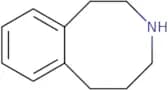
CAS:<p>Versatile small molecule scaffold</p>Formula:C10H16O3Purity:Min. 95%Molecular weight:184.23 g/mol1,2,3,4,5,6-Hexahydro-3-benzazocine
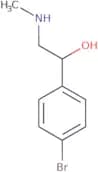
CAS:<p>1,2,3,4,5,6-Hexahydro-3-benzazocine is a cyclopropylcarbonyl compound with analgesic properties. It is used in the treatment of moderate to moderately severe pain. This drug has been shown to bind to benzene ring and form an aliphatic bond with a hydroxy group on the adjacent carbon. The binding of the hydroxy group is stabilized by the methoxy and cycloaliphatic groups. 1,2,3,4,5,6-Hexahydro-3-benzazocine also binds to aluminum cations through its hydride or aralkyl groups and forms a stable complex that can be removed from solution by dialysis. The phenylacetyl group is used for solubilization.</p>Formula:C11H15NPurity:Min. 95%Molecular weight:161.24 g/mol1-(4-Bromophenyl)-2-(methylamino)ethan-1-ol
CAS:<p>Versatile small molecule scaffold</p>Formula:C9H12BrNOPurity:Min. 95%Molecular weight:230.1 g/mol1-(Bicyclo[2.2.2]oct-5-en-2-yl)ethanone
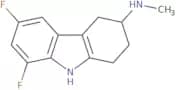
CAS:<p>Versatile small molecule scaffold</p>Formula:C10H14OPurity:Min. 95%Molecular weight:150.22 g/mol6,8-Difluoro-N-methyl-2,3,4,9-tetrahydro-1H-carbazol-3-amine
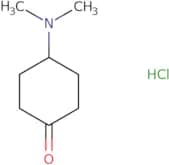
CAS:Versatile small molecule scaffoldFormula:C13H14F2N2Purity:Min. 95%Molecular weight:236.26 g/mol4-(Dimethylamino)cyclohexanone hydrochloride
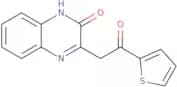
CAS:<p>Versatile small molecule scaffold</p>Formula:C8H16ClNOPurity:Min. 95%Molecular weight:177.67 g/mol3-(2-Oxo-2-(thiophen-2-yl)ethyl)quinoxalin-2(1H)-one
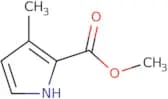
CAS:<p>3-(2-Oxo-2-(thiophen-2-yl)ethyl)quinoxalin-2(1H)-one is a medicament with aromatase inhibition properties. It acts by inhibiting the enzyme aromatase, which is responsible for the conversion of androgens to estrogens. This compound has been found to have potential therapeutic applications in the treatment of hormone-related conditions such as breast cancer and endometriosis.</p>Formula:C14H10N2O2SPurity:Min. 95%Molecular weight:270.31 g/molMethyl 3-methyl-1H-pyrrole-2-carboxylate
CAS:<p>Versatile small molecule scaffold</p>Formula:C7H9NO2Purity:Min. 95%Molecular weight:139.15 g/molMethyl 4-acetyl-1H-pyrrole-2-carboxylate
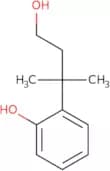
CAS:<p>Versatile small molecule scaffold</p>Formula:C8H9NO3Purity:Min. 95%Molecular weight:167.16 g/mol2-(4-Hydroxy-2-methylbutan-2-yl)phenol
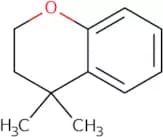
CAS:<p>Versatile small molecule scaffold</p>Formula:C11H16O2Purity:Min. 95%Molecular weight:180.24 g/mol4,4-Dimethyl-3,4-dihydro-2H-1-benzopyran
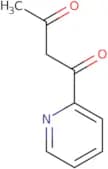
CAS:<p>Versatile small molecule scaffold</p>Formula:C11H14OPurity:Min. 95%Molecular weight:162.23 g/mol1-(pyridin-2-yl)butane-1,3-dione
CAS:<p>1-(Pyridin-2-yl)butane-1,3-dione is a hydrazine derivative that is used as a research tool for the synthesis of heterocycles. It has been found to react with sodium borohydride in the presence of formic acid to yield various pyrazoles and formic acid. 1-(Pyridin-2-yl)butane-1,3-dione can also be used to reduce aldehydes, ketones, and other compounds containing an alpha carbon.</p>Formula:C9H9NO2Purity:Min. 95%Molecular weight:163.18 g/mol



![1-(Bicyclo[2.2.2]oct-5-en-2-yl)ethanone](/_next/image/?url=https%3A%2Fstatic.cymitquimica.com%2Fproducts%2F3D%2Fthumb-webp%2FQBA59077.webp&w=3840&q=75)