Building Blocks
This section contains fundamental products for the synthesis of organic and biological compounds. Building blocks are the essential starting materials used to construct complex molecules through various chemical reactions. They play a critical role in drug discovery, material science, and chemical research. At CymitQuimica, we offer a diverse range of high-quality building blocks to support your innovative research and industrial projects, ensuring you have the essential components for successful synthesis.
Subcategories of "Building Blocks"
- Boronic Acids & Boronic Acid Derivatives(5,780 products)
- Chiral Building Blocks(1,241 products)
- Hydrocarbon Building Blocks(6,100 products)
- Organic Building Blocks(61,023 products)
Found 205289 products of "Building Blocks"
Sort by
Purity (%)
0
100
|
0
|
50
|
90
|
95
|
100
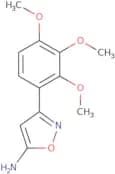
3-(2,3,4-Trimethoxyphenyl)-1,2-oxazol-5-amine
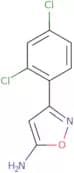
CAS:Versatile small molecule scaffoldFormula:C12H14N2O4Purity:Min. 95%Molecular weight:250.25 g/mol3-(2,4-Dichlorophenyl)-1,2-oxazol-5-amine
CAS:Versatile small molecule scaffoldFormula:C9H6Cl2N2OPurity:Min. 95%Molecular weight:229.06 g/mol3-[3-(Benzyloxy)phenyl]-1,2-oxazol-5-amine
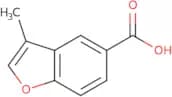
CAS:Versatile small molecule scaffoldFormula:C16H14N2O2Purity:Min. 95%Molecular weight:266.29 g/mol3-Methyl-1-benzofuran-5-carboxylic acid
CAS:3-Methyl-1-benzofuran-5-carboxylic acid is a synthetic compound that has been shown to induce apoptosis in human malignant melanoma cells. It inhibits the proliferation of these cells and induces cell death by an apoptotic mechanism. 3-Methyl-1-benzofuran-5-carboxylic acid has anti-proliferative effects on a variety of human malignant cells including those from breast, colon, and prostate cancers, as well as those with leukemia. Cell death was induced in all cases by an apoptotic mechanism. Addition of the compound to cultured cells at concentrations below its IC50 value resulted in a dose dependent inhibition of cell proliferation.Formula:C10H8O3Purity:Min. 95%Molecular weight:176.17 g/mol3-Methylbenzofuran-5-carboxylic acid methyl ester
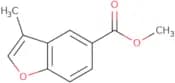
CAS:Versatile small molecule scaffoldFormula:C11H10O3Purity:Min. 95%Molecular weight:190.19 g/molMethyl 3-bromobenzofuran-5-carboxylate
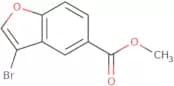
CAS:Versatile small molecule scaffoldFormula:C10H7BrO3Purity:Min. 95%Molecular weight:255.07 g/mol4-(2,2-Difluoroethoxy)-3,5-dimethoxybenzaldehyde
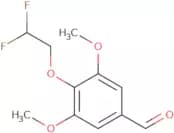
CAS:Versatile small molecule scaffold
Formula:C11H12F2O4Purity:Min. 95%Molecular weight:246.21 g/mol3-[(tert-Butylcarbamoyl)amino]benzoic acid
CAS:Versatile small molecule scaffoldFormula:C12H16N2O3Purity:Min. 95%Molecular weight:236.27 g/mol3-(2-Chloro-4-nitrophenyl)propanoic acid
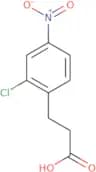
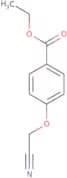
CAS:Versatile small molecule scaffoldFormula:C9H8ClNO4Purity:Min. 95%Molecular weight:229.62 g/molEthyl 4-(cyanomethoxy)benzoate
CAS:Versatile small molecule scaffold
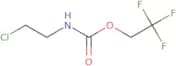
Formula:C11H11NO3Purity:Min. 95%Molecular weight:205.21 g/mol2,2,2-Trifluoroethyl N-(2-chloroethyl)carbamate
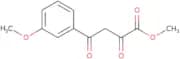
CAS:Versatile small molecule scaffoldFormula:C5H7ClF3NO2Purity:Min. 95%Molecular weight:205.56 g/molMethyl 4-(3-methoxyphenyl)-2,4-dioxobutanoate
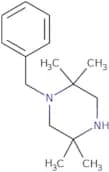
CAS:Versatile small molecule scaffoldFormula:C12H12O5Purity:Min. 95%Molecular weight:236.22 g/mol1-Benzyl-2,2,5,5-tetramethylpiperazine
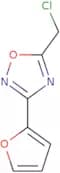
CAS:Versatile small molecule scaffoldFormula:C15H24N2Purity:Min. 95%Molecular weight:232.36 g/mol5-(Chloromethyl)-3-(2-furyl)-1,2,4-oxadiazole
CAS:Versatile small molecule scaffoldFormula:C7H5ClN2O2Purity:Min. 95%Molecular weight:184.58 g/mol2-[(Pyrrolidine-1-carbonyl)amino]acetic acid
CAS:Versatile small molecule scaffoldFormula:C7H12N2O3Purity:Min. 95%Molecular weight:172.18 g/mol3-(4,5-Dichloro-6-oxopyridazin-1(6H)-yl)benzoic acid
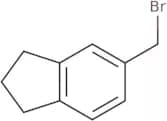
CAS:Versatile small molecule scaffoldFormula:C11H6Cl2N2O3Purity:Min. 95%Molecular weight:285.08 g/mol5-Bromomethylindane
CAS:Versatile small molecule scaffoldFormula:C10H11BrPurity:Min. 95%Molecular weight:211.1 g/mol4-(1,2,3,4-Tetrahydroquinazolin-2-yl)phenol
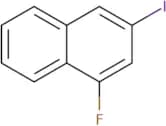
CAS:Versatile small molecule scaffoldFormula:C14H14N2OPurity:Min. 95%Molecular weight:226.3 g/mol1-Fluoro-3-iodonaphthalene
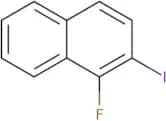
CAS:Versatile small molecule scaffoldFormula:C10H6FIPurity:Min. 95%Molecular weight:272.06 g/mol1-Fluoro-2-iodonaphthalene
CAS:1-Fluoro-2-iodonaphthalene is a reagent that is used for the cleavage of 1,4-cis-bonds. It has been shown to react with aryl halides in the presence of aluminium and lithium to form 1-fluoro-2-(aryl)naphthalenes. This reaction can be done selectively in the presence of other substituents. The fluorine atom in this compound can also be substituted with chlorine or bromine.
Formula:C10H6FIPurity:Min. 95%Molecular weight:272.06 g/mol

![3-[3-(Benzyloxy)phenyl]-1,2-oxazol-5-amine](/_next/image/?url=https%3A%2Fstatic.cymitquimica.com%2Fproducts%2F3D%2Fthumb-webp%2FBVA90218.webp&w=3840&q=75)
![3-[(tert-Butylcarbamoyl)amino]benzoic acid](/_next/image/?url=https%3A%2Fstatic.cymitquimica.com%2Fproducts%2F3D%2Fthumb-webp%2FBVA67902.webp&w=3840&q=75)
![2-[(Pyrrolidine-1-carbonyl)amino]acetic acid](/_next/image/?url=https%3A%2Fstatic.cymitquimica.com%2Fproducts%2F3D%2Fthumb-webp%2FBVA65298.webp&w=3840&q=75)