Building Blocks
This section contains fundamental products for the synthesis of organic and biological compounds. Building blocks are the essential starting materials used to construct complex molecules through various chemical reactions. They play a critical role in drug discovery, material science, and chemical research. At CymitQuimica, we offer a diverse range of high-quality building blocks to support your innovative research and industrial projects, ensuring you have the essential components for successful synthesis.
Subcategories of "Building Blocks"
- Boronic Acids & Boronic Acid Derivatives(5,756 products)
- Chiral Building Blocks(1,242 products)
- Hydrocarbon Building Blocks(6,095 products)
- Organic Building Blocks(61,055 products)
Found 199650 products of "Building Blocks"
Sort by
Purity (%)
0
100
|
0
|
50
|
90
|
95
|
100
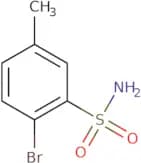
2-Bromo-5-methylbenzene-1-sulfonamide
CAS:<p>Versatile small molecule scaffold</p>Formula:C7H8BrNO2SPurity:Min. 95%Molecular weight:250.12 g/molMethyl 5-methyl-4-nitrothiophene-2-carboxylate
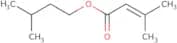
CAS:<p>Methyl 5-methyl-4-nitrothiophene-2-carboxylate (MMTC) is a potent and selective inhibitor of the RNA polymerase. MMTC inhibits the replication of both single stranded and double stranded RNA viruses, such as hepatitis C virus (HCV), human immunodeficiency virus (HIV), and influenza. MMTC is an allosteric inhibitor that binds to the active site of the polymerase at a specific site, which prevents it from binding to its natural substrate, rRNA. This binding prevents elongation of the RNA chain by interfering with nucleotide addition, leading to termination of RNA synthesis. MMTC also inhibits replication of subgenomic RNAs in HCV and HIV infection.</p>Formula:C7H7NO4SPurity:Min. 95%Molecular weight:201.2 g/mol3-Methylbutyl 3-methylbut-2-enoate
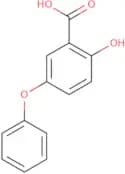
CAS:<p>3-Methylbutyl 3-methylbutanoate is a fungus that belongs to the order Talaromycetales. It is considered to be a microorganism and has been used in the study of biology. 3-Methylbutyl 3-methylbutanoate functions as an acid ester of fatty acids and can also act as an ester of fatty acid. It can act as a substrate for the synthesis of substances such as isoamyl, isobutyl, and isopentyl. This fungus has been isolated from plants belonging to the genus Senecio and can be found in soil rich in organic matter.</p>Formula:C10H18O2Purity:Min. 95%Molecular weight:170.25 g/mol2-Hydroxy-5-phenoxybenzoic acid
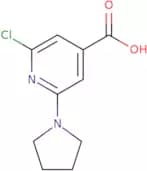
CAS:<p>Versatile small molecule scaffold</p>Formula:C13H10O4Purity:Min. 95%Molecular weight:230.22 g/mol2-Chloro-6-(pyrrolidin-1-yl)pyridine-4-carboxylic acid
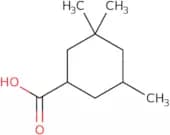
CAS:<p>Versatile small molecule scaffold</p>Formula:C10H11ClN2O2Purity:Min. 95%Molecular weight:226.66 g/molrac-(1R,5S)-3,3,5-Trimethylcyclohexane-1-carboxylic acid
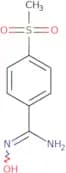
CAS:<p>Versatile small molecule scaffold</p>Formula:C10H18O2Purity:Min. 95%Molecular weight:170.25 g/molN-Hydroxy-4-methanesulfonylbenzene-1-carboximidamide
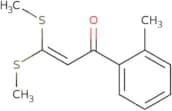
CAS:<p>Versatile small molecule scaffold</p>Formula:C8H10N2O3SPurity:Min. 95%Molecular weight:214.24 g/mol1-(2-Methylphenyl)-3,3-bis(methylsulfanyl)prop-2-en-1-one
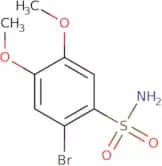
CAS:<p>Versatile small molecule scaffold</p>Formula:C12H14OS2Purity:Min. 95%Molecular weight:238.4 g/mol2-Bromo-4,5-dimethoxybenzene-1-sulfonamide
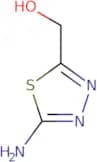
CAS:<p>Versatile small molecule scaffold</p>Formula:C8H10BrNO4SPurity:Min. 95%Molecular weight:296.14 g/mol(5-Amino-1,3,4-thiadiazol-2-yl)methanol
CAS:<p>Versatile small molecule scaffold</p>Formula:C3H5N3OSPurity:Min. 95%Molecular weight:131.16 g/mol9-(Bromomethyl)-9H-fluorene
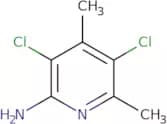
CAS:<p>Versatile small molecule scaffold</p>Formula:C14H11BrPurity:Min. 95%Molecular weight:259.14 g/mol2-Amino-3,5-dichloro-4,6-dimethylpyridine
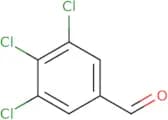
CAS:<p>Versatile small molecule scaffold</p>Formula:C7H8Cl2N2Purity:Min. 95%Molecular weight:191.05 g/mol3,4,5-Trichlorobenzaldehyde
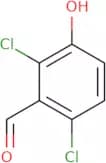
CAS:<p>3,4,5-Trichlorobenzaldehyde is an aldehyde that is used as a reagent for the detection of isomers. It is also used to determine the efficiency and selectivity of gas chromatography. In addition, 3,4,5-trichlorobenzaldehyde has been shown to be a useful reagent for the identification of alcohols. This compound has also been found to be useful in determining the structure of various compounds by gas chromatography. 3,4,5-trichlorobenzaldehyde is often used as a reference standard in analytical chemistry due to its structural simplicity and ease of purification.</p>Formula:C7H3Cl3OPurity:Min. 95%Molecular weight:209.46 g/mol2,6-Dichloro-3-hydroxybenzaldehyde
CAS:<p>Versatile small molecule scaffold</p>Formula:C7H4Cl2O2Purity:Min. 95%Molecular weight:191.01 g/molN-(3-Methylbutyl)-1H-pyrazolo[3,4-d]pyrimidin-4-amine
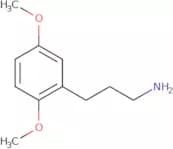
CAS:Versatile small molecule scaffoldFormula:C10H15N5Purity:Min. 95%Molecular weight:205.26 g/mol3-(2,5-Dimethoxyphenyl)propan-1-amine
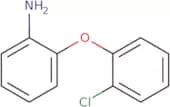
CAS:<p>Versatile small molecule scaffold</p>Formula:C11H17NO2Purity:Min. 95%Molecular weight:195.26 g/mol2-(2-Chlorophenoxy)aniline
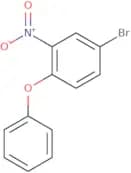
CAS:<p>Versatile small molecule scaffold</p>Formula:C12H10ClNOPurity:Min. 95%Molecular weight:219.67 g/mol4-Bromo-2-nitro-1-phenoxybenzene
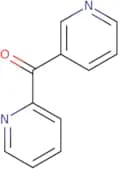
CAS:<p>Versatile small molecule scaffold</p>Formula:C12H8BrNO3Purity:Min. 95%Molecular weight:294.1 g/mol3-(Pyridine-2-carbonyl)pyridine
CAS:<p>3-(Pyridine-2-carbonyl)pyridine is a ligand that binds to metal cations and anions. This ligand has been shown to have a helical structure, which allows it to interact with the metal cations. 3-(Pyridine-2-carbonyl)pyridine forms an anion in solution, which can be stabilized by interaction with a metal cation. The interactions between these ligands and metal cations are highly dependent on their conformations, as well as their bonding and geometry. 3-(Pyridine-2-carbonyl)pyridine has been shown to be stable in the solid state when interacting with perchlorate ions. These interactions are also reversible and can be used for docking studies of various compounds.</p>Formula:C11H8N2OPurity:Min. 95%Molecular weight:184.19 g/mol2,5,8,11-Tetrathiadodecane
CAS:<p>Versatile small molecule scaffold</p>Formula:C8H18S4Purity:Min. 95%Molecular weight:242.5 g/mol


![N-(3-Methylbutyl)-1H-pyrazolo[3,4-d]pyrimidin-4-amine](/_next/image/?url=https%3A%2Fstatic.cymitquimica.com%2Fproducts%2F3D%2Fthumb-webp%2FGCA96492.webp&w=3840&q=75)