


Building Blocks
This section contains fundamental products for the synthesis of organic and biological compounds. Building blocks are the essential starting materials used to construct complex molecules through various chemical reactions. They play a critical role in drug discovery, material science, and chemical research. At CymitQuimica, we offer a diverse range of high-quality building blocks to support your innovative research and industrial projects, ensuring you have the essential components for successful synthesis.
Subcategories of "Building Blocks"
- Boronic Acids & Boronic Acid Derivatives(5,756 products)
- Chiral Building Blocks(1,242 products)
- Hydrocarbon Building Blocks(6,095 products)
- Organic Building Blocks(61,055 products)
Found 199650 products of "Building Blocks"
Sort by
Purity (%)
0
100
|
0
|
50
|
90
|
95
|
100
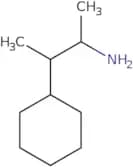
3-Cyclohexylbutan-2-amine
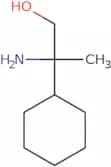
CAS:<p>Versatile small molecule scaffold</p>Formula:C10H21NPurity:Min. 95%Molecular weight:155.28 g/mol2-Amino-2-cyclohexylpropan-1-ol
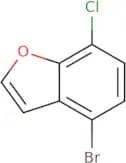
CAS:<p>Versatile small molecule scaffold</p>Formula:C9H19NOPurity:Min. 95%Molecular weight:157.25 g/mol4-Bromo-7-chlorobenzofuran
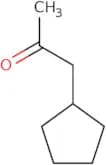
CAS:<p>Versatile small molecule scaffold</p>Formula:C8H4BrClOPurity:Min. 95%Molecular weight:231.47 g/mol1-Cyclopentylpropan-2-one
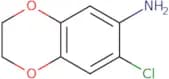
CAS:<p>Cyclopentylpropan-2-one (1CPA) is an aliphatic hydrocarbon that has been shown to act as a light-sensitive molecule. It is used as a polymerization initiator and is also found in the human body as a metabolic intermediate. 1CPA is found in the form of a diacylglycerol and can be converted into an allyl carbonate, which reacts with methoxy groups to form an allyl ether. 1CPA has also been shown to have structural similarities with pyrimidine compounds and formyl groups. The 1CPA molecule contains a carbonyl group, which is the reactive functional group that allows for this chemical to react with other compounds.</p>Formula:C8H14OPurity:Min. 95%Molecular weight:126.2 g/mol7-Chloro-2,3-dihydro-1,4-benzodioxin-6-amine
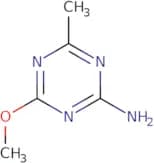
CAS:<p>Versatile small molecule scaffold</p>Formula:C8H8ClNO2Purity:Min. 95%Molecular weight:185.61 g/mol4-Methoxy-1,3,5-triazin-2-amine
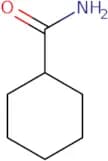
CAS:Versatile small molecule scaffoldFormula:C4H6N4OPurity:Min. 95%Molecular weight:126.12 g/molCyclohexanecarboxamide
CAS:<p>Cyclohexanecarboxamide is a carboxamide that has been shown to inhibit the growth of bacteria. It binds to the bacterial receptor and inhibits the activity of the enzyme carboxide, which is involved in the synthesis of monoamine neurotransmitters. Cyclohexanecarboxamide has also been shown to inhibit axonal growth in mammalian cells, which may be due to its ability to block potassium channels on nerve cells. Cyclohexanecarboxamide has been shown to have antimicrobial properties against a range of organisms including those resistant mutants.</p>Formula:C7H13NOPurity:Min. 95%Molecular weight:127.18 g/mol3-[3-({[(9H-Fluoren-9-yl)methoxy]carbonyl}amino)propanamido]propanoic acid
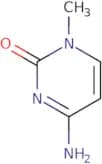
CAS:<p>Versatile small molecule scaffold</p>Formula:C21H22N2O5Purity:Min. 95%Molecular weight:382.4 g/mol4-Amino-1-methylpyrimidin-2(1H)-one
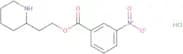
CAS:<p>4-Amino-1-methylpyrimidin-2(1H)-one is a chemical compound that belongs to the group of pyrimidine compounds. It has been shown to be an inhibitor of viral life, with its activity against HIV being most well studied. The tautomers of 4-amino-1-methylpyrimidin-2(1H)-one are protonated and stable, meaning that they do not undergo any chemical change in the body. 4-Amino-1-methylpyrimidin-2(1H)-one is also able to form stable complexes with nitrogen atoms. The xray crystal structure for this compound shows that it coordinates with group P2, which contains two nitrogen atoms and one oxygen atom. The interaction between these three atoms is called a dinucleotide phosphate. This group binds to DNA by hydrogen bonds, forming intramolecular hydrogen bonds. The groups on the other side of the molecule bind</p>Formula:C5H7N3OPurity:Min. 95%Molecular weight:125.13 g/mol2-(Piperidin-2-yl)ethyl 3-nitrobenzoate hydrochloride
CAS:<p>Versatile small molecule scaffold</p>Formula:C14H19ClN2O4Purity:Min. 95%Molecular weight:314.76 g/mol6-Amino-3-methylpyrimidin-4(3H)-one
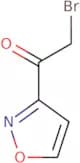
CAS:<p>Versatile small molecule scaffold</p>Formula:C5H7N3OPurity:Min. 95%Molecular weight:125.12 g/mol2-Bromo-1-(1,2-oxazol-3-yl)ethan-1-one
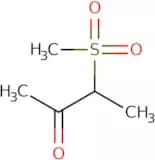
CAS:<p>Versatile small molecule scaffold</p>Formula:C5H4BrNO2Purity:Min. 95%Molecular weight:189.99 g/mol3-Methanesulfonylbutan-2-one
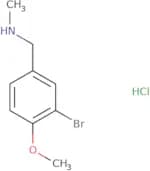
CAS:<p>Versatile small molecule scaffold</p>Formula:C5H10O3SPurity:Min. 95%Molecular weight:150.2 g/mol1-(3-Bromo-4-methoxyphenyl)-N-methylmethanamine hydrochloride
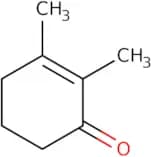
CAS:Versatile small molecule scaffoldFormula:C9H13BrClNOPurity:Min. 95%Molecular weight:266.56 g/mol2,3-Dimethylcyclohex-2-en-1-one
CAS:<p>2,3-Dimethylcyclohex-2-en-1-one is a phenylhydrazine derivative that can be converted into aporphine alkaloids. It is also an isomer of cyclohexenones and epoxides. This compound has substituents at the 2 and 3 positions which are either methyl or hydrogen, respectively. The carbonyl group in 2,3-Dimethylcyclohex-2-en-1-one is a ketone or aldehyde, depending on the substitution pattern. The oxygen function in this molecule is an ether or ester. 2,3-Dimethylcyclohex-2-en-1-one has properties that are similar to those of diketones and spirolactones because it contains both carbonyl and oxygen functions. It can be classified as an aporphine alkaloid because it has two rings fused together with one nitrogen atom between them</p>Formula:C8H12OPurity:Min. 95%Color and Shape:Clear LiquidMolecular weight:124.18 g/mol[3-(Ethanesulfonyl)phenyl]methanamine hydrochloride
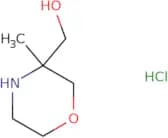
CAS:<p>Versatile small molecule scaffold</p>Formula:C9H14ClNO2SPurity:Min. 95%Molecular weight:235.73 g/mol(3-Methylmorpholin-3-yl)methanol hydrochloride
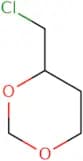
CAS:<p>Versatile small molecule scaffold</p>Formula:C6H14ClNO2Purity:Min. 95%Molecular weight:167.63 g/mol4-(Chloromethyl)-1,3-dioxane
CAS:<p>Versatile small molecule scaffold</p>Formula:C5H9ClO2Purity:Min. 95%Molecular weight:136.58 g/mol3-(Methylsulfonyl)benzylaminehydrochloride
CAS:<p>Versatile small molecule scaffold</p>Formula:C8H12ClNO2SPurity:Min. 95%Molecular weight:221.71 g/mol(1R,6S,7R)-7-Bromobicyclo[4.1.0]heptane
CAS:<p>Versatile small molecule scaffold</p>Formula:C7H11BrPurity:Min. 95%Molecular weight:175.07 g/mol

![3-[3-({[(9H-Fluoren-9-yl)methoxy]carbonyl}amino)propanamido]propanoic acid](/_next/image/?url=https%3A%2Fstatic.cymitquimica.com%2Fproducts%2F3D%2Fthumb-webp%2FFJB31646.webp&w=3840&q=75)

![[3-(Ethanesulfonyl)phenyl]methanamine hydrochloride](/_next/image/?url=https%3A%2Fstatic.cymitquimica.com%2Fproducts%2F3D%2Fthumb-webp%2FFJB27147.webp&w=3840&q=75)

![(1R,6S,7R)-7-Bromobicyclo[4.1.0]heptane](/_next/image/?url=https%3A%2Fstatic.cymitquimica.com%2Fproducts%2F3D%2Fthumb-webp%2FBAA12141.webp&w=3840&q=75)