Building Blocks
This section contains fundamental products for the synthesis of organic and biological compounds. Building blocks are the essential starting materials used to construct complex molecules through various chemical reactions. They play a critical role in drug discovery, material science, and chemical research. At CymitQuimica, we offer a diverse range of high-quality building blocks to support your innovative research and industrial projects, ensuring you have the essential components for successful synthesis.
Subcategories of "Building Blocks"
- Boronic Acids & Boronic Acid Derivatives(5,778 products)
- Chiral Building Blocks(1,242 products)
- Hydrocarbon Building Blocks(6,098 products)
- Organic Building Blocks(61,034 products)
Found 199601 products of "Building Blocks"
Sort by
Purity (%)
0
100
|
0
|
50
|
90
|
95
|
100
3-(2-Oxo-2-(thiophen-2-yl)ethyl)quinoxalin-2(1H)-one
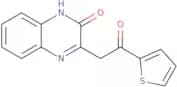
CAS:<p>3-(2-Oxo-2-(thiophen-2-yl)ethyl)quinoxalin-2(1H)-one is a medicament with aromatase inhibition properties. It acts by inhibiting the enzyme aromatase, which is responsible for the conversion of androgens to estrogens. This compound has been found to have potential therapeutic applications in the treatment of hormone-related conditions such as breast cancer and endometriosis.</p>Formula:C14H10N2O2SPurity:Min. 95%Molecular weight:270.31 g/molMethyl 3-methyl-1H-pyrrole-2-carboxylate
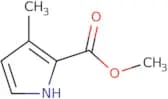
CAS:<p>Versatile small molecule scaffold</p>Formula:C7H9NO2Purity:Min. 95%Molecular weight:139.15 g/molMethyl 4-acetyl-1H-pyrrole-2-carboxylate
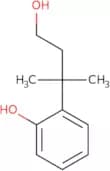
CAS:<p>Versatile small molecule scaffold</p>Formula:C8H9NO3Purity:Min. 95%Molecular weight:167.16 g/mol2-(4-Hydroxy-2-methylbutan-2-yl)phenol
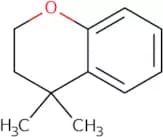
CAS:<p>Versatile small molecule scaffold</p>Formula:C11H16O2Purity:Min. 95%Molecular weight:180.24 g/mol4,4-Dimethyl-3,4-dihydro-2H-1-benzopyran
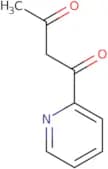
CAS:Versatile small molecule scaffoldFormula:C11H14OPurity:Min. 95%Molecular weight:162.23 g/mol1-(pyridin-2-yl)butane-1,3-dione
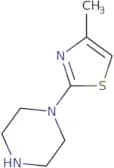
CAS:<p>1-(Pyridin-2-yl)butane-1,3-dione is a hydrazine derivative that is used as a research tool for the synthesis of heterocycles. It has been found to react with sodium borohydride in the presence of formic acid to yield various pyrazoles and formic acid. 1-(Pyridin-2-yl)butane-1,3-dione can also be used to reduce aldehydes, ketones, and other compounds containing an alpha carbon.</p>Formula:C9H9NO2Purity:Min. 95%Molecular weight:163.18 g/mol1-(4-Methyl-1,3-thiazol-2-yl)piperazine
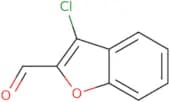
CAS:<p>Versatile small molecule scaffold</p>Formula:C8H13N3SPurity:Min. 95%Molecular weight:183.28 g/mol3-chloro-1-benzofuran-2-carbaldehyde
CAS:3-Chloro-1-benzofuran-2-carbaldehyde is a chemical that belongs to the group of heterocyclic compounds. It has the ability to act as an acceptor and chloride. 3-Chloro-1-benzofuran-2-carbaldehyde has been shown to be toxic to kidney cells, which may be due to its ability to cause chloride ion accumulation in the cell. 3-Chloro-1-benzofuran-2-carbaldehyde also acts as a virus inhibitor, and it has been shown that it inhibits the replication of viruses by reacting with their DNA. This chemical can also react with alkylating agents and form acetylated or formylated derivatives.Formula:C9H5ClO2Purity:Min. 95%Molecular weight:180.59 g/mol(3R)-3-(3-Chlorophenyl)-3-hydroxypropanoic acid
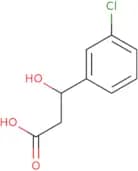
CAS:Versatile small molecule scaffoldFormula:C9H9ClO3Purity:Min. 95%Molecular weight:200.62 g/mol3-(4-Fluorophenyl)-3-hydroxypropanoic acid
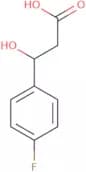
CAS:<p>Versatile small molecule scaffold</p>Formula:C9H9FO3Purity:Min. 95%Molecular weight:184.16 g/molN-(2,6-Diethylphenyl)-3-oxo-3-phenylpropanamide
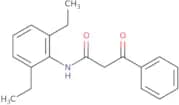
CAS:<p>Versatile small molecule scaffold</p>Formula:C19H21NO2Purity:Min. 95%Molecular weight:295.4 g/mol4-(2-Chloro-4-methylphenoxy)butanoic acid
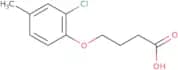
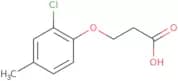
CAS:Controlled Product<p>Versatile small molecule scaffold</p>Formula:C11H13ClO3Purity:Min. 95%Molecular weight:228.67 g/mol3-(2-Chloro-4-methylphenoxy)propanoic acid
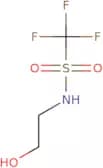
CAS:<p>Versatile small molecule scaffold</p>Formula:C10H11ClO3Purity:Min. 95%Molecular weight:214.64 g/mol1,1,1-Trifluoro-N-(2-hydroxyethyl)methanesulfonamide
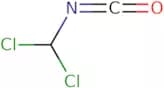
CAS:<p>Versatile small molecule scaffold</p>Formula:C3H6F3NO3SPurity:Min. 95%Molecular weight:193.15 g/molDichloro(isocyanato)methane
CAS:<p>Dichloro(isocyanato)methane is a chemical compound that belongs to the haloalkyl group. It can be used in dyestuffs, as a reagent for the modification of quinoline derivatives, and in the production of nitro compounds. Dichloro(isocyanato)methane has two isomers: monochloro-dichloromethane and dichloro-monochloromethane. The former is a kinetic product while the latter is thermodynamic. This compound is also polymorphic and has two expressible forms: one with an electron density on chlorine atom and another with an electron density on carbon atom.</p>Formula:C2HCl2NOPurity:Min. 95%Molecular weight:125.94 g/molCyclooctanecarbonitrile
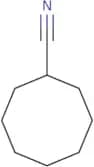
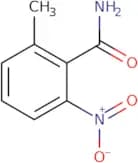
CAS:<p>Cyclooctanecarbonitrile is a hydroxy group that is used as a polymerization initiator. It can be synthesized by the reaction of cyclooctane and carbon monoxide. Cyclooctanecarbonitrile is an amine with a homogeneous catalyst, which also has functional groups such as an isopropyl group. Cyclooctanecarbonitrile is used in industrial processes to make polyvinyl chloride (PVC) and ethylene vinyl acetate (EVA). This compound also has the ability to inhibit insulin resistance and may be useful for treating diabetes. The polymerization of cyclooctanecarbonitrile can be catalyzed by titanium or zirconium.</p>Formula:C9H15NPurity:Min. 95%Molecular weight:137.22 g/mol2-Methyl-6-nitrobenzamide
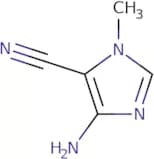
CAS:<p>Versatile small molecule scaffold</p>Formula:C8H8N2O3Purity:Min. 95%Molecular weight:180.16 g/mol4-Amino-1-methylimidazole-5-carbonitrile
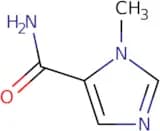
CAS:<p>Versatile small molecule scaffold</p>Formula:C5H6N4Purity:Min. 95%Molecular weight:122.13 g/mol1-Methyl-1H-imidazole-5-carboxamide
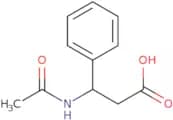
CAS:<p>Versatile small molecule scaffold</p>Formula:C5H7N3OPurity:Min. 95%Molecular weight:125.13 g/molN-Acetyl-DL-²-phenylalanine
CAS:<p>Versatile small molecule scaffold</p>Formula:C11H13NO3Purity:Min. 95%Molecular weight:207.23 g/mol