Building Blocks
This section contains fundamental products for the synthesis of organic and biological compounds. Building blocks are the essential starting materials used to construct complex molecules through various chemical reactions. They play a critical role in drug discovery, material science, and chemical research. At CymitQuimica, we offer a diverse range of high-quality building blocks to support your innovative research and industrial projects, ensuring you have the essential components for successful synthesis.
Subcategories of "Building Blocks"
- Boronic Acids & Boronic Acid Derivatives(5,756 products)
- Chiral Building Blocks(1,242 products)
- Hydrocarbon Building Blocks(6,095 products)
- Organic Building Blocks(61,037 products)
Found 196200 products of "Building Blocks"
Sort by
Purity (%)
0
100
|
0
|
50
|
90
|
95
|
100
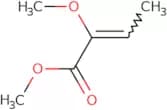
Methyl 2-methoxybut-2-enoate
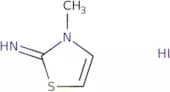
CAS:<p>Versatile small molecule scaffold</p>Formula:C6H10O3Purity:Min. 95%Molecular weight:130.14 g/mol3-Methyl-2,3-dihydro-1,3-thiazol-2-imine hydroiodide
CAS:<p>Versatile small molecule scaffold</p>Formula:C4H7IN2SPurity:Min. 95%Molecular weight:242.08 g/mol(2R)-2-Amino-3-{[(methylsulfanyl)methyl]sulfanyl}propanoic acid
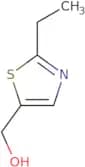
CAS:<p>Versatile small molecule scaffold</p>Formula:C5H11NO2S2Purity:Min. 95%Molecular weight:181.3 g/mol(2-Ethyl-1,3-thiazol-5-yl)methanol
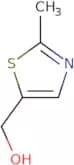
CAS:<p>Versatile small molecule scaffold</p>Formula:C6H9NOSPurity:Min. 95%Molecular weight:143.21 g/mol(2-Methylthiazol-5-yl)methanol
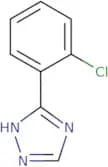
CAS:<p>Versatile small molecule scaffold</p>Formula:C5H7NOSPurity:Min. 95%Molecular weight:129.18 g/mol5-(2-Chlorophenyl)-1H-1,2,4-triazole
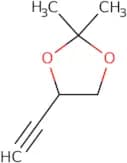
CAS:<p>Versatile small molecule scaffold</p>Formula:C8H6ClN3Purity:Min. 95%Molecular weight:179.6 g/mol(4S)-4-Ethynyl-2,2-dimethyl-1,3-dioxolane
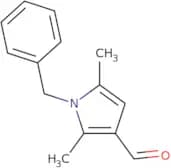
CAS:<p>Versatile small molecule scaffold</p>Formula:C7H10O2Purity:Min. 95%Molecular weight:126.15 g/mol1-Benzyl-2,5-dimethyl-1H-pyrrole-3-carbaldehyde
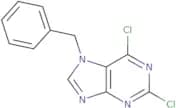
CAS:<p>Versatile small molecule scaffold</p>Formula:C14H15NOPurity:Min. 95%Molecular weight:213.28 g/mol7-Benzyl-2,6-dichloro-7H-purine
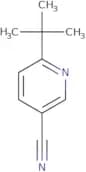
CAS:<p>7-Benzyl-2,6-dichloro-7H-purine is a reagent that is used in the synthesis of adenine and other purines. It can be synthesized by coupling 3-methylxanthine with aminoacids and organometallic reagents. This chemical can also be used to selectively synthesize 6-benzyladenine, which is an important precursor to pharmaceuticals. The 7-benzyl group on this chemical has been shown to act as a positional group in the catalytic hydrogenation of amines. This selective hydrogenation process has been found to be regioselective for cycloalkyl amines.</p>Formula:C12H8Cl2N4Purity:Min. 95%Molecular weight:279.1 g/mol6-Tert-butylnicotinonitrile
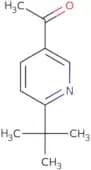
CAS:<p>Versatile small molecule scaffold</p>Formula:C10H12N2Purity:Min. 95%Molecular weight:160.22 g/mol1-(6-tert-Butylpyridin-3-yl)ethan-1-one
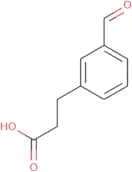
CAS:<p>Versatile small molecule scaffold</p>Formula:C11H15NOPurity:Min. 95%Molecular weight:177.24 g/mol3-(3-Formylphenyl)propanoic acid
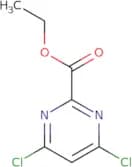
CAS:<p>Versatile small molecule scaffold</p>Formula:C10H10O3Purity:Min. 95%Molecular weight:178.18 g/molEthyl 4,6-dichloro-2-pyrimidinecarboxylate
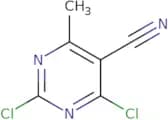
CAS:<p>Versatile small molecule scaffold</p>Formula:C7H6Cl2N2O2Purity:Min. 95%Molecular weight:221.04 g/mol2,4-Dichloro-6-methylpyrimidine-5-carbonitrile
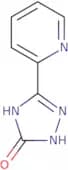
CAS:<p>2,4-Dichloro-6-methylpyrimidine-5-carbonitrile is an efficient and inexpensive reagent for the synthesis of 2,6-dichloro-4-(trifluoromethyl)pyrimidine. It is a chlorinating agent that can be used in place of chlorine gas, which is expensive. The methylation reaction proceeds efficiently with n-butyl alcohol as the methylating agent, giving a high yield of product. The synthesis method has been shown to be effective for the preparation of this chemical.</p>Formula:C6H3Cl2N3Purity:Min. 95%Molecular weight:188.01 g/mol5-(Pyridin-2-yl)-1H-1,2,4-triazol-3(2H)-one
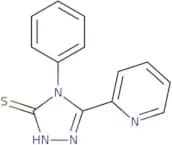
CAS:<p>Versatile small molecule scaffold</p>Formula:C7H6N4OPurity:Min. 95%Molecular weight:162.15 g/mol4-Phenyl-5-(pyridin-2-yl)-4H-1,2,4-triazole-3-thiol
CAS:<p>4-Phenyl-5-(pyridin-2-yl)-4H-1,2,4-triazole-3-thiol is a ligand that can be used to form supramolecular architectures. The compound has a coordination geometry of square pyramidal and exhibits anion recognition properties.</p>Formula:C13H10N4SPurity:Min. 95%Molecular weight:254.31 g/mol1-Ethynyl-4-(methylsulfanyl)benzene
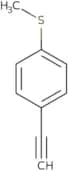
CAS:<p>1-Ethynyl-4-(methylsulfanyl)benzene (EMSB) is a novel organometallic compound that has been shown to be an inhibitor of cyclooxygenases. EMSB inhibits cox-1 and cox-2, which are enzymes involved in the inflammatory response. Inhibiting these enzymes may lead to the reduction of inflammation, which is implicated in many diseases such as cancer, arthritis, and cardiovascular disease. EMSB has also been shown to have antiinflammatory activity in a gravimetric analysis of human neutrophils. This molecule has been shown to inhibit the production of prostaglandins by inhibiting the enzyme cyclooxygenase and x-ray diffraction data show that this molecule binds with high affinity to cox-1 and cox-2.</p>Formula:C9H8SPurity:Min. 95%Molecular weight:148.23 g/mol2,4-Dioxo-1,2,3,4-tetrahydro-quinazoline-6-sulfonyl chloride
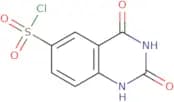
CAS:<p>Versatile small molecule scaffold</p>Formula:C8H5ClN2O4SPurity:Min. 95%Molecular weight:260.66 g/mol4-chloro-3-cyanobenzenesulfonyl chloride
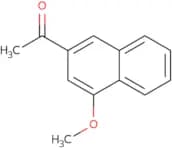
CAS:<p>Versatile small molecule scaffold</p>Formula:C7H3Cl2NO2SPurity:Min. 95%Molecular weight:236.07 g/mol1-(4-Methoxynaphthalen-2-yl)ethan-1-one
CAS:<p>Versatile small molecule scaffold</p>Formula:C13H12O2Purity:Min. 95%Molecular weight:200.23 g/mol

![(2R)-2-Amino-3-{[(methylsulfanyl)methyl]sulfanyl}propanoic acid](/_next/image/?url=https%3A%2Fstatic.cymitquimica.com%2Fproducts%2F3D%2Fthumb-webp%2FGCA01093.webp&w=3840&q=75)