Building Blocks
This section contains fundamental products for the synthesis of organic and biological compounds. Building blocks are the essential starting materials used to construct complex molecules through various chemical reactions. They play a critical role in drug discovery, material science, and chemical research. At CymitQuimica, we offer a diverse range of high-quality building blocks to support your innovative research and industrial projects, ensuring you have the essential components for successful synthesis.
Subcategories of "Building Blocks"
- Boronic Acids & Boronic Acid Derivatives(5,756 products)
- Chiral Building Blocks(1,242 products)
- Hydrocarbon Building Blocks(6,095 products)
- Organic Building Blocks(61,055 products)
Found 199650 products of "Building Blocks"
Sort by
Purity (%)
0
100
|
0
|
50
|
90
|
95
|
100
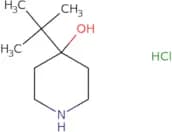
4-(tert-Butyl)piperidin-4-ol hydrochloride
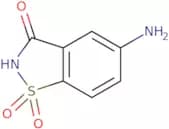
CAS:<p>Versatile small molecule scaffold</p>Formula:C9H20ClNOPurity:Min. 95%Molecular weight:193.71 g/mol5-Amino-2,3-dihydro-1,2-benzothiazole-1,1,3-trione
CAS:<p>5-Amino-2,3-dihydro-1,2-benzothiazole-1,1,3-trione is a nitro compound that has been shown to have toxin and sweet taste activity. 5-Amino-2,3-dihydro-1,2-benzothiazole-1,1,3-trione is used in the analysis of sweeteners in food products. It is also used as an intermediate in the synthesis of other compounds. 5AMT has been shown to be mutagenic and cytotoxic in some assays.</p>Formula:C7H6N2O3SPurity:Min. 95%Molecular weight:198.2 g/mol6-Amino-1,1-dioxo-1,2-benzothiazol-3-one
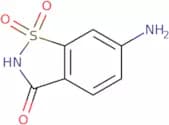
CAS:<p>6-Amino-1,1-dioxo-1,2-benzothiazol-3-one (6ABT) is a diazo compound that has been used in the synthesis of bioconjugates. 6ABT is an intermediate for the preparation of monoclonal antibodies and as an inhibitor of carbonic anhydrase II. 6ABT has been shown to have anti-cancer properties by inhibiting proliferation and inducing apoptosis in human cancer cells. It also inhibits cell growth in human colon cancer cells and human breast cancer cells. 6ABT has been found to inhibit the diphenolase activity of beta-hexosaminidase and alpha-glucosidase, which are enzymes that break down proteins and carbohydrates respectively. This inhibition may lead to metabolic disorders such as diabetes mellitus type 2.</p>Formula:C7H6N2O3SPurity:Min. 95%Color and Shape:PowderMolecular weight:198.19 g/mol5-Methyl-1,2,3-Thiadiazole-4-Carboxylic Acid
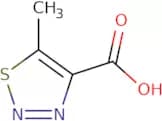
CAS:<p>5-Methyl-1,2,3-thiadiazole-4-carboxylic acid is a carboxylic acid that is used as an adjuvant for agricultural purposes. It is used to increase the effectiveness of insecticides and acaricides. This material can be prepared by synthetic methods. 5-Methyl-1,2,3-thiadiazole-4-carboxylic acid is activated by carboxylic acids to form a reactive methyl ester. This activation increases the solubility and stability of this compound. 5MTT provides insecticidal activity with an attack on the insect's nervous system and prevents virus infection in plants by blocking viral replication.</p>Formula:C4H4N2O2SPurity:Min. 95%Molecular weight:144.15 g/mol1,2,3-Benzothiadiazole-6-carboxylic acid
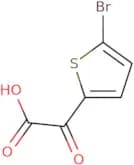
CAS:Versatile small molecule scaffoldFormula:C7H4N2O2SPurity:Min. 95%Color and Shape:PowderMolecular weight:180.19 g/mol2-(5-Bromothiophen-2-yl)-2-oxoacetic acid
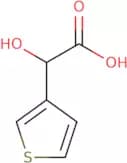
CAS:<p>Versatile small molecule scaffold</p>Formula:C6H3BrO3SPurity:Min. 95%Molecular weight:235.06 g/mol2-Hydroxy-2-(thiophen-3-yl)acetic acid
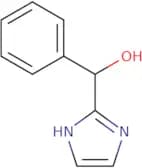
CAS:<p>Versatile small molecule scaffold</p>Formula:C6H6O3SPurity:Min. 95%Molecular weight:158.18 g/mol1H-Imidazol-2-yl(phenyl)methanol
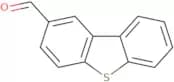
CAS:<p>Versatile small molecule scaffold</p>Formula:C10H10N2OPurity:Min. 95%Molecular weight:174.2 g/molDibenzothiophene-2-carboxaldehyde
CAS:<p>Dibenzothiophene-2-carboxaldehyde is a colorimetric, nucleophilic, and fluorescent compound. The fluorescence of this compound is activated by UV light and can be used to measure the concentration of other compounds with a high degree of sensitivity. This chemical is used in optical sensing devices such as fluorescent sensors or fluorophores. The fluorescence emission can be induced by an electron transfer reaction, which involves a nucleophilic attack on the carbonyl group. Dibenzothiophene-2-carboxaldehyde is also used in titrations and has low detection limits. It reacts with dmso solution to form a fluorescent sensor for monitoring reactions that require an intramolecular nucleophilic attack.</p>Formula:C13H8OSPurity:Min. 95%Molecular weight:212.27 g/mol2-{[(5-Methylfuran-2-yl)methyl]amino}ethan-1-ol
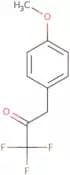
CAS:<p>Versatile small molecule scaffold</p>Formula:C8H13NO2Purity:Min. 95%Molecular weight:155.19 g/mol3-(4-Methoxyphenyl)-1,1,1-trifluoro-2-propanone
CAS:<p>Versatile small molecule scaffold</p>Formula:C10H9F3O2Purity:Min. 95%Molecular weight:218.17 g/molBenzyl[3-(dimethylamino)propyl]amine dihydrochloride
CAS:<p>Versatile small molecule scaffold</p>Formula:C12H22Cl2N2Purity:Min. 95%Molecular weight:265.22 g/mol2-(Propan-2-yl)but-3-ynoic acid
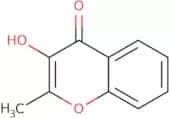
CAS:Versatile small molecule scaffoldFormula:C7H10O2Purity:Min. 95%Molecular weight:126.2 g/mol3-Hydroxy-2-methyl-4H-chromen-4-one
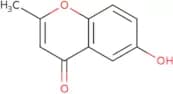
CAS:<p>3-Hydroxy-2-methyl-4H-chromen-4-one is a synthetic compound that has been shown to have potential use as an anticancer agent. It was originally developed for the treatment of cancer, but clinical studies have been limited due to its poor solubility and toxicity. 3-Hydroxy-2-methyl-4H-chromen-4-one has antiangiogenic effects, which means it prevents the formation of new blood vessels that are necessary for tumor growth. This effect may be due to its ability to inhibit the production of substances that stimulate angiogenesis, such as erythropoietin and vascular endothelial growth factor (VEGF). In addition, 3HMMCT inhibits iron homeostasis by binding to ferric iron in the enterocyte lysosome and preventing its absorption from food. This leads to increased excretion of iron in feces and urine.</p>Formula:C10H8O3Purity:Min. 95%Molecular weight:176.17 g/mol6-Hydroxy-2-methyl-4H-chromen-4-one
CAS:<p>Protocetraric acid is a natural product that is found in the bark of Usnea longissima. It can be synthesized by diazotization and oxidation of protocetraric acid with nitrous acid, followed by hydrolysis. Protocetraric acid has been shown to have cytotoxic effects on murine cells and multidimensional structures. The structure of protocetraric acid is similar to that of chromones and flavones, which are also found in Usnea longissima. Protocetraric acid has been shown to inhibit the enzyme catalase, suggesting it may have anti-inflammatory properties.</p>Formula:C10H8O3Purity:Min. 95%Molecular weight:176.17 g/molN-Methyl-N-phenylpyrrolidin-3-amine
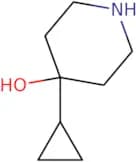
CAS:<p>Versatile small molecule scaffold</p>Formula:C11H16N2Purity:Min. 95%Molecular weight:176.26 g/mol4-cyclopropylpiperidin-4-ol
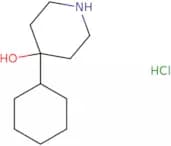
CAS:<p>Versatile small molecule scaffold</p>Formula:C8H15NOPurity:Min. 95%Molecular weight:141.21 g/mol4-Cyclohexylpiperidin-4-ol hydrochloride
CAS:<p>Versatile small molecule scaffold</p>Formula:C11H22ClNOPurity:Min. 95%Molecular weight:219.75 g/mol3,5,6-Trichloropicoline
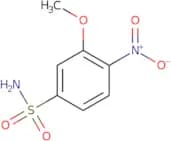
CAS:<p>Versatile small molecule scaffold</p>Formula:C6H4Cl3NPurity:Min. 95%Molecular weight:196.46 g/mol3-Methoxy-4-nitrobenzene-1-sulfonamide
CAS:<p>Versatile small molecule scaffold</p>Formula:C7H8N2O5SPurity:Min. 95%Molecular weight:232.22 g/mol


![2-{[(5-Methylfuran-2-yl)methyl]amino}ethan-1-ol](/_next/image/?url=https%3A%2Fstatic.cymitquimica.com%2Fproducts%2F3D%2Fthumb-webp%2FXAA09962.webp&w=3840&q=75)
![Benzyl[3-(dimethylamino)propyl]amine dihydrochloride](/_next/image/?url=https%3A%2Fstatic.cymitquimica.com%2Fproducts%2F3D%2Fthumb-webp%2FXAA10229.webp&w=3840&q=75)