


Building Blocks
This section contains fundamental products for the synthesis of organic and biological compounds. Building blocks are the essential starting materials used to construct complex molecules through various chemical reactions. They play a critical role in drug discovery, material science, and chemical research. At CymitQuimica, we offer a diverse range of high-quality building blocks to support your innovative research and industrial projects, ensuring you have the essential components for successful synthesis.
Subcategories of "Building Blocks"
- Boronic Acids & Boronic Acid Derivatives(5,756 products)
- Chiral Building Blocks(1,242 products)
- Hydrocarbon Building Blocks(6,095 products)
- Organic Building Blocks(61,038 products)
Found 196817 products of "Building Blocks"
Sort by
Purity (%)
0
100
|
0
|
50
|
90
|
95
|
100
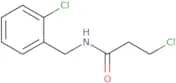
3-Chloro-N-(2-chlorobenzyl)propanamide
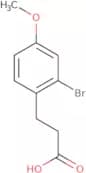
CAS:<p>Versatile small molecule scaffold</p>Formula:C10H11Cl2NOPurity:Min. 95%Molecular weight:232.1 g/mol3-(2-Bromo-4-methoxyphenyl)propanoic acid
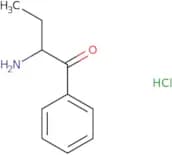
CAS:<p>Versatile small molecule scaffold</p>Formula:C10H11BrO3Purity:Min. 95%Molecular weight:259.1 g/mol2-Amino-1-phenylbutan-1-one hydrochloride
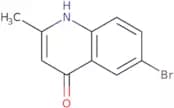
CAS:Controlled Product<p>Versatile small molecule scaffold</p>Formula:C10H14ClNOPurity:Min. 95%Molecular weight:199.68 g/mol6-Bromo-2-methylquinolin-4-ol
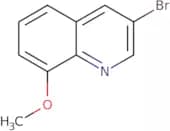
CAS:<p>Versatile small molecule scaffold</p>Formula:C10H8BrNOPurity:Min. 95%Molecular weight:238.08 g/mol3-Bromo-8-methoxyquinoline
CAS:<p>Versatile small molecule scaffold</p>Formula:C10H8BrNOPurity:Min. 95%Molecular weight:238.08 g/mol3-Nitroquinolin-2-ol
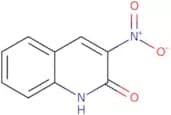
CAS:<p>3-Nitroquinolin-2-ol is a molecule that has been developed to modulate the activity of glutamate receptors. It is synthesized by reacting an ethyl group with hydrochloric acid in the presence of a borohydride reducing agent, such as sodium borohydride. 3-Nitroquinolin-2-ol has been shown to be effective against cancer cells and can inhibit the growth of bacteria by binding to toll-like receptor proteins. The synthesis of this molecule is done under inorganic acid conditions, which give it a polymer conjugate property.</p>Formula:C9H6N2O3Purity:Min. 95%Molecular weight:190.16 g/mol5-(2-Chlorophenyl)imidazolidine-2,4-dione
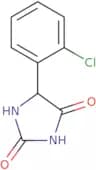
CAS:<p>Versatile small molecule scaffold</p>Formula:C9H7ClN2O2Purity:Min. 95%Molecular weight:210.62 g/mol1-(4-Methylpyridin-2-yl)butan-1-one
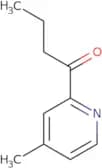
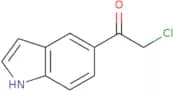
CAS:<p>Versatile small molecule scaffold</p>Formula:C10H13NOPurity:Min. 95%Molecular weight:163.22 g/mol2-Chloro-1-(1H-indol-5-yl)ethanone
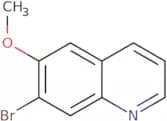
CAS:<p>2-Chloro-1-(1H-indol-5-yl)ethanone is an aminated product that can be synthesized by the reaction of nitromethane and aluminium chloride. This product is a side-chain condensation product of indoline and chloroacetyl chloride. The product yields are about 68%.</p>Formula:C10H8ClNOPurity:Min. 95%Molecular weight:193.63 g/mol7-Bromo-6-methoxyquinoline
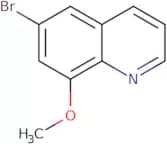
CAS:<p>Versatile small molecule scaffold</p>Formula:C10H8BrNOPurity:Min. 95%Molecular weight:238.08 g/mol6-Bromo-8-methoxyquinoline
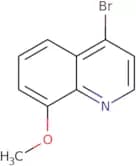
CAS:<p>6-Bromo-8-methoxyquinoline is a quinoline that has shown anticancer activity. The anticancer effect of this compound is due to its ability to inhibit the synthesis of DNA, RNA, and protein in tumor cells. This drug also has a cytotoxic effect on lymphocytes. 6-Bromo-8-methoxyquinoline is a derivative of methoxyquinoline, which was used as an antiparasitic agent for the treatment of schistosomiasis.</p>Formula:C10H8BrNOPurity:Min. 95%Molecular weight:238.08 g/mol4-Bromo-8-methoxyquinoline
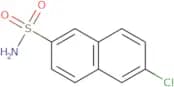
CAS:<p>4-Bromo-8-methoxyquinoline is an organic compound with the chemical formula C8H6BrN2O. It is a colorless solid that is soluble in organic solvents. The molecule consists of a six-membered ring with two bromine atoms and one methoxy group attached to each ring carbon. It can be synthesized by reacting 4-bromophenol with formaldehyde followed by heating the reaction mixture to produce 4-(4,5-dihydroxyphenyl)-1,3,2-oxazinane. This product can be chlorinated to produce monochloro or brominated to produce dibromo derivatives. The infrared spectrum of 4-bromo-8-methoxyquinoline shows peaks at 1650 cm−1 (C=O), 1510 cm−1 (C=N) and 1340 cm−1 (C=Cl). The yield for this</p>Formula:C10H8BrNOPurity:Min. 95%Molecular weight:238.08 g/mol6-Chloronaphthalene-2-sulfonamide
CAS:<p>Versatile small molecule scaffold</p>Formula:C10H8ClNO2SPurity:Min. 95%Molecular weight:241.69 g/mol7-Cyclopentyl-5,6-dimethyl-7H-pyrrolo[2,3-d]pyrimidin-4-ol
CAS:<p>Versatile small molecule scaffold</p>Formula:C13H17N3OPurity:Min. 95%Molecular weight:231.29 g/mol7-Cyclohexyl-5,6-dimethyl-7H-pyrrolo[2,3-d]pyrimidin-4-ol
CAS:<p>Versatile small molecule scaffold</p>Formula:C14H19N3OPurity:Min. 95%Molecular weight:245.32 g/mol4-Chloro-7-(furan-2-ylmethyl)-5,6-dimethyl-7H-pyrrolo[2,3-d]pyrimidine
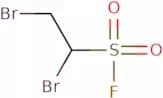
CAS:<p>Versatile small molecule scaffold</p>Formula:C13H12ClN3OPurity:Min. 95%Molecular weight:261.7 g/mol1,2-Dibromoethane-1-sulfonyl fluoride
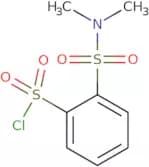
CAS:<p>1,2-Dibromoethane-1-sulfonyl fluoride is a sulfur-containing organic molecule that can be used as a connector in organic chemistry. It has been shown to yield a family of sulfonyl fluorides that are stable and have profiles that are suitable for drug discovery. These compounds are synthesized by the reaction of 1,2-dibromoethane with sodium sulfite and hydrofluoric acid. The synthesis of these compounds is carried out in two steps. In the first step, the 1,2-dibromoethane reacts with sodium sulfite to produce ethyl dibromosulfate. In the second step, this compound reacts with hydrofluoric acid to produce 1,2-dibromoethane-1-sulfonyl fluoride.</p>Formula:C2H3Br2FO2SPurity:Min. 95%Molecular weight:269.92 g/mol2-(Dimethylsulfamoyl)benzene-1-sulfonyl chloride
CAS:<p>Versatile small molecule scaffold</p>Formula:C8H10ClNO4S2Purity:Min. 95%Molecular weight:283.8 g/mol1-{4-[(2,2,2-Trifluoroethyl)sulfanyl]phenyl}ethan-1-one
CAS:<p>Versatile small molecule scaffold</p>Formula:C10H9F3OSPurity:Min. 95%Molecular weight:234.24 g/mol1-{1-Methyl-1H-pyrazolo[3,4-d]pyrimidin-4-yl}-1H-pyrazole
CAS:<p>Versatile small molecule scaffold</p>Formula:C9H8N6Purity:Min. 95%Molecular weight:200.2 g/mol

![7-Cyclopentyl-5,6-dimethyl-7H-pyrrolo[2,3-d]pyrimidin-4-ol](/_next/image/?url=https%3A%2Fstatic.cymitquimica.com%2Fproducts%2F3D%2Fthumb-webp%2FDEA02649.webp&w=3840&q=75)
![7-Cyclohexyl-5,6-dimethyl-7H-pyrrolo[2,3-d]pyrimidin-4-ol](/_next/image/?url=https%3A%2Fstatic.cymitquimica.com%2Fproducts%2F3D%2Fthumb-webp%2FDEA02647.webp&w=3840&q=75)
![4-Chloro-7-(furan-2-ylmethyl)-5,6-dimethyl-7H-pyrrolo[2,3-d]pyrimidine](/_next/image/?url=https%3A%2Fstatic.cymitquimica.com%2Fproducts%2F3D%2Fthumb-webp%2FDEA02614.webp&w=3840&q=75)
![1-{4-[(2,2,2-Trifluoroethyl)sulfanyl]phenyl}ethan-1-one](/_next/image/?url=https%3A%2Fstatic.cymitquimica.com%2Fproducts%2F3D%2Fthumb-webp%2FDDC93964.webp&w=3840&q=75)
![1-{1-Methyl-1H-pyrazolo[3,4-d]pyrimidin-4-yl}-1H-pyrazole](/_next/image/?url=https%3A%2Fstatic.cymitquimica.com%2Fproducts%2F3D%2Fthumb-webp%2FDDC89660.webp&w=3840&q=75)