Building Blocks
This section contains fundamental products for the synthesis of organic and biological compounds. Building blocks are the essential starting materials used to construct complex molecules through various chemical reactions. They play a critical role in drug discovery, material science, and chemical research. At CymitQuimica, we offer a diverse range of high-quality building blocks to support your innovative research and industrial projects, ensuring you have the essential components for successful synthesis.
Subcategories of "Building Blocks"
- Boronic Acids & Boronic Acid Derivatives(5,756 products)
- Chiral Building Blocks(1,242 products)
- Hydrocarbon Building Blocks(6,095 products)
- Organic Building Blocks(61,038 products)
Found 196817 products of "Building Blocks"
Sort by
Purity (%)
0
100
|
0
|
50
|
90
|
95
|
100
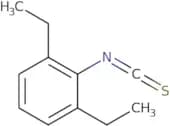
2,6-Diethylphenylisothiocyanate
CAS:<p>2,6-Diethylphenylisothiocyanate is an aliphatic anesthetic agent that binds to the acceptor site of the ligand-gated ion channels. It has a hydrophobic nature and can be used for research as a potential drug candidate for a variety of protein targets. This compound also has the ability to alter conformations of proteins such as apoferritin, which may lead to new insights into how these proteins function.</p>Formula:C11H13NSPurity:Min. 95%Molecular weight:191.29 g/mol1,3-Diisopropyl-2-isothiocyanatobenzene
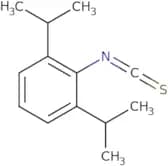
CAS:<p>Versatile small molecule scaffold</p>Formula:C13H17NSPurity:Min. 95%Molecular weight:219.35 g/mol3-Aminopropane-1-sulfinic acid
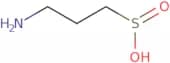
CAS:<p>3-Aminopropane-1-sulfinic acid is a reactive molecule that is found in the body and has been shown to be reactive with pancreatic tissue. It has been shown to activate the enzyme hplc analysis, which hydrolyzes 3-aminopropane-1-sulfinic acid into its metabolites. The sulfonic acids have been found to have an inflammatory effect on the pancreas. This drug has been shown to be effective in treating a number of inflammatory diseases, such as rheumatoid arthritis and ulcerative colitis. 3-Aminopropane-1-sulfinic acid may also act as a regulatory or allosteric modulator by binding to an allosteric site on the enzyme β-cell and inhibiting insulin release.</p>Formula:C3H9NO2SPurity:Min. 95%Molecular weight:123.18 g/molCyclopropyl trifluoromethanesulfonate
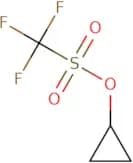
CAS:<p>Versatile small molecule scaffold</p>Formula:C4H5F3O3SPurity:Min. 95%Molecular weight:190.14 g/mol4-(Propane-2-sulfonyl)aniline
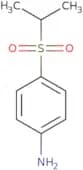
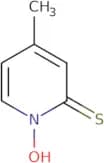
CAS:<p>Versatile small molecule scaffold</p>Formula:C9H13NO2SPurity:Min. 95%Molecular weight:199.27 g/mol1-Hydroxy-4-methyl-1,2-dihydropyridine-2-thione
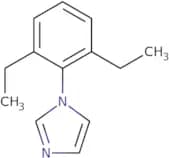
CAS:<p>1-Hydroxy-4-methyl-1,2-dihydropyridine-2-thione is an insoluble compound that is soluble in acidic solutions. It is a white powder that can be found as sodium salts or ethylene acetyl derivatives. The yield of this compound ranges from 0.5 to 1.5%. The product has been shown to be an antibacterial agent and can also be used as a marker for the identification of bacterial colonies. This product reacts with metal ions such as copper and zinc to form coordination complexes. Thiourea is the ligand in these complexes, which are then susceptible to nucleophilic attack by strong bases such as NaOH or KOH.</p>Formula:C6H7NOSPurity:Min. 95%Molecular weight:141.19 g/mol1-(2,6-Diethylphenyl)-1H-imidazole
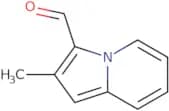
CAS:<p>Versatile small molecule scaffold</p>Formula:C13H16N2Purity:Min. 95%Molecular weight:200.28 g/mol2-Methyl-3-indolizinecarboxaldehyde
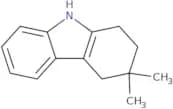
CAS:<p>Versatile small molecule scaffold</p>Formula:C10H9NOPurity:Min. 95%Molecular weight:159.18 g/mol3,3-Dimethyl-2,3,4,9-tetrahydro-1H-carbazole
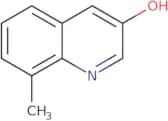
CAS:<p>Versatile small molecule scaffold</p>Formula:C14H17NPurity:Min. 95%Molecular weight:199.29 g/mol8-Methylquinolin-3-ol
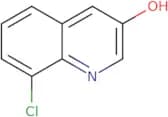
CAS:<p>Versatile small molecule scaffold</p>Formula:C10H9NOPurity:Min. 95%Molecular weight:159.18 g/mol8-chloroquinolin-3-ol
CAS:<p>Versatile small molecule scaffold</p>Formula:C9H6ClNOPurity:Min. 95%Molecular weight:179.6 g/mol2-oxo-Indoline-7-carboxylic acid
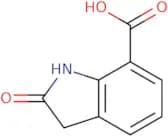
CAS:<p>2-Oxo-indoline-7-carboxylic acid is an antiinflammatory agent that belongs to the class of hydrazines. It has been shown to have antiinflammatory activity in stepwise manner, which starts with a hydrazine group attacking the carbonyl group of a carboxylic acid and forming a new heterocyclic ring. 2-Oxo-indoline-7-carboxylic acid also has esterase inhibitory effect and can be used for the treatment of inflammatory diseases such as rheumatoid arthritis.</p>Formula:C9H7NO3Purity:Min. 95%Molecular weight:177.16 g/moltert-Butyl N-methyl-N-[(4-methylbenzenesulfonyl)oxy]carbamate
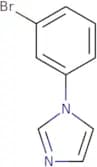
CAS:<p>Versatile small molecule scaffold</p>Formula:C13H19NO5SPurity:Min. 95%Molecular weight:301.36 g/mol1-(3-Bromophenyl)-1H-imidazole
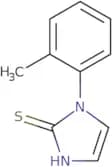
CAS:<p>Versatile small molecule scaffold</p>Formula:C9H7BrN2Purity:Min. 95%Molecular weight:223.07 g/mol1-(2-methylphenyl)-1H-imidazole-2-thiol
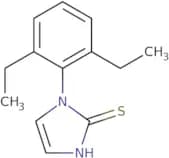
CAS:<p>Versatile small molecule scaffold</p>Formula:C10H10N2SPurity:Min. 95%Molecular weight:190.26 g/mol1-(2,6-Diethylphenyl)-1H-imidazole-2-thiol
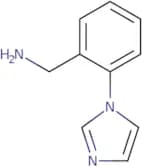
CAS:<p>Versatile small molecule scaffold</p>Formula:C13H16N2SPurity:Min. 95%Molecular weight:232.35 g/mol2-Imidazol-1-yl-benzylamine
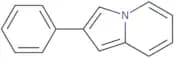
CAS:<p>Versatile small molecule scaffold</p>Formula:C10H11N3Purity:Min. 95%Molecular weight:173.22 g/mol2-Phenylindolizine
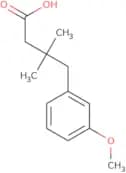
CAS:<p>2-Phenylindolizine is a chemical compound that can be used in the synthesis of other compounds. It has been shown to react with acrylonitrile to form a nitrile, which is an important intermediate in organic chemistry. 2-Phenylindolizine has also been shown to react with benzaldehyde, creating an acetal and a diazo compound. The reaction of 2-phenylindolizine with a chiral electrophile yields two different products. This reaction is highly efficient and can be screened for desirable products using fluorescence and yield measurements.</p>Formula:C14H11NPurity:Min. 95%Molecular weight:193.24 g/mol4-(3-Methoxyphenyl)-3,3-dimethylbutanoic acid
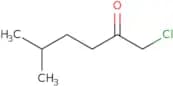
CAS:Versatile small molecule scaffoldFormula:C13H18O3Purity:Min. 95%Molecular weight:222.28 g/mol1-Chloro-5-methylhexan-2-one
CAS:<p>Versatile small molecule scaffold</p>Formula:C7H13ClOPurity:Min. 95%Molecular weight:148.63 g/mol

![tert-Butyl N-methyl-N-[(4-methylbenzenesulfonyl)oxy]carbamate](/_next/image/?url=https%3A%2Fstatic.cymitquimica.com%2Fproducts%2F3D%2Fthumb-webp%2FABA37096.webp&w=3840&q=75)