Building Blocks
This section contains fundamental products for the synthesis of organic and biological compounds. Building blocks are the essential starting materials used to construct complex molecules through various chemical reactions. They play a critical role in drug discovery, material science, and chemical research. At CymitQuimica, we offer a diverse range of high-quality building blocks to support your innovative research and industrial projects, ensuring you have the essential components for successful synthesis.
Subcategories of "Building Blocks"
- Boronic Acids & Boronic Acid Derivatives(5,756 products)
- Chiral Building Blocks(1,242 products)
- Hydrocarbon Building Blocks(6,095 products)
- Organic Building Blocks(61,038 products)
Found 196817 products of "Building Blocks"
Sort by
Purity (%)
0
100
|
0
|
50
|
90
|
95
|
100
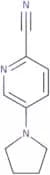
5-(Pyrrolidin-1-yl)pyridine-2-carbonitrile
CAS:<p>5-(Pyrrolidin-1-yl)pyridine-2-carbonitrile is a factor receptor antagonist. It has been shown to inhibit the growth of tumor cells and to prevent hair loss in mice by blocking the epidermal growth factor receptor (EGFR). 5-(Pyrrolidin-1-yl)pyridine-2-carbonitrile is used for diagnosis, treatment, and prevention of EGFR transforms. The compound can also be used in multimedia to measure the connectivity between cells and monitor their growth, as well as being rechargeable and chiral. This drug has been tested on animals with devices.</p>Formula:C10H11N3Purity:Min. 95%Molecular weight:173.21 g/mol6-(Pyrrolidin-1-yl)pyridine-2-carbonitrile
CAS:<p>Versatile small molecule scaffold</p>Formula:C10H11N3Purity:Min. 95%Molecular weight:173.21 g/mol2-{[(tert-Butoxy)carbonyl]amino}-4-oxopentanoic acid
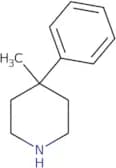
CAS:<p>Versatile small molecule scaffold</p>Formula:C10H17NO5Purity:Min. 95%Molecular weight:231.25 g/mol4-Methyl-4-phenylpiperidine
CAS:<p>4-Methyl-4-phenylpiperidine is a potent and selective antagonist of the l-type calcium channel. It blocks the opening of these channels, which are responsible for the excitation of nerve cells and contraction of muscle cells. 4-Methyl-4-phenylpiperidine has been shown to decrease blood pressure in animals by blocking the release of norepinephrine from sympathetic nerves. The drug has also been shown to be an antidepressant in animal models, but its effects on humans have not been studied.</p>Formula:C12H17NPurity:Min. 95%Molecular weight:175.27 g/mol4-Aminobicyclo[2.2.2]octane-1-carbonitrile hydrochloride
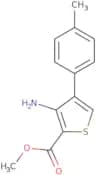
CAS:<p>Versatile small molecule scaffold</p>Formula:C9H15ClN2Purity:Min. 95%Molecular weight:186.68 g/molMethyl 3-amino-4-(4-methylphenyl)thiophene-2-carboxylate
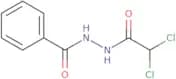
CAS:<p>Versatile small molecule scaffold</p>Formula:C13H13NO2SPurity:Min. 95%Molecular weight:247.31 g/molN'-(2,2-Dichloroacetyl)benzohydrazide
CAS:<p>Versatile small molecule scaffold</p>Formula:C9H8Cl2N2O2Purity:Min. 95%Molecular weight:247.07 g/mol4-(Triethylsilyl)-3-butyn-1-ol
CAS:<p>Versatile small molecule scaffold</p>Formula:C10H20OSiPurity:Min. 95%Molecular weight:184.35 g/mol4,6-dichloro-8-oxa-3,5-diazatricyclo[7.4.0.0,2,7]trideca-1(9),2(7),3,5,10,12-hexaene
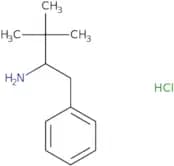
CAS:<p>Versatile small molecule scaffold</p>Formula:C10H4Cl2N2OPurity:Min. 95%Molecular weight:239.1 g/mol3,3-Dimethyl-1-phenylbutan-2-amine hydrochloride
CAS:Controlled Product<p>Versatile small molecule scaffold</p>Formula:C12H20ClNPurity:Min. 95%Molecular weight:213.75 g/molMethyl 3-methyl-5H,6H,7H-pyrrolo[2,1-c][1,2,4]triazole-5-carboxylate
CAS:<p>Versatile small molecule scaffold</p>Formula:C8H11N3O2Purity:Min. 95%Molecular weight:181.19 g/mol4-[Tris(4-carboxyphenyl)methyl]benzoic acid
CAS:<p>Versatile small molecule scaffold</p>Formula:C29H20O8Purity:Min. 95%Molecular weight:496.5 g/mol2-[(Tetrahydro-2H-pyran-4-yl)oxy]acetic acid
CAS:<p>Versatile small molecule scaffold</p>Formula:C7H12O4Purity:Min. 95%Molecular weight:160.17 g/mol[4-(Thiophen-3-yl)phenyl]methanol
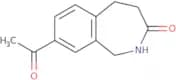
CAS:<p>Versatile small molecule scaffold</p>Formula:C11H10OSPurity:Min. 95%Molecular weight:190.26 g/mol8-Acetyl-2,3,4,5-tetrahydro-1H-2-benzazepin-3-one
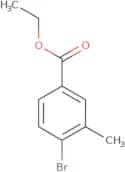
CAS:<p>Versatile small molecule scaffold</p>Formula:C12H13NO2Purity:Min. 95%Molecular weight:203.24 g/molEthyl 4-bromo-3-methylbenzoate
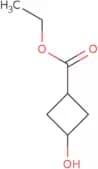
CAS:<p>Ethyl 4-bromo-3-methylbenzoate is a reagent that is used in the synthesis of ethyl 3,4-dimethoxybenzoate. It reacts with hydroxylamine to form hydroxylamine hydrochloride and chlorination, which can be detected by the presence of ethanol. Ethyl 4-bromo-3-methylbenzoate is also used as a ligand for metal ions. The reaction of ethyl 4-bromo-3-methylbenzoate with acetic anhydride forms benzoic acid and alcohol solvent, which can react with an ester to form an ester derivative.</p>Formula:C10H11BrO2Purity:Min. 95%Molecular weight:243.1 g/molethyl trans-3-hydroxycyclobutanecarboxylate
CAS:<p>Versatile small molecule scaffold</p>Formula:C7H12O3Purity:Min. 95%Molecular weight:144.17 g/mol7-Chloro-4-[(2-chloroethyl)sulfanyl]quinoline
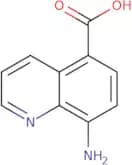
CAS:<p>Versatile small molecule scaffold</p>Formula:C11H9Cl2NSPurity:Min. 95%Molecular weight:258.2 g/mol8-Aminoquinoline-5-carboxylic acid
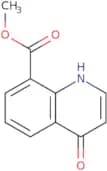
CAS:<p>Versatile small molecule scaffold</p>Formula:C10H8N2O2Purity:Min. 95%Molecular weight:188.18 g/mol4-oxo-1,4-dihydro-quinoline-8-carboxylic Acid methyl ester
CAS:<p>Versatile small molecule scaffold</p>Formula:C11H9NO3Purity:Min. 95%Molecular weight:203.19 g/mol


![2-{[(tert-Butoxy)carbonyl]amino}-4-oxopentanoic acid](/_next/image/?url=https%3A%2Fstatic.cymitquimica.com%2Fproducts%2F3D%2Fthumb-webp%2FKGA08053.webp&w=3840&q=75)
![4-Aminobicyclo[2.2.2]octane-1-carbonitrile hydrochloride](/_next/image/?url=https%3A%2Fstatic.cymitquimica.com%2Fproducts%2F3D%2Fthumb-webp%2FKGA13327.webp&w=3840&q=75)

![4,6-dichloro-8-oxa-3,5-diazatricyclo[7.4.0.0,2,7]trideca-1(9),2(7),3,5,10,12-hexaene](/_next/image/?url=https%3A%2Fstatic.cymitquimica.com%2Fproducts%2F3D%2Fthumb-webp%2FKGA19995.webp&w=3840&q=75)
![Methyl 3-methyl-5H,6H,7H-pyrrolo[2,1-c][1,2,4]triazole-5-carboxylate](/_next/image/?url=https%3A%2Fstatic.cymitquimica.com%2Fproducts%2F3D%2Fthumb-webp%2FKGA20511.webp&w=3840&q=75)
![4-[Tris(4-carboxyphenyl)methyl]benzoic acid](/_next/image/?url=https%3A%2Fstatic.cymitquimica.com%2Fproducts%2F3D%2Fthumb-webp%2FKGA24828.webp&w=3840&q=75)
![2-[(Tetrahydro-2H-pyran-4-yl)oxy]acetic acid](/_next/image/?url=https%3A%2Fstatic.cymitquimica.com%2Fproducts%2F3D%2Fthumb-webp%2FKGA25158.webp&w=3840&q=75)
![[4-(Thiophen-3-yl)phenyl]methanol](/_next/image/?url=https%3A%2Fstatic.cymitquimica.com%2Fproducts%2F3D%2Fthumb-webp%2FKGA27820.webp&w=3840&q=75)
![7-Chloro-4-[(2-chloroethyl)sulfanyl]quinoline](/_next/image/?url=https%3A%2Fstatic.cymitquimica.com%2Fproducts%2F3D%2Fthumb-webp%2FKJB19673.webp&w=3840&q=75)